
Preventive Aging Skincare: Skincare 30s to Build Resilience

Top takeaways
- Your 30s are a pivotal decade for building skin resilience before hormonal shifts begin
- Estrogen supports collagen production and barrier function — preparing now reduces disruption later
- Evidence-based actives like retinoids and peptides strengthen cellular turnover and structural support
- A preventive aging skincare strategy in your 30s creates a foundation that carries through perimenopause
- Barrier integrity and antioxidant defense matter more than chasing individual wrinkles
On this page
Introduction
Skincare 30s is about preparing your skin for the hormonal transitions ahead. Your skin in your 30s doesn't announce its changes with fanfare. The shifts are quiet — a moisturizer that worked for years suddenly feels insufficient, or breakouts appear in patterns you haven't seen since your early twenties. These aren't random events. Research shows that perimenopause, which commonly begins during the sixth decade of life, casts hormonal shadows earlier than most of us expect. Estrogen, progesterone, and testosterone — the trio that supports your extracellular matrix, collagen synthesis, and dermal blood supply — begin their gradual decline well before menopause arrives.
As we navigate our 30s, our team at Home Beauty Spa emphasizes the importance of a preventive aging skincare strategy that focuses on resilience. This decade is your window to build structural support, fortify barrier function, and establish habits that will serve you through the hormonal transitions ahead. The evidence base for this approach is solid: ingredients like retinoids stimulate cellular turnover, peptides signal collagen production, and humectants such as hyaluronic acid and glycerin maintain hydration by reducing transepidermal water loss.
What matters now isn't reversing damage — it's investing in the mechanisms that keep skin adaptable. Our editorial team has evaluated various skincare products against criteria drawn from cited safety and efficacy literature, including the ceramide ratios supported by the Cosmetic Ingredient Review (CIR). This ensures that the barrier creams and serums we recommend truly support your skin's natural defenses. The goal is not perfection; it's preparing your skin to handle what's coming with fewer disruptions and more confidence. For a deeper look at how resilience differs from surface-level fixes, see our guide to skin health markers and understanding resilience beyond wrinkles.
Prerequisites
Before you begin building a resilient skincare 30s routine, you need to understand the biological shifts happening beneath the surface and gather the right tools to support your skin through this pivotal decade. Our team at Home Beauty Spa emphasizes that effective preventive aging skincare starts with knowledge — specifically, understanding how hormonal changes during perimenopause affect skin structure and function.
What You Need to Know
First, familiarize yourself with the role of estrogen in skin health. Research shows that estrogen supports the extracellular matrix, collagen production, and dermal blood supply, while progesterone promotes extracellular matrix proteins and sebum production. During perimenopause — which can begin in your 30s — these hormone levels start to decline, triggering measurable changes in skin barrier function, hydration, and resilience.
Second, understand the difference between reactive and preventive skincare. Reactive approaches address visible damage after it appears; preventive strategies build structural resilience before hormonal decline accelerates. Your 30s are the optimal window for the latter. Learn to recognize skin health markers beyond wrinkles — barrier integrity, hydration capacity, and inflammatory response patterns matter more than fine lines at this stage.
Essential Tools and Products
You'll need a core set of active ingredients supported by dermatology research. Retinoids inhibit collagen degradation, promote keratinocyte proliferation, and induce hyaluronan production. Niacinamide, a derivative of vitamin B3, improves skin pigmentation and surface irregularity. Look for formulations that combine these actives — studies demonstrate that multi-ingredient approaches target multiple signs of aging more effectively than single-ingredient products. For evidence-based peptide options that complement this strategy, see our peptide serum reviews for perimenopausal skin.
Your routine should also include barrier-supporting ingredients. Moisturizers with occlusive ingredients like dimethicone and petrolatum, combined with humectants such as hyaluronic acid and glycerin, restore normal barrier function and decrease transepidermal water loss. As your skin becomes more susceptible to reactive oxygen species and sun injury during hormonal shifts, pair moisturizers with antioxidants and anti-inflammatory ingredients.
Baseline Assessment
Before implementing any new routine, document your current skin state. Take clear photos in consistent lighting, note areas of sensitivity or reactivity, and track how your skin responds to environmental stressors. This baseline lets you measure progress objectively rather than relying on perception, which can shift as you adjust to gradual improvements.
Consider consulting a dermatologist for a professional assessment, especially if you have concerns about barrier damage, persistent inflammation, or hormonal skin changes. While skincare can be a powerful preventive tool, personalized medical guidance ensures you're addressing your specific needs safely and effectively.
What Does Effective Skincare 30s Look Like?
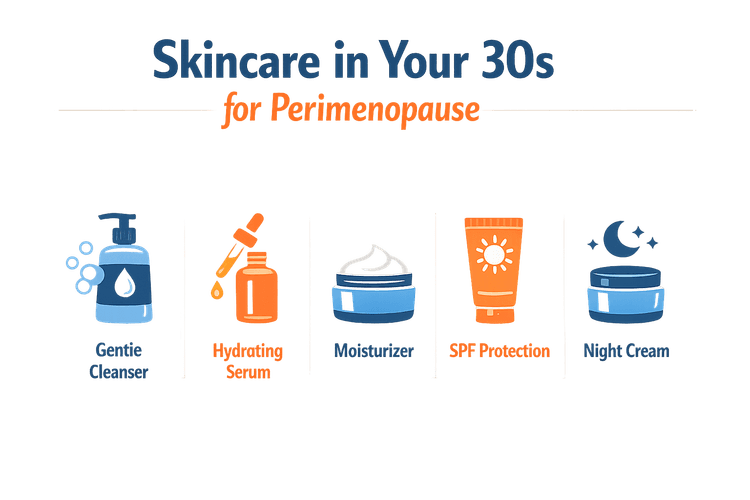
Building a resilient skincare routine in your 30s means targeting the early signs of aging while preparing your skin for hormonal shifts ahead. The evidence points to specific ingredients and application strategies that support barrier function, collagen integrity, and antioxidant defense. Here's how to structure your routine.
Step 1: Establish a Gentle, Consistent Cleanse
Choose a low-pH cleanser that removes makeup and environmental debris without stripping your skin's natural lipid barrier. Cleanse once in the evening; in the morning, rinse with water or use a micellar solution if your skin feels oily. Over-cleansing disrupts the barrier and accelerates moisture loss, which becomes more pronounced as estrogen begins its gradual decline.
Step 2: Layer Hydration with Humectants and Occlusives
Apply a hydrating serum containing hyaluronic acid or glycerin immediately after cleansing, while your skin is still damp. Follow with a moisturizer that includes occlusive ingredients like ceramides or squalane to seal in moisture. Research from 2024 confirms that skin hydration is crucial for delaying the formation of wrinkles and improving the appearance of fine lines, which are common concerns in preventive aging skincare during the 30s.
For a deeper look at how moisture retention works and why some serums fail to deliver, see our guide on hyaluronic acid serum and why it's not hydrating your skin.
Step 3: Introduce Retinoids Gradually
Start with retinaldehyde or a low-concentration retinol two to three nights per week. Retinoids inhibit collagen degradation, promote keratinocyte proliferation, and support collagen synthesis. Published data from 2024 shows that retinaldehyde has demonstrated good tolerability, enabling prolonged use for up to three years, with habituation typically occurring after the first month of use. Apply a pea-sized amount to dry skin, wait 20 minutes, then follow with your moisturizer.
Step 4: Add Niacinamide for Multi-Target Support
Incorporate a serum or moisturizer containing niacinamide, a derivative of vitamin B3 that improves skin pigmentation and surface irregularity. A 2024 study found that niacinamide is well tolerated, even in individuals with sensitive skin conditions like rosacea, making it a suitable ingredient for preventive aging skincare in the 30s. You can layer niacinamide with retinoids; apply niacinamide first, allow it to absorb, then follow with your retinoid on alternating nights or in the morning routine.
Step 5: Replenish Antioxidants Daily
The endogenous cutaneous antioxidant barrier declines with chronological age, making it crucial to replenish antioxidants in skincare for those in their 30s. Apply a vitamin C serum in the morning under sunscreen, or choose a moisturizer formulated with vitamin E, ferulic acid, or green tea extract. Antioxidants neutralize free radicals generated by UV exposure and environmental pollution, protecting collagen and elastin from degradation.
Step 6: Apply Broad-Spectrum Sunscreen Every Morning
Use a broad-spectrum SPF 30 or higher as the final step in your morning routine. Sunscreen is non-negotiable for preserving collagen, preventing hyperpigmentation, and maintaining barrier integrity. Reapply every two hours if you're outdoors or exposed to direct sunlight through windows.
Step 7: Assess and Adjust Every Three Months
Take progress photos in consistent lighting every 12 weeks. Evaluate skin texture, tone evenness, hydration, and any irritation. If your skin tolerates your retinoid well, consider increasing frequency or concentration. If you experience persistent dryness or sensitivity, scale back actives and focus on barrier repair for a cycle before reintroducing them.
How Do You Fix Common Skincare 30s Issues?
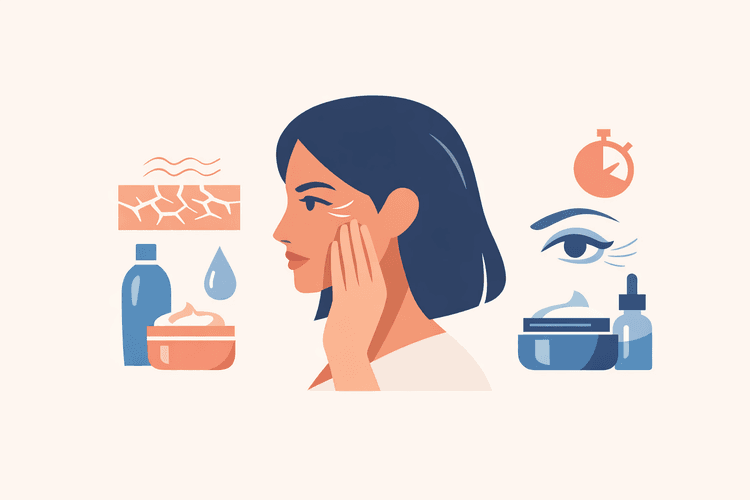
Your skin doesn't always cooperate with your routine. Even when you've built a solid foundation, breakouts resurface, sensitivity flares, or products that worked last year suddenly irritate. These disruptions are common in your 30s as hormonal shifts begin to alter barrier function and microbial balance. Here's what the research shows about the most frequent issues — and how to address them without dismantling your entire regimen.
Adult Acne and Barrier Disruption
Acne in your 30s often arrives with barrier dysfunction. Research shows that acne vulgaris is a multifactorial inflammatory disorder frequently accompanied by barrier disruption and dysbiosis of the skin's surface microbiome. When your barrier is compromised, traditional acne treatments like benzoyl peroxide can worsen sensitivity and prolong recovery.
A multi-targeted approach addresses both inflammation and barrier integrity. Clinical data demonstrates that regimens combining salicylic acid, niacinamide, and zinc alongside microbiome-supportive ingredients achieve higher efficacy and better tolerability than single-agent treatments. In a 30-day clinical study, participants using this combined protocol reported dermopurifying efficacy reaching 100% for certain formulations, with gentleness ratings above 85%.
Solution protocol:
- Swap harsh cleansers for gentle, pH-balanced formulas that preserve lipid integrity
- Introduce salicylic acid gradually — 2-3 times per week initially, monitoring for irritation
- Layer niacinamide (which supports both barrier function and sebum regulation) before your moisturizer
- Avoid stacking multiple actives during active breakouts; simplify to 1-2 targeted ingredients
For persistent concerns, consult a dermatologist to rule out hormonal drivers that require medical intervention. Our guide to hormonal acne in your 40s explores the perimenopause connection in depth.
Microbiome Imbalance and Persistent Inflammation
Increasing evidence links acne and chronic sensitivity to microbial imbalance. Your skin's microbiome diversity naturally declines with age, and disruption accelerates when you over-cleanse, over-exfoliate, or use products that strip beneficial bacteria. For a comprehensive look at this ecosystem, see our guide to skin microbiome and why your skin's ecosystem matters.
Prebiotic skincare ingredients — such as inulin and α-glucan oligosaccharide — are designed to restore microbial homeostasis while maintaining barrier integrity. These components selectively nourish beneficial microbes, helping to rebalance the skin surface without introducing live cultures (which have inconsistent stability in topical formulations).
Solution protocol:
- Reduce cleansing frequency if you're washing twice daily — once in the evening is often sufficient
- Choose products labeled "microbiome-friendly" or containing prebiotic oligosaccharides
- Avoid antibacterial cleansers unless medically indicated; they disrupt both harmful and beneficial flora
- Allow 4-6 weeks for microbiome rebalancing before evaluating results
Dehydration Despite Moisturizer Use
If your skin feels dry hours after moisturizing, the issue is often water loss rather than lipid deficiency. Transepidermal water loss (TEWL) accelerates when the barrier's ceramide-to-cholesterol-to-fatty-acid ratio is disrupted — a shift that begins in your 30s and accelerates with estrogen decline.
Humectants like hyaluronic acid draw water into the skin, but without an occlusive layer to seal it in, that water evaporates. The result: temporary plumpness followed by tightness.
Solution protocol:
- Apply humectant serums (hyaluronic acid, glycerin) to damp skin immediately after cleansing
- Follow within 60 seconds with a moisturizer containing occlusive or semi-occlusive ingredients (ceramides, squalane, petrolatum)
- In low-humidity environments, consider adding a dedicated occlusive layer at night
- Check that your cleanser isn't stripping — post-cleanse tightness indicates lipid removal
If barrier damage is severe, our damaged skin barrier repair protocol provides a structured recovery framework.
Product Intolerance After Years of Use
Skin that tolerated retinoids or acids in your 20s may react differently in your 30s. Barrier thinning, hormonal fluctuation, and cumulative UV exposure all reduce your tolerance threshold. This isn't product failure — it's a physiological shift.
Solution protocol:
- Reduce active concentration or frequency rather than eliminating the ingredient entirely
- Introduce a barrier-repair step (ceramide serum or lipid concentrate) before applying actives
- Alternate active nights with recovery nights (moisturizer only)
- Reassess every 8-12 weeks as your skin adapts
When to Seek Professional Evaluation
Some issues require clinical diagnosis rather than over-the-counter adjustments. Consult a dermatologist if you experience:
- Breakouts that don't respond to 8-10 weeks of targeted treatment
- New-onset melasma or hyperpigmentation patches
- Persistent redness, burning, or stinging with minimal product use
- Sudden texture changes (roughness, scaling, or raised lesions)
- Hair thinning or changes in hair texture coinciding with skin changes (may indicate hormonal shifts requiring medical workup)
Skincare addresses surface-level concerns effectively, but systemic hormonal changes — which often begin in the mid-to-late 30s — sometimes require prescription intervention or hormone evaluation.
Conclusion
Your 30s represent a pivotal window for building skin resilience that will serve you through perimenopause and beyond. The evidence-based strategies outlined here — prioritizing barrier integrity, introducing proven actives like retinoids and niacinamide, and maintaining consistent sun protection — form the foundation of a preventive aging skincare approach that addresses both current concerns and future hormonal transitions.
Our editorial team has evaluated various skincare products against criteria drawn from cited safety and efficacy literature. For example, we often assess barrier creams by comparing them to the ceramide ratios supported by the Cosmetic Ingredient Review (CIR) literature. This ensures that the products we recommend truly support the skin's natural defenses. Research demonstrates that ingredients like retinaldehyde maintain good tolerability over extended periods, with habituation typically occurring after the first month of use, making them suitable for the long-term commitment your skin deserves in this decade.
The step-by-step framework provided here isn't about perfection — it's about consistency and informed choices. Whether you're addressing early fine lines, managing adult acne, or simply maintaining healthy skin function, the routine you establish now builds the cellular resilience that becomes increasingly valuable as estrogen levels begin their gradual decline. Niacinamide's demonstrated tolerability, even in sensitive skin conditions, makes it a reliable cornerstone ingredient for the years ahead.
Investing in your skincare routine during your 30s means more than addressing visible signs of aging — it means supporting your skin's structural integrity, maintaining its protective function, and establishing habits that will ease the transition into hormonal changes. The skin health markers you strengthen now — barrier function, hydration capacity, and cellular turnover — determine how your skin responds to the challenges ahead.
Remember, while skincare can be a powerful tool, it's always best to consult with a healthcare professional for personalized advice. Olivia is our editorial persona, not a real person.
Sources(12)
- Journal of Cosmetic Dermatology (2025)
- Journal of Cosmetic Dermatology (2026)
- International Journal of Molecular Sciences (2021)
- Journal of Cosmetic Dermatology (2025)
- Journal of Clinical Medicine (2025)
- Journal of Clinical Medicine (2023)
- Clinical and Experimental Dermatology (2022)
- Molecules (2026)
- Life (2026)
- South African Family Practice (2025)
- Biomolecules (2024)
- ACS Omega (2025)
About this editor
Olivia Morgan is Home Beauty Spa’s AI-generated editorial persona for research-led skincare coverage.
More about Olivia Morgan