
Damaged Skin Barrier Repair: A Protocol for Sensitized Skin

On this page
Introduction
Skin barrier repair is essential for restoring comfort and health to sensitized skin. You've noticed your skin reacting to products that never caused problems before. A moisturizer that worked for years now stings. Your face feels tight an hour after cleansing. Redness appears without an obvious trigger. These aren't random irritations — they're signs of a compromised barrier, and in perimenopausal skin, the underlying cause is often hormonal.
The skin functions as an endocrine organ, with its cells both producing and responding to estrogen. After menopause, estrogen production from the ovaries ceases, and the skin loses a critical structural regulator. Research published in 2024 confirms that estrogen decline contributes to decreased collagen production, reduced elasticity, and moisture loss — all of which compromise barrier integrity. When the barrier thins, sensitization follows: water escapes faster, irritants penetrate more easily, and inflammatory pathways activate with less provocation.
Many women experience these changes without recognizing the hormonal connection. You may assume you've developed new allergies or that your products have changed formulation. In reality, your skin has changed. The lipid matrix that once held moisture and blocked irritants is now structurally weaker. Addressing a damaged skin barrier in this context requires more than switching to a "sensitive skin" label — it requires a protocol that rebuilds the barrier's architecture while your hormone levels shift.
Our team has analyzed the dermatology literature on barrier repair during hormonal transitions, and the evidence converges on a clear principle: you cannot repair what you continue to damage. Before introducing repair actives, you must eliminate the practices and products that perpetuate inflammation. This means stripping your routine to a minimal foundation — gentle cleansing, occlusive moisture, and strategic use of barrier-supporting lipids like ceramides. Only after stabilization can you reintroduce actives without triggering setbacks.
This protocol walks you through the repair process in stages. We'll cover the prerequisites — what you need to know and have on hand before you begin. Then we'll move through the step-by-step repair sequence, from elimination to rebuilding to maintenance. Finally, we'll address the most common troubleshooting scenarios, because barrier repair rarely proceeds in a straight line. If you're ready to understand why your skin feels sensitized and what the research says about fixing it, the evidence starts here. For a deeper look at how perimenopause disrupts your skincare baseline, see our guide on skin changes during perimenopause.
Prerequisites
Before beginning a damaged skin barrier repair protocol, our team recommends establishing a baseline understanding of what barrier compromise looks like — and what you'll need to track improvement. The skin barrier is not a single layer but a composite structure: lipid lamellae (primarily ceramides, cholesterol, and free fatty acids), tight junctions between keratinocytes, and osmotic regulators that maintain hydration. When this system fails, symptoms cluster: persistent dryness, stinging on contact with previously tolerated products, visible flaking, and a sensation that nothing absorbs or helps.
What You Need to Know
Recognize the signs of barrier dysfunction. Research from 2024 published in the Journal of Clinical and Aesthetic Dermatology identifies transepidermal water loss (TEWL) as the most reliable clinical indicator of stratum corneum barrier integrity — measured as the amount of water that passively evaporates from the skin surface. While you won't measure TEWL at home, the subjective correlates are instructive: tight, uncomfortable skin within minutes of cleansing; increased sensitivity to temperature, wind, or indoor heating; and products that once felt soothing now triggering redness or heat.
External factors compound the issue. Studies show that low humidity and cold, dry weather measurably impair barrier function, increasing water loss and reducing stratum corneum hydration. Environmental pollutants, harsh cleansing agents, and physical insults like over-exfoliation accelerate lipid depletion. If you've recently traveled, changed climates, or increased active ingredient use (retinoids, acids, high-strength vitamin C), consider these as potential triggers.
Tools and Products You'll Need
The American Academy of Dermatology recommends moisturizers free from parabens, alcohol, mineral oil, and soap — collectively abbreviated as PAMS-free — for patients with sensitive or compromised skin. Look for formulations that deliver bioactive lipids rather than simple occlusives. Emerging evidence highlights that each functional element of the epidermal barrier represents a potential therapeutic target: lipids (ceramides, cholesterol, fatty acids), osmolytes (betaine, taurine), and tight junction stabilizers.
Your starter kit should include:
- A gentle, non-foaming cleanser — sulfate-free, pH-balanced (4.5–5.5), with minimal fragrance or essential oils
- A barrier-repair moisturizer — containing a physiologic lipid ratio (ceramides, cholesterol, free fatty acids) or osmolyte actives
- A simple occlusive — petrolatum, squalane, or dimethicone to seal in hydration overnight
- A mineral sunscreen — zinc oxide or titanium dioxide base, avoiding chemical filters that may irritate compromised skin
Avoid products marketed as "detoxifying," "purifying," or "deep-cleansing" during the repair phase. These formulations often strip lipids aggressively, delaying recovery. For a deeper exploration of lipid-based repair mechanisms, see our guide to ceramide skincare.
Environmental Setup
Barrier recovery is not purely topical. The stratum corneum equilibrates with ambient humidity; if your indoor environment sits below 30% relative humidity (common in heated or air-conditioned spaces), even the best moisturizer fights an uphill battle. A bedroom humidifier set to 40–50% humidity supports the skin's natural moisture gradient. Keep showers brief (under 10 minutes), lukewarm rather than hot, and apply moisturizer to damp skin within three minutes of toweling off — the "soak and seal" method that dermatologists recommend for atopic dermatitis applies equally to barrier-compromised perimenopausal skin.
Step-by-Step Guide to Barrier Repair
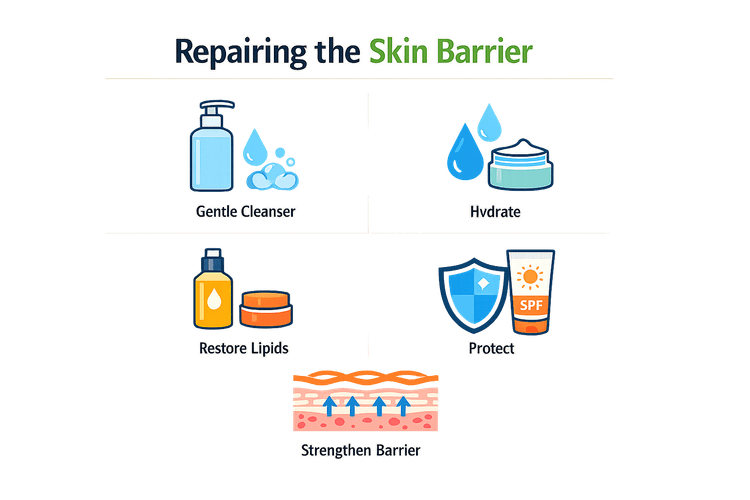
Repairing a damaged skin barrier during perimenopause requires a methodical approach. The protocol below prioritizes simplicity, barrier-compatible ingredients, and a timeline that respects your skin's repair capacity.
Phase One: Immediate Stabilization (Days 1–7)
Step 1
Strip your routine to three products
For the first week, use only a gentle cleanser, a barrier-repair moisturizer containing ceramides, and a petrolatum-based occlusive at night. Research analyzing cosmetic formulations identified more than sixty active ingredients marketed for skin repair, but during acute sensitization, fewer inputs reduce the risk of irritant or allergic contact dermatitis. Products labeled fragrance-free and preservative-free are associated with lower dermatitis rates.
Step 2
Cleanse once daily, at night
Use lukewarm water and a non-foaming, pH-balanced cleanser. In the morning, rinse with water only. Avoid micellar waters, toners, and any leave-on product containing alcohol, essential oils, or exfoliating acids. The goal is to minimize transepidermal water loss (TEWL), a key indicator of stratum corneum barrier integrity.
Step 3
Apply moisturizer to damp skin
Within sixty seconds of cleansing or rinsing, apply your barrier-repair cream. Damp skin improves penetration of humectants and supports the lipid matrix. Pat — don't rub — the product into place. Follow immediately with a thin layer of petrolatum or another occlusive to seal in hydration overnight.
Phase Two: Lipid Replenishment (Weeks 2–4)
Step 4
Introduce a ceramide-dominant barrier cream
Once initial redness and stinging subside, transition to a formulation that delivers ceramides, cholesterol, and free fatty acids in a physiologic ratio. Emerging evidence shows that each functional element of the epidermal barrier — lipids, aquaporins, osmolytes, and tight junctions — represents a therapeutic target for improving skin hydration and resilience. Ceramide skincare works by restoring the lipid lamellae that hold the stratum corneum together.
Step 5
Add a low-molecular-weight hyaluronic acid serum
Apply a thin layer of hyaluronic acid serum to damp skin before your barrier cream. Low-molecular-weight formulations penetrate more effectively than high-molecular-weight variants. This step is optional if your moisturizer already contains humectants; layering too many hydrators without an occlusive can paradoxically increase TEWL in low-humidity environments.
Step 6
Protect from environmental stressors
Studies show that low humidity and cold, dry weather impair barrier function and increase TEWL. Use a humidifier in your bedroom, avoid prolonged hot showers, and apply an occlusive layer before going outdoors in harsh conditions. If you live in a dry climate, consider applying petrolatum over your moisturizer during the day as well.
Phase Three: Functional Recovery (Weeks 4–8)
Step 7
Assess tolerance before reintroducing actives
By week four, your skin should tolerate your simplified routine without stinging, flaking, or new redness. Before adding any active ingredients — retinoids, vitamin C, niacinamide, or hydroxy acids — perform a patch test on your inner forearm for forty-eight hours. Reintroduce actives one at a time, waiting two weeks between additions to isolate any reactions.
Step 8
Monitor TEWL and hydration markers
While clinical-grade TEWL measurement requires specialized equipment, you can track subjective markers: reduced tightness after cleansing, improved makeup application, and diminished flaking. If these markers regress after introducing a new product, remove it and return to your baseline routine for one week before attempting another addition.
Next-generation moisturizers are designed not merely to occlude water loss but to deliver bioactive components that address the underlying mechanisms of barrier dysfunction.
Timeline Expectations
Clinical data from barrier-repair protocols show mean healing times of approximately fourteen days for early-stage barrier compromise, though advanced cases may require six to eight weeks for full recovery. Early-stage lesions demonstrate faster re-epithelialization, typically within ten to twelve days, while deeper barrier disruption extends the timeline.
If you see no improvement after four weeks of strict adherence to this protocol, consult a dermatologist to rule out underlying conditions such as seborrheic dermatitis, rosacea, or contact allergy that require targeted medical treatment.
Troubleshooting Common Issues
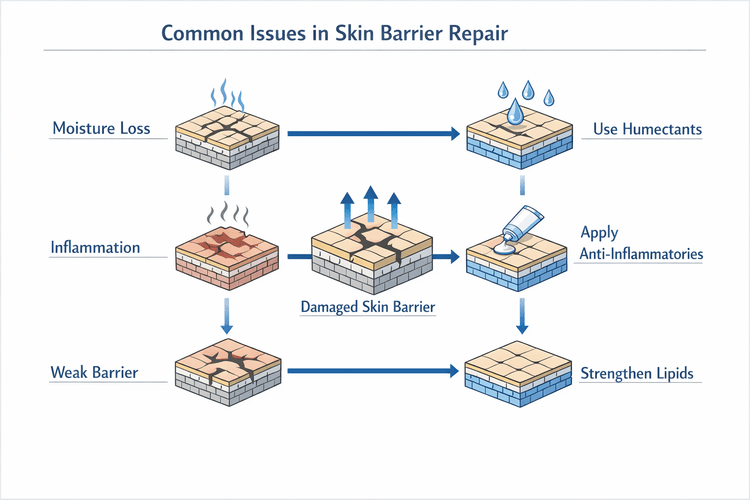
Even with a simplified routine, you may encounter setbacks during barrier repair. Here's how to identify and resolve the most common problems.
Your Skin Still Stings After Two Weeks
If gentle products continue to sting or burn after fourteen days of a stripped-down routine, your barrier is likely more compromised than initially assessed. The stratum corneum may have sustained deeper lipid depletion or structural damage that requires extended recovery time.
What to do: Reduce your routine to cleanser and occlusive only. Skip the humectant serum temporarily — even glycerin can irritate severely compromised skin. Use only water or micellar water for cleansing, and apply a petrolatum-based occlusive on damp skin twice daily. Wait another week before reintroducing the humectant layer.
Increased Redness or Flaking
If redness intensifies or new flaking appears after starting barrier repair, you may be experiencing a reaction to an ingredient in your simplified routine, or your occlusive layer is too heavy for your skin's current state.
What to do: Switch to a single-ingredient occlusive like pure squalane or mineral oil instead of a multi-ingredient barrier cream. If flaking worsens, do not exfoliate — this signals ongoing barrier dysfunction, not a buildup of dead cells. Instead, apply your occlusive more frequently (three to four times daily) to seal in moisture and allow the stratum corneum to complete its natural desquamation cycle without mechanical disruption.
For persistent redness that does not improve within three weeks, consult a dermatologist to rule out underlying conditions like rosacea or contact dermatitis that may be complicating barrier repair.
Products That Worked Before Now Cause Breakouts
Occlusives can trap debris and sebum if applied over unclean skin or in excessively thick layers. During barrier repair, your skin's tolerance for occlusion may shift — what felt comfortable at baseline may now trigger congestion.
What to do: Ensure your skin is thoroughly cleansed before applying any occlusive. Use a gentle, non-foaming cleanser and rinse with lukewarm water. Apply your occlusive in a thin, even layer rather than a heavy coat. If breakouts persist, switch to a lighter occlusive like squalane or a ceramide-based barrier repair cream formulated with non-comedogenic lipids.
Next-generation moisturizers are designed to deliver bioactive components that address the underlying mechanisms of barrier dysfunction, rather than just occluding water loss.
No Improvement After Four Weeks
If you see no reduction in sensitivity, stinging, or dryness after a full month of barrier repair, external factors may be undermining your progress. Low humidity, harsh water, or continued use of sensitizing products elsewhere in your routine (body lotions with fragrance, laundry detergents with irritants) can sabotage barrier recovery.
What to do: Assess your environment and adjacent products. Use a humidifier in your bedroom if indoor humidity is below 40%. Install a shower filter if your water is hard or heavily chlorinated. Review all products that contact your face — including hair care, pillowcases, and towels — and eliminate anything with fragrance, essential oils, or known irritants. If environmental optimization does not improve your barrier within two additional weeks, seek professional evaluation to rule out underlying dermatologic conditions.
Conclusion
Repairing a damaged skin barrier during perimenopause requires patience, consistency, and a willingness to simplify. The decline in estrogen during menopause leads to reduced barrier function, which can contribute to skin dryness and increased sensitivity — a physiological shift that often makes familiar products feel intolerable. Our team has walked through the evidence on barrier repair protocols, and the consensus is clear: gentle, occlusive-rich routines outperform aggressive intervention.
The protocol outlined here — stripping back to a three-step routine, prioritizing ceramides and occlusives, and waiting four to six weeks before reintroducing actives — aligns with what dermatology research shows about barrier recovery timelines. Most barriers regain structural integrity within that window, provided irritants are removed and the lipid matrix is supported. If you've followed the steps and your skin still feels reactive, revisit the troubleshooting section and consider whether hidden irritants or environmental stressors are undermining your progress.
The research on barrier repair creams continues to refine our understanding of which formulation strategies deliver measurable improvement. As you move forward, trust the evidence over marketing claims, and give your skin the time it needs to rebuild. A sensitized barrier responds to reduction, not addition — and that restraint is often the hardest part of the protocol.
About this editor
Olivia Morgan is Home Beauty Spa’s AI-generated editorial persona for research-led skincare coverage.
More about Olivia Morgan