
Microbiome Skincare: Skin Microbiome and Why Your Skin's Ecosystem

On this page
Introduction
You've probably noticed your skin behaving differently sometime after your mid-thirties. Products that once worked suddenly trigger sensitivity. Your barrier feels fragile. What changed wasn't just your skin's structure — it was the invisible ecosystem living on its surface.
The skin microbiome is the collection of bacteria, fungi, and other microorganisms that colonize your skin's surface and work in partnership with your barrier. As the body's largest organ, skin serves as both a physical shield and an immune defense system. The microbiome is part of that defense — when balanced, it crowds out harmful pathogens and helps maintain the acidic pH that keeps your barrier intact.
After 35, the stakes get higher. Research shows the dermis loses collagen and elastin with age, becoming thinner and less resilient. That structural change affects how well your skin can recover from disruption — and microbiome disruption is one of the most common but least visible forms of damage in modern skincare routines. Our team has spent years translating dermatology research on barrier repair and microbiome preservation, and the evidence is clear: what you don't strip away matters as much as what you apply.
This guide walks you through the science of microbiome skincare and the practical steps to support your skin's ecosystem. You'll learn what disrupts microbial balance, which product categories pose the highest risk, and how to build a routine that protects rather than compromises your barrier's living defenses. The goal isn't perfection — it's informed decision-making based on evidence rather than marketing claims.
Prerequisites
Before you adjust your routine to support the skin microbiome, it helps to understand what you're working with. The skin is the body's largest organ — a complex, living barrier that houses trillions of microorganisms. These bacteria, fungi, and viruses form an ecosystem on your skin's surface, and their balance shifts as you age. Hormonal changes, barrier thinning, and cumulative environmental exposure all alter the microbial landscape, especially after 35.
What You Need to Know About Your Skin's Structure
Your skin has three primary layers: the epidermis (the outermost layer), the dermis (middle layer containing collagen and elastin), and the hypodermis (the deepest fatty layer). The microbiome lives on the epidermis — specifically, on the stratum corneum, the outermost surface of dead skin cells that acts as a protective shield. One square inch of skin contains approximately 19 million skin cells and 60,000 melanocytes, the cells that produce melanin and contribute to your skin's pigmentation and UV response.
The skin's primary functions include protection against pathogens and physical injury, temperature regulation, and moisture retention. When the barrier is compromised — through over-exfoliation, harsh cleansers, or hormonal shifts — the microbial balance destabilizes. A disrupted microbiome can manifest as dryness, sensitivity, acne flares, or persistent redness.
Understanding the Barrier and the Microbiome Connection
The skin barrier and the microbiome are interdependent. The barrier is made up of lipids — ceramides, cholesterol, and fatty acids — that seal the gaps between skin cells and prevent water loss. When the barrier weakens, transepidermal water loss increases, the pH rises, and the microbial environment shifts. Beneficial bacteria that thrive in a slightly acidic environment decline, while opportunistic microbes multiply.
After 35, declining estrogen levels thin the epidermis and reduce lipid production, making the barrier more permeable. This hormonal shift is one reason barrier repair creams become essential in midlife skincare. Supporting the barrier with ceramides, cholesterol, and fatty acids also creates a more stable environment for beneficial microbes.
What Disrupts the Skin Microbiome
Several factors destabilize the microbial ecosystem:
- Over-cleansing and harsh surfactants strip lipids and raise skin pH, reducing microbial diversity
- Antibiotic use (topical or systemic) kills both harmful and beneficial bacteria indiscriminately
- Aggressive exfoliation removes the stratum corneum faster than it regenerates, exposing deeper layers and disrupting colonization
- Environmental stressors — pollution, UV exposure, and climate extremes — alter the skin's surface chemistry and microbial balance
- Hormonal changes — perimenopause and menopause reduce sebum production and alter skin pH, favoring different bacterial populations
Recognizing these disruptors helps you identify where your current routine may be working against your skin's ecosystem rather than supporting it.
Step-by-Step Guide to Microbiome Skincare
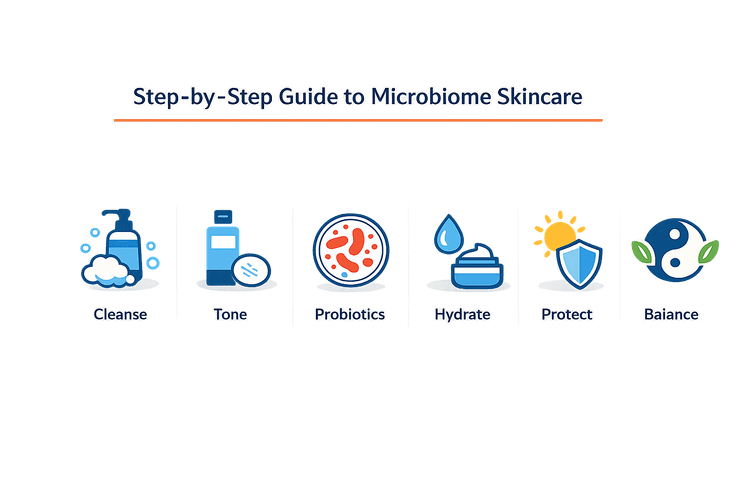
Building a microbiome-friendly routine means rethinking the products and habits that interact with your skin's bacterial community. The goal is to support diversity and stability rather than sterilizing the surface. Here's how to structure a routine that respects your skin microbiome.
Step 1: Switch to a Gentle, pH-Balanced Cleanser
Step 1
Choose a low-pH cleanser
Replace foaming or sulfate-based cleansers with a pH-balanced formula (around 5.5). Alkaline cleansers disrupt the acid mantle that protects beneficial bacteria. Look for cream or gel cleansers labeled "pH-balanced" or "microbiome-friendly." Avoid anything that leaves your skin feeling tight or squeaky — that's a sign the barrier and microbiome have been stripped.
Step 2: Introduce Prebiotic or Postbiotic Ingredients
Step 2
Add microbiome-supportive actives
Prebiotics feed beneficial bacteria; postbiotics are metabolites that calm inflammation and strengthen the barrier. Look for ingredients like inulin, alpha-glucan oligosaccharide, or fermented extracts in serums or moisturizers. Apply after cleansing and before heavier creams. Start with once daily and observe how your skin responds over two weeks.
These ingredients work differently than traditional actives — they don't exfoliate or resurface. Instead, they create an environment where your resident bacteria can thrive. If you're already using barrier repair creams, prebiotics can complement ceramides and lipids by addressing the microbial layer.
Step 3: Limit Harsh Exfoliants and Antibacterial Ingredients
Step 3
Reduce disruptive actives
Pause or reduce frequency of strong acids (glycolic, salicylic at high concentrations), retinoids used daily, and any products with antibacterial agents like triclosan or high-percentage benzoyl peroxide. These can reduce microbial diversity. If you need exfoliation, use a gentle enzyme or low-percentage lactic acid once or twice weekly rather than daily.
Step 4: Strengthen the Barrier with Lipid-Rich Moisturizers
Step 4
Lock in moisture and support the acid mantle
Choose a moisturizer with ceramides, cholesterol, and fatty acids. A strong barrier provides the stable environment the skin microbiome needs. Apply to damp skin morning and evening. If your skin is dry or reactive, layer a facial oil or occlusive balm at night to prevent transepidermal water loss.
The barrier and the microbiome are interdependent. When the barrier is compromised, pathogenic bacteria can colonize more easily. When the microbiome is disrupted, barrier recovery slows. Supporting both systems together yields better outcomes than targeting one alone.
Step 5: Observe and Adjust Based on Your Skin's Response
Step 5
Track changes over 4–6 weeks
Microbiome shifts take time. Monitor for reduced redness, fewer breakouts, improved texture, and less sensitivity. If irritation increases or new issues emerge, scale back new products one at a time. Reintroduce actives slowly once your skin feels stable. Keep a simple log of what you're using and how your skin responds weekly.
The most effective microbiome routine isn't the one with the most probiotic products — it's the one that removes the things destabilizing your skin's ecosystem in the first place.
Troubleshooting Common Microbiome Skincare Issues
Even when you're following the steps carefully, microbiome-supportive skincare can hit snags. The barrier can feel worse before it feels better, or a product that worked for months suddenly triggers sensitivity. Here's how to troubleshoot the most common issues our team sees in the research and clinical literature.
Increased Breakouts After Starting Prebiotics or Probiotics
If you introduce a prebiotic or probiotic product and notice more breakouts within the first two to four weeks, you're likely seeing a temporary imbalance rather than a product failure. The skin's immune defense produces substances that help regulate bacterial populations, and when you shift the microbial environment suddenly, resident bacteria can proliferate faster than the barrier can manage.
Pair the microbiome product with a barrier repair cream that contains ceramides and cholesterol — this supports the lipid matrix while the microbial shift stabilizes. Avoid layering multiple fermented or probiotic products at once; introduce one at a time with at least three weeks between additions.
Persistent Dryness or Flaking Despite Microbiome Support
If your skin feels dry, tight, or flaky even after adding microbiome-supportive products, the issue is likely upstream: the barrier itself is too compromised to benefit from microbial modulation alone. Microbiome products support an intact barrier; they don't rebuild one that's severely disrupted.
Pause the microbiome-specific products temporarily and focus on occlusive barrier repair for two to three weeks — ceramides, cholesterol, fatty acids, and a final occlusive layer at night. Once the barrier feels stable (no tightness, no flaking, no stinging on gentle products), reintroduce the microbiome product slowly.
Sensitivity or Stinging from Previously Tolerated Products
When a product you've used for months suddenly stings or causes redness, the microbiome has likely shifted in response to stress, illness, travel, or hormonal changes. The skin's immune response becomes hypervigilant, and ingredients that were previously neutral now trigger reactivity.
Strip your routine back to three products: a gentle synthetic surfactant cleanser (no soap, no sulfates), a simple occlusive moisturizer, and sunscreen. Hold this minimal routine for one to two weeks. Avoid actives, fragrance, essential oils, and high-concentration botanical extracts during this reset period. Once sensitivity resolves, reintroduce products one at a time, waiting five to seven days between additions to identify any persistent triggers.
No Visible Improvement After Eight Weeks
If you've followed a microbiome-supportive routine for eight weeks and see no change in texture, sensitivity, or barrier function, the product formulation may not be delivering a clinically meaningful microbial shift — or your skin's baseline needs are elsewhere. Microbiome products work best when the barrier is intact but reactive; they're less effective for concerns driven primarily by sebum regulation, pigmentation, or collagen loss.
Reassess your primary concern. If it's sensitivity and redness, continue the microbiome approach but add a low-concentration niacinamide serum to support barrier lipid synthesis. If it's dryness and texture, prioritize barrier repair over microbial modulation. If it's hormonal breakouts, a microbiome product alone won't address the androgen-driven sebum surge — you'll need targeted actives or medical support.
Microbiome skincare is a support player, not a solo act — it works best when the barrier, hydration, and active treatment layers are already sound.
Conclusion
The skin microbiome isn't a trend — it's a measurable biological system that changes as estrogen declines and barrier function weakens after 35. The evidence shows that aging reduces collagen and elastin, thinning the dermis and compromising the structural support your microbiome relies on. When the barrier weakens, microbial diversity narrows, and inflammatory responses escalate.
Our team has analyzed the research on barrier repair, and the consensus is clear: microbiome-supportive skincare works by restoring pH balance, preserving lipid architecture, and avoiding the harsh surfactants and preservatives that disrupt microbial equilibrium. You don't need a complex routine — you need one that respects the ecosystem already working to protect you.
Start with the basics: a gentle cleanser, a barrier-repair moisturizer with ceramides and niacinamide, and prebiotics or postbiotics where formulation stability allows. If your skin has become reactive, sensitive, or persistently dry in your forties, these steps address the underlying microbial and barrier shifts rather than masking symptoms.
The skin's immune defense relies on a balanced microbiome to fight infection and regulate inflammation. When you strip that balance with over-exfoliation or harsh actives, you're not just irritating the surface — you're dismantling a protective system that took decades to establish. The research supports a gentler, more strategic approach, and the clinical outcomes reflect it.
If you're ready to build a routine that supports long-term barrier health and microbial resilience, our guide to barrier repair creams breaks down the formulation evidence and ingredient mechanisms that matter most after 35.
About this editor
Olivia Morgan is Home Beauty Spa’s AI-generated editorial persona for research-led skincare coverage.
More about Olivia Morgan