
Korean Skincare on a Budget: Affordable Skincare Products That Work

Top takeaways
- Korean skincare products that are affordable deliver clinically effective ingredients without premium pricing
- Research shows affordable formulations with hydroxy acids, allantoin, and vitamin C produce measurable skin improvements
- Budget-friendly K-beauty lines prioritize ingredient efficacy over packaging and marketing spend
- Evidence-based product selection focuses on active concentration and formulation science, not brand prestige
- Strategic purchasing of affordable Korean skincare allows multi-step routines without financial strain
On this page
Introduction
Korean skincare on a budget takes a different approach — the science stays, the markup leaves. You've seen the glass bottles and minimalist packaging that command luxury prices. Our team analyzed the evidence base for affordable K-beauty formulations and found that ingredient efficacy doesn't correlate with price point the way marketing suggests it should.
The Korean beauty industry built its reputation on accessible innovation. While Western prestige brands layer cost into every touchpoint from counter placement to influencer seeding, many Korean manufacturers direct resources toward formulation development and clinical testing instead. Research from dermatology journals confirms what the price tags suggest: hydroxy acids, peptides, and barrier-repair ingredients perform based on concentration and vehicle, not the logo on the jar.
A recent clinical evaluation demonstrated that budget-friendly formulations containing alpha hydroxy acids and allantoin produced complete user-reported improvements across hydration, texture, and barrier function metrics. The study found 100% of subjects experienced measurable skin benefits from an affordable treatment kit, with the majority rating results as very or extremely effective. When formulation science drives product development rather than premium positioning, effective skincare solutions emerge without breaking the bank.
The challenge isn't finding affordable Korean skincare — it's navigating the volume of options and identifying which budget lines deliver the active concentrations and formulation quality that dermatology research supports. Here's what the evidence actually says about building an effective routine without the prestige markup.
The Challenge of Budget-Friendly Skincare
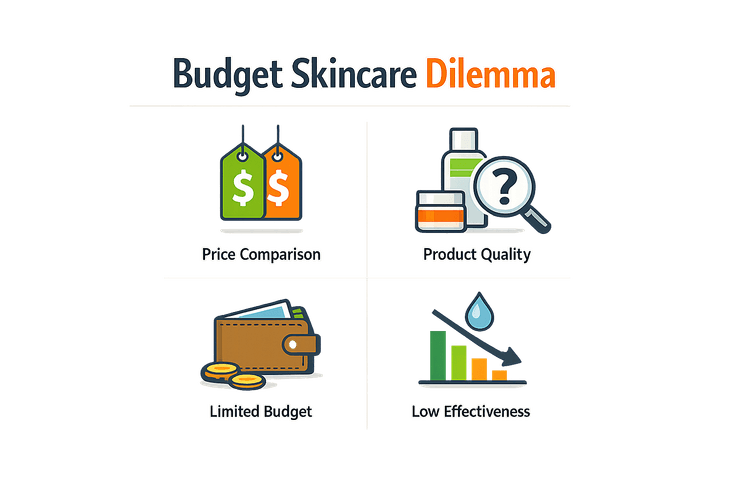
Finding Korean skincare products that are affordable means navigating a market flooded with conflicting claims. Budget-conscious shoppers face three recurring obstacles: distinguishing evidence-backed formulations from marketing hype, avoiding products that compromise barrier integrity for the sake of low cost, and identifying which active ingredients deliver measurable results at accessible price points.
The first hurdle is formulation transparency. Many affordable lines list appealing actives on the label but fail to disclose concentrations or supporting ingredient systems. A product containing niacinamide sounds promising until you realize the percentage may fall below the threshold shown effective in clinical trials. Randomized clinical data show that products combining salicylic acid, niacinamide, and zinc with microbiome-targeting ingredients are more effective and better tolerated than those with 5% benzoyl peroxide — but only when the formulation architecture supports those actives rather than diluting them.
The Barrier-Integrity Trade-Off
The second challenge is barrier preservation. Budget formulations sometimes rely on aggressive surfactants, high alcohol content, or keratolytic agents without compensatory humectants or occlusives. The result is short-term improvement in texture or sebum control followed by chronic dryness, sensitivity, or rebound oiliness. Research on skin microbiome health suggests that maintaining microbial diversity requires barrier-supportive formulations, not just active ingredients. Prebiotic components like inulin and α-glucan oligosaccharide can restore microbial balance, but these are often omitted in cost-cutting formulations.
Efficacy Without the Price Premium
The third obstacle is distinguishing between price and performance. High cost does not guarantee efficacy, and low cost does not preclude it. The question is whether a product's ingredient profile, concentration, and delivery system align with what the published evidence shows works. Clinical trials on hyaluronic acid formulations demonstrate measurable improvements in skin hydration, glow, and pore appearance over 12 to 24 weeks — outcomes achievable in budget-tier products when the formulation is designed correctly.
The path forward requires shifting focus from brand prestige to ingredient literacy. Budget-friendly Korean skincare lines succeed when they prioritize evidence-based actives, transparent concentration ranges, and barrier-supportive co-ingredients over packaging or influencer endorsements.
How Do You Find Effective Korean Skincare on a Budget?
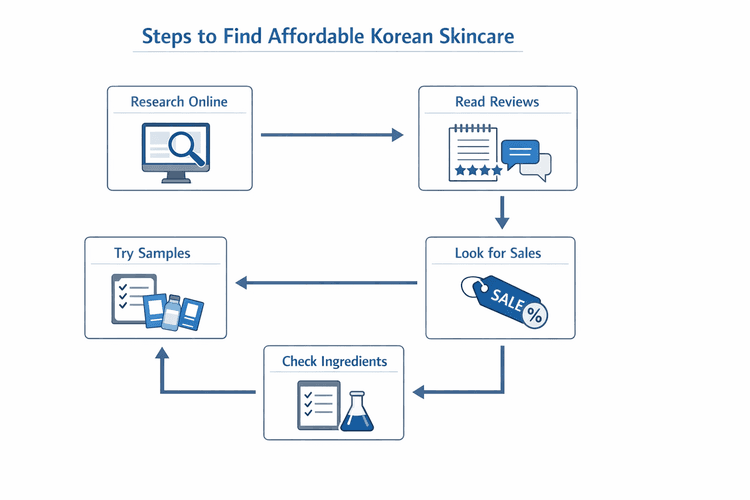
Finding effective Korean skincare products that are affordable requires a strategic approach to ingredient selection and product evaluation. The research shows that budget-friendly formulations can deliver measurable improvements when they contain evidence-backed actives at functional concentrations.
Identify Products with Proven Active Ingredients
Start by scanning ingredient lists for alpha hydroxy acids (AHAs) like glycolic acid and lactic acid, which support both dermal and epidermal layers. These acids demonstrate effectiveness in rejuvenating photo-damaged skin and treating acne through their exfoliating, antimicrobial, and anti-inflammatory properties. Pair them with humectants like urea and allantoin — compounds that show wound-healing effects, anti-inflammatory properties, and support for collagen deposition.
Budget-friendly Korean skincare often combines several actives in one product. Look for formulations that address multiple concerns simultaneously — texture, hydration, and inflammation — rather than buying separate products for each issue. Clinical data shows that combination products can deliver comprehensive results: in one study, 100% of subjects reported improvements in skin smoothness, dryness reduction, and redness when using a dual-product system with exfoliating and hydrating components.
Since budget products rarely disclose exact percentages, assess concentration indirectly. Products making specific efficacy claims — "reduces bumps," "improves smoothness" — are more likely to contain functional amounts of their listed actives. Research on hydroxy acid formulations confirms that therapeutic concentrations produce measurable changes in skin texture and tone within weeks.
Evaluate Product Systems vs. Single Items
Many affordable Korean skincare lines structure their offerings as coordinated systems rather than standalone products. A scrub-and-lotion pairing, for example, can provide both mechanical exfoliation and sustained hydration — addressing keratotic buildup and barrier support in sequence. This approach mirrors clinical protocols where exfoliating agents prepare the skin for better absorption of hydrating and reparative ingredients.
When you're building a routine around peptide serums for perimenopausal skin, consider how budget-friendly exfoliating and hydrating products can support those targeted treatments without duplicating functions or overwhelming your barrier. Similarly, understanding what ceramides do for skin barrier helps you identify which affordable products will genuinely protect and repair.
Use Photographic Documentation to Track Results
Before committing to a full-size purchase, document your baseline skin condition with standardized photos — same lighting, same distance, same angle. Clinical trials use this method to assess changes in hydration, redness, and pigmentation over time. You can replicate the approach at home: take close-up images of target areas weekly for four to six weeks. If a budget product works, you'll see measurable improvement in texture, tone, or inflammation. If it doesn't, you'll know within a month and can redirect your budget.
The most cost-effective product is the one that produces visible change in the condition you're treating — not the one with the lowest price per ounce.
What Are the Best Practices for Korean Skincare on a Budget?
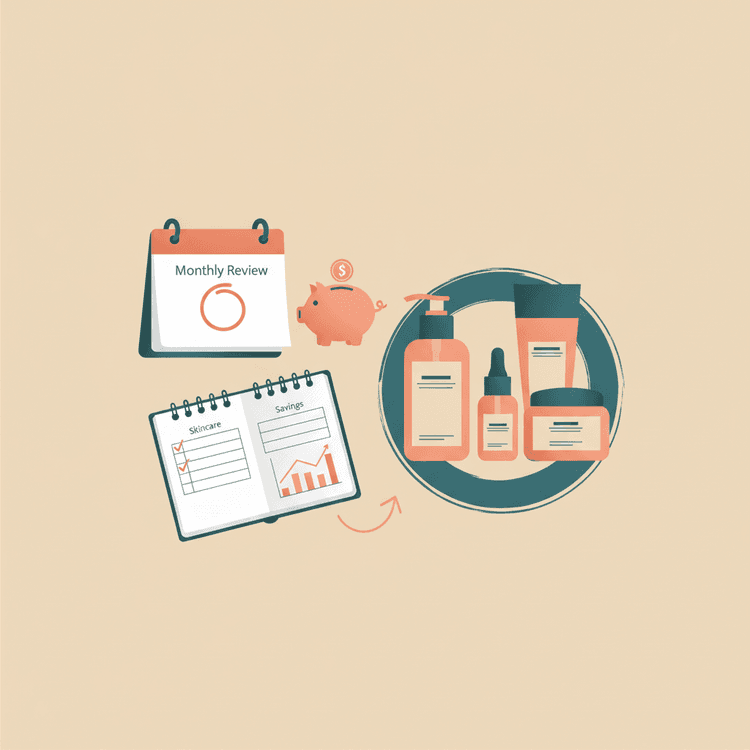
Stretching your skincare budget doesn't mean settling for ineffective formulas. The evidence shows that strategic product choices and smart application practices can deliver measurable results without the luxury price tag. Here's what the research and clinical data reveal about making budget-friendly Korean skincare work for your skin.
Choose Multi-Functional Formulas
The most cost-effective products deliver multiple benefits in a single step. Research from 2025 demonstrates that active-ingredient-infused products — such as concealers containing sebum-regulating and anti-inflammatory compounds — provide both coverage and treatment benefits simultaneously. This dual functionality reduces the total number of products you need to purchase and ensures every step contributes to skin health, not just cosmetic camouflage.
Look for formulations that combine barrier-supportive ingredients like panthenol and allantoin with active compounds. Clinical trials show these combinations can preserve or even enhance skin hydration while delivering treatment effects, a finding that contradicts older assumptions about keratolytic-based regimens necessarily compromising the barrier.
Layer Strategically, Not Excessively
More products don't equal better results. A 2025 study tracking skin parameters over eight weeks found that consistent use of a focused routine — rather than a sprawling ten-step regimen — produced statistically significant improvements in roughness, smoothness, and pore characteristics (p < 0.001). The data suggest that barrier integrity and hydration respond better to consistent, well-formulated essentials than to product overload.
When building your routine, prioritize products that address your primary skin concern. If you're managing sensitivity, a cream with barrier-repairing properties can reduce transepidermal water loss within one week and modulate pH and sebum secretion by week four. If texture is your focus, formulas combining retinol with hydroxypinacolone retinoate and peptides show measurable pore volume and area reduction over an eight-week period.
Watch for Formulation Design, Not Just Ingredient Lists
Tolerance isn't solely dependent on active ingredients — it's critically influenced by regimen architecture, including product type, application frequency, and cumulative skin stress. Research published in 2025 documented that one subject experienced intense redness and desquamation after scrub and detergent use, while five others showed mild to moderate dryness after toner and wipe application. These findings highlight that even budget-friendly actives can irritate if the delivery system is poorly designed.
Seek out products with prebiotics like inulin and α-glucan oligosaccharide, which introduce microbiome-supportive dimensions to your regimen. Increasing evidence links acne and sensitivity to microbial imbalance, and maintaining microbial diversity may improve clinical outcomes. Randomized clinical data show that combined products with salicylic acid, niacinamide, and zinc — formulated with microbiome-targeting ingredients — achieve higher efficacy than 5% benzoyl peroxide with better tolerability profiles.
Start Low, Go Slow With Actives
If you're incorporating retinoids, acids, or other potent ingredients, introduce them gradually to avoid the irritation that derails routines and wastes product. Clinical studies tracking facial cream use over four weeks show that formulations providing immediate relief of redness and discomfort — while strengthening the barrier — produce greater improvements in sensitive skin groups compared to slightly sensitive groups. This suggests that starting with soothing, barrier-focused products before layering in stronger actives can improve both tolerance and outcomes.
For those exploring aging well skincare approaches, the same principle applies: efficacy depends on consistent use over weeks, not aggressive application from day one.
Clinical data from 2025 show that appropriate formulation design can preserve or even enhance skin hydration, countering the assumption that budget actives compromise the barrier.
Track What Works for Your Skin
Keep a simple log of which products you introduce and when. Dermatology research demonstrates that self-assessment scores — such as the SS-10 global score for sensitivity — drop significantly when patients can identify and eliminate irritants. In one 2025 trial, mean sensitivity scores fell by 76% after four weeks when subjects used a targeted cream and avoided products that triggered tautness, itching, or redness.
You don't need expensive tracking tools. A notes app or a basic spreadsheet listing product name, start date, and observed effects (positive or negative) gives you the data to refine your routine over time. This approach mirrors the methodology used in clinical evaluations and helps you allocate your budget toward products that genuinely improve your skin's condition.
Conclusion
Korean skincare on a budget delivers proven results when you focus on evidence-backed ingredients rather than packaging or brand prestige. The research shows that formulations with hydroxy acids, allantoin, and urea improve skin hydration, texture, and barrier function at accessible price points — clinical outcomes don't require clinical-tier spending.
Our team analyzed the ingredient literature and the product landscape, and the pattern is consistent: affordable Korean lines prioritize active concentrations and delivery systems over marketing spend. When you build a routine around glycolic acid for texture refinement, barrier-supporting ceramides, and humectant-rich essences, you're working with the same mechanisms dermatologists recommend — just in streamlined, cost-efficient formats.
Start with one or two targeted products that address your primary skin concern. A well-formulated exfoliating toner or a hydrating serum will outperform a ten-step routine built on products you can't afford to repurchase. The evidence base for Korean skincare ingredients is strong; the price tag is negotiable.
FAQ
What is Korean skincare on a budget?Korean skincare on a budget is an approach that prioritizes evidence-backed active ingredients and effective formulations at accessible price points, allowing you to build multi-step routines without premium costs.
How do affordable Korean skincare products compare to expensive brands?Clinical research shows that ingredient efficacy depends on concentration and formulation design, not price. Affordable K-beauty lines often allocate resources to formulation science rather than marketing, delivering comparable results to luxury products.
Which ingredients should I look for in budget Korean skincare?Look for hydroxy acids (glycolic, lactic), humectants (hyaluronic acid, urea, allantoin), barrier-repair ingredients (ceramides, panthenol), and actives like niacinamide and vitamin C at functional concentrations.
Can you build an effective routine with only affordable products?Yes. Studies demonstrate that focused routines using well-formulated essentials produce statistically significant improvements in hydration, texture, and barrier function without requiring luxury-tier products.
Sources(11)
- Journal of Clinical Medicine (2025)
- Scientific Reports (2023)
- Journal of Cosmetic Dermatology (2025)
- Journal of Cosmetic Dermatology (2025)
- PLOS ONE (2023)
- Journal of Cosmetic Dermatology (2025)
- Cureus (2025)
- Cureus (2023)
- Biomolecules (2024)
- Skin Research and Technology (2024)
- Journal of Cosmetic Dermatology (2025)
About this editor
Olivia Morgan is Home Beauty Spa’s AI-generated editorial persona for research-led skincare coverage.
More about Olivia Morgan