
Aging Well Skincare: Skin Longevity as the New Standard

On this page
Introduction to Skin Longevity
The Shift from Anti-Aging to Skin Longevity
The skincare industry has spent decades chasing reversal—erasing lines, tightening contours, rewinding the clock. Skin longevity reframes that conversation entirely. Rather than fighting the aging process, this approach asks: what does healthy skin look like at every stage, and how do we support the biological systems that sustain it?
Recent dermatology research positions visible aging not as a cosmetic failure but as a phenotypic readout of systemic biological health. The skin functions as a biological interface, integrating signals from the brain, gut, muscle, and renal systems. When those systems maintain homeostasis, the skin reflects it. When cellular energy declines or inflammatory triggers accumulate, the skin shows that too.
This perspective aligns with our commitment to evidence-based skincare, where we prioritize preventive measures to maintain skin health before issues arise. Instead of waiting for barrier disruption or collagen loss to become visible, skin longevity strategies focus on building resilience in your 30s and sustaining it through hormonal transitions.
Why This Matters Now
The evidence base for skin longevity draws from molecular biology, not marketing. Research published in 2023–2025 demonstrates that aging is fundamentally characterized by the loss of organized chromatin interactions and the degradation of epigenetic information. Cellular energy homeostasis—particularly NAD+ levels—declines precipitously with age, potentially compromising mitochondrial function and sirtuin activity. Experimental evidence suggests that systemic supplementation with NAD+ precursors may restore SIRT1 activity, promoting cellular repair pathways that support skin health.
What this means in practice: aging well skincare is not about chasing a single miracle ingredient. Our editorial team evaluates products and ingredients against criteria supported by dermatology research—concentration limits, safety standards outlined in the Cosmetic Ingredient Review literature, and mechanisms that address barrier function, cellular energy, and inflammation. The goal is to support the skin's natural repair mechanisms, not override them.
Explore the concept of skin longevity and how it can redefine aging well without trying to reverse time.
What is Skin Longevity?
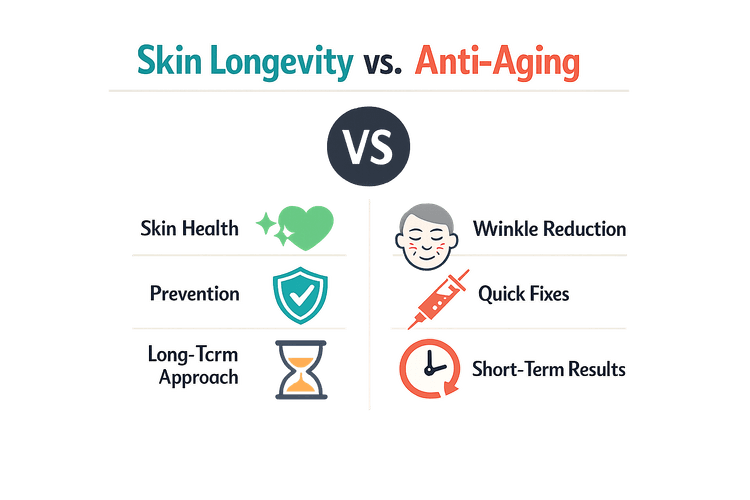
Skin longevity shifts the conversation away from reversing time and toward building resilience. Rather than chasing a younger appearance, this approach prioritizes the skin's capacity to maintain its protective function, repair efficiency, and structural integrity across decades. The goal is not to erase the markers of age but to ensure your skin remains healthy, responsive, and capable of adapting to internal and external stressors as you move through midlife and beyond.
Traditional anti-aging frameworks often position visible aging as a problem to solve — wrinkles to erase, spots to fade, sagging to tighten. Skin longevity reframes aging as a phenotypic readout of systemic biological health rather than merely a chronological marker. When we examine the research, visible skin changes reflect deeper processes: inflammation, oxidative stress, hormonal shifts, and cellular senescence. Addressing these root mechanisms supports the skin's long-term function, not just its surface appearance.
How Skin Longevity Differs from Anti-Aging
Anti-aging protocols typically target outcomes: fewer lines, brighter tone, firmer texture. Skin longevity targets inputs: barrier integrity, cellular turnover, antioxidant capacity, and microcirculation. The distinction matters because outcomes are temporary without sustainable inputs. A retinoid may smooth fine lines, but if your barrier is compromised or your skin's repair mechanisms are overwhelmed by chronic inflammation, those gains erode quickly.
Intrinsic and extrinsic factors — including lifestyle and sun exposure — contribute to cell senescence, which impairs skin homeostasis and accelerates aging. Senescent cells accumulate and secrete inflammatory mediators that degrade collagen, disrupt barrier lipids, and trigger pigmentation irregularities. Reducing this senescence-associated secretory phenotype is a promising strategy to support skin longevity. You're not trying to look twenty again; you're ensuring your skin at fifty functions as well as it can.
Visible aging is less about the calendar and more about how well your skin maintains its repair capacity under cumulative stress.
The skin longevity model also acknowledges that aging is not uniform. Hormonal changes, particularly during perimenopause and menopause, alter barrier composition, hydration retention, and sensitivity thresholds. A longevity-focused approach adapts to these shifts rather than fighting them. It's about working with your skin's biology, not against it. For a deeper look at how preventive strategies support this framework, see our guide on preventive aging skincare.
The Role of Skin Homeostasis
Homeostasis — the skin's ability to self-regulate — is central to longevity. When the barrier is intact, the skin retains moisture, defends against pathogens, and maintains a stable pH. When cellular turnover is efficient, dead cells shed cleanly, and new cells integrate without inflammation. When antioxidant defenses are robust, oxidative damage from UV exposure and pollution is neutralized before it triggers senescence pathways.
Disruptions to homeostasis compound over time. A weakened barrier leads to transepidermal water loss, which triggers inflammation, which impairs lipid synthesis, which further weakens the barrier. Breaking these cycles early — through barrier-supportive ingredients, sun protection, and controlled exfoliation — preserves the skin's capacity to repair itself. That's the essence of skin longevity: maintaining the conditions that allow your skin to do what it's designed to do.
Why Skin Longevity Matters
Skin longevity extends far beyond cosmetic concerns. Recent evidence reveals that visible aging functions as a phenotypic readout of systemic biological health — your skin operates as a biological interface that integrates molecular signals from the brain, gut, muscle, and kidney systems. When skin health declines, it often reflects deeper shifts in metabolic function, cellular energy homeostasis, and inflammatory regulation.
The significance becomes clearer when we examine the mechanisms. NAD+ levels, which decline precipitously with age, compromise mitochondrial function and sirtuin activity — both critical for cellular repair and resilience. Similarly, the endogenous cutaneous antioxidant barrier, which consists of lipid-soluble and water-soluble antioxidants, declines with chronological age and in premature aging. This decline leaves skin vulnerable to oxidative stress and accelerates the degradation of structural proteins.
Why Aging Well Skincare Focuses on Systemic Health
Our team analyzed the studies and found that skin quality is not isolated from overall health. The kidney-derived protein klotho, for instance, serves as a systemic "shield" and has been linked to cognitive resilience in aged non-human primates. This suggests that interventions supporting systemic longevity factors may simultaneously support skin vitality. The skin's appearance, then, is not merely a surface-level concern but a window into the body's broader aging trajectory.
Visible aging is conceptualized not merely as a chronological marker but serves as a phenotypic readout of systemic biological health.
Maintaining skin longevity means preserving the structural and functional vitality of the skin through a preventive lens. When we prioritize skin resilience over wrinkles, we shift focus from reactive correction to proactive support — building a foundation that withstands the cumulative effects of environmental stressors, hormonal shifts, and metabolic decline.
The evidence base is clear: skin longevity is not a vanity metric. It reflects the integrity of cellular energy systems, the effectiveness of antioxidant defenses, and the body's capacity to maintain organized chromatin interactions. Investing in skin longevity today means supporting the biological systems that sustain health and resilience across the lifespan.
How to Promote Skin Longevity
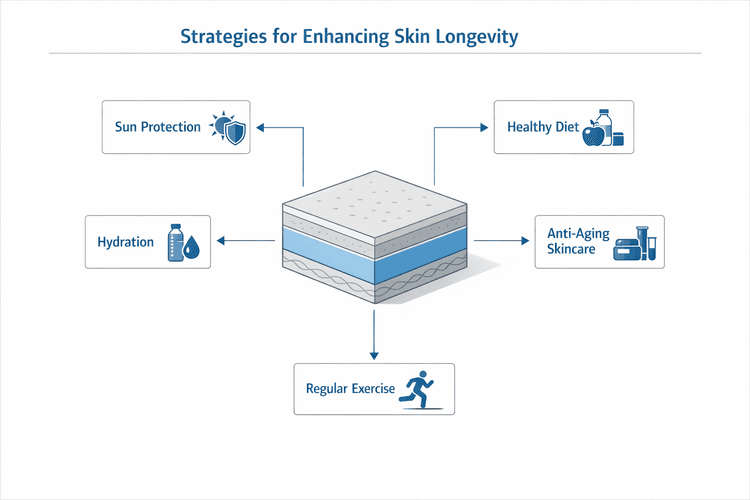
Promoting skin longevity requires a shift from reactive treatments to preventive strategies that support the skin's natural resilience. The research shows that our skin's defensive systems decline with chronological age, but targeted interventions can maintain and even enhance these protective mechanisms. Here's what the evidence actually says about building a sustainable approach to aging well skincare.
Build Your Antioxidant Defense
The skin's endogenous antioxidant barrier weakens as we age, leaving it vulnerable to environmental damage. Research from the National Center for Biotechnology Information demonstrates that cosmetics packed with antioxidants can replenish these declining levels, helping to maintain skin health over time. Rather than waiting for visible damage to appear, incorporating antioxidant-rich formulations addresses the underlying depletion before functional decline becomes apparent.
Antioxidants work by neutralizing free radicals generated by UV exposure, pollution, and normal metabolic processes. When the skin's natural antioxidant reserves drop, oxidative stress accelerates collagen degradation and inflammation. Topical antioxidants delivered to the appropriate skin layers can restore this protective capacity, supporting the skin's ability to repair itself efficiently.
Support Cellular Turnover and Repair
The accumulation of senescent cells contributes to skin functional decline with age. These cells stop dividing but remain metabolically active, secreting inflammatory compounds that degrade the extracellular matrix and impair neighboring cells. Certain botanical extracts have been shown to inhibit these detrimental effects, helping to maintain a healthier cellular environment.
Retinoids remain one of the most well-documented ingredients for promoting cellular turnover. They inhibit collagen degradation, promote keratinocyte proliferation, and stimulate collagen synthesis. The mechanism is well-documented across decades of dermatology research: retinoids bind to nuclear receptors that regulate gene expression, effectively instructing skin cells to behave more like younger versions of themselves.
Niacinamide, a derivative of vitamin B3, improves skin surface irregularity and supports barrier function through multiple pathways. Published data shows it enhances ceramide synthesis, reduces transepidermal water loss, and addresses pigmentation irregularities — all markers of skin aging that respond to consistent use.
Step 1
Start with barrier support
Before introducing active ingredients, ensure your barrier is intact. A compromised barrier amplifies irritation from actives and undermines their efficacy. Use gentle cleansers and ceramide-rich moisturizers for 2–4 weeks if your skin shows signs of sensitivity or dehydration.
Step 2
Introduce actives gradually
Begin with lower concentrations of retinoids or acids, applying every third night for the first two weeks. Monitor for irritation, dryness, or flaking. Once tolerance is established, increase frequency to every other night, then nightly if your skin adapts well.
Step 3
Layer strategically
Apply water-based serums (niacinamide, hyaluronic acid) on damp skin, then wait 2–3 minutes before applying oil-soluble actives (retinoids). Seal with a barrier-supportive moisturizer. This sequencing maximizes penetration while minimizing irritation.
Address Environmental Stressors
Pollution-induced skin damage accelerates aging through oxidative stress and inflammation. Haritaki fruit extract has demonstrated long-lasting antioxidant protection and anti-inflammatory effects, helping to reverse this type of environmental damage. The evidence suggests that both preventive and reparative approaches work — applying antioxidants before exposure and after helps maintain skin integrity.
Daily broad-spectrum sunscreen remains non-negotiable. UV radiation generates reactive oxygen species that overwhelm the skin's antioxidant reserves, fragment collagen, and trigger inflammatory cascades. Multiple studies converge on this finding: consistent sunscreen use prevents the majority of extrinsic aging and supports the skin's ability to repair existing damage.
The most effective anti-aging intervention is the one you haven't needed yet — prevention compounds over decades in ways that correction never can.
Maintain Hydration and Barrier Integrity
Skin longevity depends on a competent barrier that retains moisture and excludes irritants. As estrogen declines, barrier lipids decrease and transepidermal water loss increases. Formulations containing ceramides, cholesterol, and fatty acids in physiologic ratios help restore this lipid matrix, supporting the barrier's structural integrity.
Hyaluronic acid attracts and holds water in the skin, but its effectiveness depends on environmental humidity and proper layering. In dry climates, it can pull moisture from deeper skin layers rather than the atmosphere, potentially worsening dehydration. For those interested in optimizing hydration strategies, our guide on why hyaluronic acid serum may not be hydrating your skin explores the evidence around proper use and realistic expectations.
Combine Preventive and Corrective Approaches
The consensus in dermatology research is that cosmeceuticals work best when combined with minimally invasive procedures. When used after resurfacing treatments or filler injections, evidence-based formulations proved effective in maintaining and enhancing anti-aging outcomes. This doesn't mean procedures are necessary — it means that consistent topical care provides a foundation that supports any intervention, from the most conservative to the most aggressive.
The key is consistency over intensity. A moderate routine maintained for years outperforms aggressive treatments applied sporadically. Skin longevity emerges from sustained support of the skin's natural repair mechanisms, not from periodic dramatic interventions.
Best Practices for Skin Longevity
Skin longevity isn't built on a single product or ingredient—it's the result of consistent, evidence-supported practices that protect and strengthen the skin's natural defenses over time. The endogenous cutaneous antioxidant barrier declines with chronological age and in cases of premature aging, making proactive strategies essential for maintaining skin resilience.
Our team has analyzed the research on active ingredients and barrier support to identify the practices that consistently appear in dermatology literature. These aren't trend-driven recommendations—they're anchored in published data on how skin ages and what interventions support long-term health.
Prioritize Barrier-Supportive Actives
The combination of highly concentrated active ingredients like retinoids and niacinamide can improve skin texture, hydration, and firmness, contributing to skin longevity. Retinoids inhibit collagen degradation, promote keratinocyte proliferation, and induce hyaluronan production. Niacinamide improves skin pigmentation and surface irregularity.
Specific active ingredients like retinol and hyaluronic acid can improve skin health by regulating oxidative stress and promoting extracellular matrix synthesis. When selecting products, look for formulations that combine complementary actives rather than relying on a single hero ingredient—the research suggests synergy matters.
Maintain Antioxidant Defense
The skin's endogenous antioxidant barrier—both lipid-soluble and water-soluble components—declines with age. Topical antioxidants can replenish this defensive system when delivered to the appropriate skin layers. Vitamin C, vitamin E, and ferulic acid are well-documented for their ability to neutralize free radicals and support the skin's natural repair mechanisms.
Apply antioxidant serums in the morning before sunscreen to maximize photoprotection. The evidence base is strongest for formulations that combine multiple antioxidants rather than single-ingredient products.
Integrate Post-Procedure Support
Minimally to moderately invasive rejuvenation procedures can achieve even better results when combined with cosmeceuticals as post-procedure adjuvants. When used after cutaneous resurfacing or filler treatments, evidence-based skincare proved effective in maintaining and enhancing anti-aging outcomes.
If you're considering professional treatments, discuss a coordinated skincare protocol with your provider. The goal is to support the skin's recovery and extend the results, not to introduce new stressors during the healing window.
Skin longevity is built on daily habits, not episodic interventions—consistency compounds over decades.
Build a Preventive Routine Early
The research on preventive aging skincare shows that starting barrier-supportive practices in your 30s yields measurable benefits by perimenopause. Waiting until visible aging appears means you're repairing damage rather than preventing it.
A preventive routine includes daily broad-spectrum SPF, a barrier-repair moisturizer, and one or two well-chosen actives based on your skin's current needs. Add complexity only when the evidence supports it—more products don't equal better outcomes if they compromise barrier integrity.
Monitor Skin Response Over Time
Skin longevity requires feedback loops. If a product or routine causes persistent redness, stinging, or increased sensitivity, it's undermining barrier function regardless of its ingredient list. The published data on skin health markers emphasizes resilience and recovery capacity—not just the absence of wrinkles.
Adjust your routine seasonally and hormonally. Perimenopausal skin, in particular, shifts in its tolerance and needs as estrogen levels decline. What worked at 35 may need modification at 45.
Common Mistakes in Skin Longevity
Skin longevity requires a shift in mindset — from chasing dramatic reversals to supporting the skin's natural resilience over time. Yet many well-intentioned routines undermine this goal. The evidence points to several recurring pitfalls that compromise barrier integrity, accelerate cellular senescence, and disrupt the homeostatic mechanisms that keep skin functioning optimally.
Overlooking Intrinsic and Extrinsic Aging Factors
A common error is treating aging as a purely external problem. Research published in 2024 confirms that both intrinsic factors (genetics, hormonal shifts) and extrinsic factors (UV exposure, pollution, lifestyle stress) contribute to cellular senescence, which impairs skin homeostasis and accelerates visible aging. Focusing exclusively on topical treatments while ignoring systemic contributors — poor sleep, chronic inflammation, inadequate nutrition — leaves half the equation unaddressed. Skin longevity depends on managing both internal and environmental stressors in concert.
Prioritizing Correction Over Prevention
Many routines are built around correcting existing damage rather than preventing future decline. This reactive approach often leads to overuse of aggressive actives — high-percentage acids, multiple retinoids, daily exfoliation — that compromise the barrier faster than they build resilience. A 2021 review in dermatology literature notes that cumulative alterations from repeated barrier disruption, loss of fibrillin-positive structures, and reduced collagen content drive the aging process. Preventive strategies that maintain barrier function and support collagen synthesis from early adulthood yield more sustainable outcomes than late-stage interventions alone.
Ignoring the Role of Cellular Senescence
Senescent cells accumulate with age and secrete inflammatory mediators — matrix metalloproteinases (MMPs), chemokines, and damage-associated molecular patterns — collectively known as the senescence-associated secretory phenotype (SASP). According to a 2024 study, these secretions degrade extracellular matrix, impair tissue repair, and perpetuate chronic low-grade inflammation. Yet most consumer skincare routines fail to address senescence directly. While senotherapeutics (agents that clear or suppress senescent cells) remain largely experimental, lifestyle interventions that reduce oxidative stress and inflammation — consistent sleep, anti-inflammatory nutrition, stress management — can slow senescent cell accumulation. For more on building a preventive framework, see our guide to preventive aging skincare in your 30s.
Neglecting Systemic Metabolic Health
Skin does not age in isolation. Emerging evidence suggests that integrating systemic metabolic modulators with topical skincare may produce more durable results than topical interventions alone. NAD+ decline, mitochondrial dysfunction, and metabolic dysregulation all influence skin aging at the cellular level. Treating skin as a cosmetic surface while ignoring metabolic health — insulin resistance, chronic inflammation, nutrient deficiencies — limits the efficacy of even the most sophisticated topical regimens. The skin reflects systemic vitality; sustainable longevity requires addressing both.
Chasing Trends Over Evidence
Viral ingredients, unsubstantiated claims, and marketing hype often displace evidence-based decision-making. Products promising instant transformation or leveraging pseudoscientific language ('detoxifying,' 'cellular regeneration,' 'anti-aging breakthroughs') rarely deliver on longevity metrics. The research consensus is clear: skin longevity is built on consistent, moderate interventions — sunscreen, barrier support, proven actives at safe concentrations, and patience. Trend-chasing introduces formulation instability, ingredient incompatibility, and unnecessary expense without measurable benefit.
Skin longevity is not built on dramatic interventions; it is earned through disciplined consistency and respect for the barrier's biological limits.
FAQ on Skin Longevity
What is the difference between anti-aging and skin longevity?
Anti-aging typically focuses on reversing visible signs of aging—smoothing wrinkles, erasing spots, turning back the clock. Skin longevity, by contrast, emphasizes building and maintaining your skin's structural resilience over time. The goal is not to erase evidence of lived experience, but to support the biological systems that keep skin functioning well as you age. Research from 2022 shows that interventions targeting cellular energy homeostasis and barrier integrity produce measurable improvements in skin health markers, independent of cosmetic appearance alone.
Can I start focusing on skin longevity at any age?
You can. The earlier you begin supporting your skin's repair mechanisms and barrier function, the more runway you give those systems to work. That said, starting in your thirties or forties—before perimenopausal estrogen decline accelerates barrier thinning—offers a preventive advantage. If you're already noticing sensitivity, dryness, or reactivity, a longevity-focused approach can still rebuild resilience. For a structured guide to preventive measures in your thirties, see our article on Preventive Aging Skincare: Skincare 30s to Build Resilience.
Do I need expensive products to promote skin longevity?
No. Peer-reviewed data indicates that ingredient concentration and formulation stability matter more than price point. A well-formulated product with niacinamide, ceramides, or a retinoid at an evidence-supported concentration will outperform a luxury cream with trace actives and a long fragrance list. In a clinical trial with forty-four women, two months of treatment with a formula containing niacinamide and hyaluronic acid improved fine lines, wrinkles, luminosity, smoothness, homogeneity, and plumpness. The mechanism is well-documented: niacinamide improves barrier function and pigmentation, while hyaluronic acid supports hydration. Neither ingredient requires a luxury price tag to be effective.
How long does it take to see results from a skin longevity routine?
Barrier repair typically shows measurable improvement within four to six weeks—reduced transepidermal water loss, less reactivity, better moisture retention. Collagen remodeling and pigmentation changes take longer, often twelve to sixteen weeks, because those processes depend on cellular turnover cycles. After 84 days of use, over 90% of subjects in one study reported a satisfaction score of 5 or higher (on a 10-point scale) regarding the appearance of their skin. The consensus in dermatology research is that consistency over months, not weeks, drives the structural changes that define longevity.
Does skin longevity mean I should avoid all aesthetic procedures?
Not necessarily. The evidence base suggests that minimally invasive procedures—resurfacing, certain fillers—can complement a longevity-focused routine when used judiciously. Multiple studies converge on the finding that post-procedure barrier support accelerates healing and sustains outcomes. The question is whether the procedure aligns with your goal of supporting skin health, or whether it introduces risk that outweighs the benefit. Our team analyzed the studies and found that procedures paired with barrier-supportive cosmeceuticals produced better long-term results than procedures alone.
Can lifestyle factors really impact skin longevity as much as products?
Yes. NAD+ levels decline with age, which may compromise mitochondrial function and sirtuin activity, suggesting that maintaining NAD+ levels could support skin health and longevity. Sleep, nutrition, and metabolic health influence the cellular energy systems that drive repair. Sun protection remains the single most impactful intervention for preventing collagen degradation and DNA damage. Products support skin longevity, but they cannot override chronic sleep deprivation, uncontrolled UV exposure, or metabolic dysfunction. The clinical evidence suggests that systemic factors and topical interventions work in tandem—neither alone is sufficient.
Conclusion: Embracing Skin Longevity
Skin longevity reframes aging well skincare as a preventive practice — one that prioritizes the skin's structural integrity and resilience over cosmetic correction. The research converges on a central truth: visible aging is not merely a chronological marker but a phenotypic readout of systemic biological health. When we shift focus from reversing time to supporting the skin's natural repair mechanisms, we align our routines with the biology that sustains barrier function, cellular energy, and inflammatory control across decades.
At Home Beauty Spa, our team believes that skin longevity is the new standard for aging well. Rather than focusing on reversing time, we emphasize building resilience and supporting the skin's natural repair mechanisms. This approach aligns with our commitment to evidence-based skincare, where we prioritize preventive measures to maintain skin health before issues arise. The evidence base for this approach includes emerging data on NAD+ decline with age, which may compromise mitochondrial function and sirtuin activity — suggesting that maintaining cellular energy homeostasis supports skin health and longevity. The skin functions as a biological interface that integrates molecular signals from multiple organ systems, and interventions that address systemic health — metabolic modulators, anti-inflammatory pathways, and barrier-supportive actives — are hypothesized to preserve the structural and functional vitality of the skin.
The practical takeaway is straightforward: invest in your skin's health today to enjoy its vitality tomorrow. A consistent routine built on sunscreen, barrier repair, and evidence-backed actives — retinoids, niacinamide, peptides — addresses the mechanisms that drive skin aging at the cellular level. For readers seeking a preventive framework aligned with this philosophy, our guide to preventive aging skincare in your 30s offers a roadmap for building resilience before perimenopause. The goal is not perfection or reversal; it is resilience, function, and the quiet confidence that comes from skin that works.
Skin longevity is not about erasing time — it is about supporting the biology that sustains barrier function, cellular energy, and inflammatory control across decades.
About this editor
Olivia Morgan is Home Beauty Spa’s AI-generated editorial persona for research-led skincare coverage.
More about Olivia Morgan