
Best Collagen Powder: Which Collagen Powder Actually Works for Skin?

On this page
Introduction
Collagen powder for skin is a major structural protein, accounting for 75% of the skin's dry weight and maintaining elasticity through the dermal extracellular matrix. When collagen levels decline, the skin loses both elasticity and moisture, and wrinkles appear. That much is well-documented. What's less clear to most shoppers is which collagen formulations, molecular weights, and co-factors translate those biological facts into measurable skin outcomes.
You've noticed the supplement aisle flooded with collagen powders promising firmer, younger-looking skin. The marketing is persuasive — smooth skin, fewer wrinkles, that coveted "glow." But when you're choosing a collagen powder for skin, the question isn't what the label promises. It's what the research actually supports.
Our team analyzed the clinical literature to separate the evidence from the noise. The challenge lies in delivery and bioavailability. Not all collagen powders are created equal — molecular weight, source, and the presence of synergistic nutrients like ascorbic acid all influence whether ingested collagen peptides reach the skin and stimulate endogenous collagen synthesis. Does collagen supplementation improve skin? The evidence examines the clinical trial data in depth, but this buyer's breakdown focuses on what to look for when you're standing in front of a shelf full of options.
Research from clinical trials demonstrates that the combined use of ascorbic acid and collagen produces synergistic effects on skin whitening, wrinkle improvement, elasticity, radiance, and moisturizing — and those effects persist even after discontinuation of the product. The molecular weight of the collagen matters too. Low molecular weight collagen (mean molecular weight around 2kDa) in microgranulated form shows high dispersability, which addresses one of the key challenges in collagen delivery to the skin.
This breakdown walks through the evidence on collagen types, molecular weight, co-factor requirements, and what the peer-reviewed data actually says works. If you've been confused by conflicting claims or overwhelmed by options, here's what the research shows you should prioritize.
What Makes Choosing Collagen Powder for Skin So Confusing?
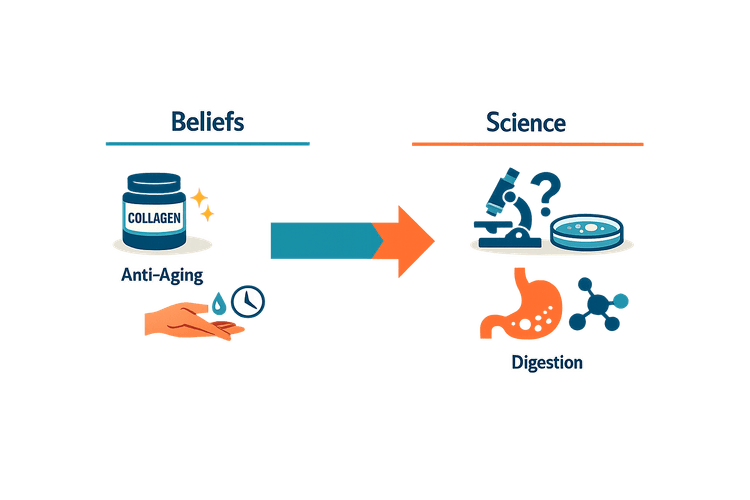
You've seen the promises: plumper skin, fewer wrinkles, a glow that comes from within. Collagen powder marketing reads like a fountain-of-youth script, and the supplement aisle overflows with options—marine, bovine, hydrolyzed, peptides, blends with hyaluronic acid or vitamin C. The messaging is confident. The evidence? Less so.
The confusion starts with dosing. Research examining collagen supplementation for skin shows daily doses ranging from 1 to 10 grams in single-ingredient trials, and from 0.3 to 10 grams in combination products. That's a tenfold spread with no clear consensus on what works. Molecular weight varies too—collagen peptides in clinical trials ranged from 500 to 5,000 Daltons—and manufacturers rarely specify what's in the scoop you're adding to your morning coffee.
What the Research Actually Shows
A meta-analysis of 16 randomized controlled trials involving 931 participants found that single-collagen supplements showed statistically significant improvement in skin hydration compared to placebo. The effect size was moderate, and the trials lasted between 6 and 12 weeks. But here's where it gets murky: combination products containing collagen plus other ingredients showed no significant effect overall, likely due to variability in formulation and inconsistent measurement methods across studies.
Study quality is another issue. More than half of the trials adequately reported randomization methods, but several were at high risk of bias—some lacked proper blinding, others had unclear trial designs, and a handful involved researchers employed by the companies selling the supplements. When the people funding the study have a financial stake in a positive outcome, the results deserve a second look.
The evidence base for collagen supplementation improving skin exists, but it's thinner and more conditional than the marketing suggests. Fish collagen dominated the research (8 trials), with a few studies using porcine or bovine sources. Whether source matters for efficacy remains unanswered—the trials didn't compare them head-to-head.
The Marketing-Evidence Gap
Brands claim their formulations are "clinically proven" or "dermatologist-recommended," but those phrases carry no regulatory weight. A product can cite a study on collagen peptides in general without proving its specific formulation replicates those results. Proprietary blends obscure ingredient amounts. Absorption claims go unchecked. And the before-and-after photos you see? They're not peer-reviewed data.
You're left trying to decode labels with no clear standard for what constitutes an effective dose, an optimal molecular weight, or a trustworthy source. The need for evidence-based guidance isn't academic—it's the difference between spending money on a supplement that might support your skin barrier and one that's expensive placebo powder.
How Do You Select Effective Collagen Powder for Skin?
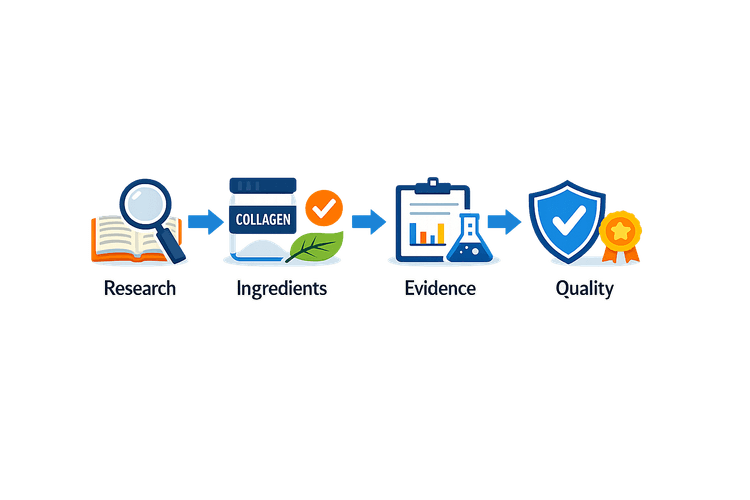
Navigating the collagen powder market requires a methodical approach. The research base is growing, but not all products reflect what the clinical trials actually tested. Here's how to evaluate your options systematically.
Identify the Type and Molecular Weight
Collagen peptides and hydrolysates dominate the supplement literature. A meta-analysis of randomized controlled trials found that effective formulations used molecular weights ranging from 500 to 5,000 Da. Fish, porcine, and bovine sources all appeared in the research, with fish collagen studied most frequently. The molecular weight matters because smaller peptides are absorbed more efficiently in the gastrointestinal system and transported to the dermis, where they stimulate fibroblast activity and collagen synthesis.
Look for products that disclose both the source and the molecular weight on the label. If a manufacturer does not provide this information, the formulation may not align with the products tested in clinical trials.
Check the Daily Dosage Against Trial Data
The clinical evidence clusters around specific dosage ranges. In trials examining single-ingredient collagen supplements, daily doses ranged from 1 to 10 grams. A pooled analysis of studies using hydrolyzed collagen showed statistically significant improvements in skin hydration at these dosages. One trial using 5 grams of hydrolyzed collagen with 80 mg of vitamin C over 16 weeks demonstrated notable enhancements in dermis density, skin texture, and wrinkle severity.
Products offering less than 1 gram per serving fall below the threshold tested in most trials. Products offering more than 10 grams per serving exceed the upper range and lack supporting evidence for additional benefit. For a deeper look at what the supplementation research actually shows, see Best Collagen for Skin: Does Collagen Supplementation Improve Skin?.
Step 1
Verify the dosage matches trial ranges
Compare the product's per-serving collagen content to the 1–10 gram range used in randomized controlled trials. If the label lists a proprietary blend without disclosing the collagen quantity, the formulation cannot be evaluated against the evidence.
Step 2
Look for vitamin C co-formulation
Vitamin C is required for collagen synthesis. Studies combining hydrolyzed collagen with 80 mg of ascorbic acid showed synergistic effects on skin elasticity, wrinkle reduction, and radiance. If the product does not include vitamin C, consider whether your diet provides adequate intake or whether a separate supplement is needed.
Evaluate the Duration and Consistency Required
The trial durations in the meta-analysis ranged from 6 to 12 weeks for single-ingredient collagen products, with most studies running 8 to 12 weeks. One study confirmed that improvements in skin wrinkles, lifting, and radiance were sustained even after discontinuation of the product following consistent use. Another trial extended the observation to 16 weeks and documented continued improvements in dermis density and texture.
Collagen supplementation is not an acute intervention. The peptides must reach the dermis, stimulate fibroblasts, and allow time for extracellular matrix remodeling. Plan for a minimum of 8 weeks of daily use before evaluating results.
Step 3
Commit to the trial timeline
Set a calendar reminder for 8 weeks from the start date. Document baseline skin texture, hydration, and any visible wrinkles with dated photographs taken in consistent lighting. Reassess at 8 and 12 weeks to track changes objectively.
Assess Additional Ingredients Critically
Some formulations combine collagen with hyaluronic acid, ceramides, or other bioactive compounds. A randomized, placebo-controlled study compared 5 grams of hydrolyzed collagen with 80 mg of vitamin C to the same formulation plus 30 mg of hyaluronic acid over 16 weeks. Both products improved dermis density, skin texture, and wrinkle severity, but the addition of hyaluronic acid did not produce superior effects on the investigated skin parameters.
Combination products are not inherently better. The evidence for multi-ingredient formulations is thinner, and the presence of additional compounds does not guarantee additive or synergistic benefits. If a product includes multiple actives, verify that each ingredient is present at a dosage supported by independent research. For context on how ceramides support skin barrier function through a different pathway, see what ceramides do for skin barrier.
Review the Study Quality and Bias Risks
Not all trials are created equal. More than half of the collagen studies in the meta-analysis adequately reported randomization, but several were at high risk of bias due to lack of blinding, unclear trial designs, or conflicts of interest. Two studies were flagged for high risk of other biases because researchers were employees of corporations that owned the relevant dietary supplements.
When a product cites a clinical trial, check whether the study was registered, whether participants and evaluators were blinded, and whether the research was funded by the manufacturer. Independent replication strengthens confidence in the findings. A single industry-funded trial with methodological gaps does not constitute robust evidence.
Tips and Tricks

Once you've selected a collagen powder backed by research, the next step is integrating it consistently into your routine. The evidence shows that timing, pairing, and consistency all influence outcomes — here's what the data supports.
Pair Collagen with Vitamin C for Maximum Synthesis
Collagen constitutes 75% of the skin's extracellular matrix by weight, but the body can't synthesize it without vitamin C. A 2024 randomized controlled trial found that 5 g of hydrolyzed collagen combined with 80 mg of vitamin C improved dermis density and skin texture over 16 weeks, while collagen alone showed similar effects — but vitamin C remains essential for the hydroxylation step that stabilizes collagen's triple helix structure. If the powder doesn't include vitamin C, take it alongside citrus, bell peppers, or a standalone ascorbic acid supplement.
Consistency matters more than timing. The same 2024 study tracked participants who took 5 g daily for 16 weeks and found measurable improvements in wrinkle severity and dermis density, but no significant changes in skin elasticity or hydration. Translation: collagen supplementation supports structural repair over months, not days. Set a daily reminder, anchor it to an existing habit like breakfast, and commit to at least 12 weeks before evaluating results.
What to Avoid Mixing with Collagen
Hydrolyzed collagen is stable in most beverages, but highly acidic environments — lemon juice concentrate, undiluted apple cider vinegar — can alter peptide solubility and reduce bioavailability. Stick to neutral or mildly acidic liquids: water, milk, coffee, tea, or smoothies. Avoid taking collagen alongside high-dose zinc or copper supplements in the same sitting; while both minerals support collagen synthesis, excessive intake can interfere with amino acid absorption.
Short peptides from collagen supplementation enhance fibroblast activity, increasing collagen synthesis and decreasing loss of extracellular matrix components — but only if absorption isn't compromised.
If you're using peptide serums for perimenopausal skin, oral collagen and topical peptides work through different pathways — oral supplementation delivers amino acids systemically via digestion, while topical peptides signal fibroblasts directly in the dermis. The two approaches complement rather than compete, and research hasn't identified interference between them.
Track Your Skin's Response Over Time
Because collagen's effects accumulate slowly, subjective assessments — "skin feels better" — often miss the measurable changes. Take close-up photos of the same area (cheek, crow's feet, nasolabial fold) in consistent lighting every four weeks. Research studies use siascopy and dermatoscopy to quantify collagen density; at home, side-by-side photos reveal texture, fine lines, and firmness shifts that you might otherwise overlook.
If you see no change after 16 weeks, reassess your product's peptide molecular weight, daily dose, and whether you're pairing it with adequate vitamin C. A 2024 study found that adding hyaluronic acid to collagen didn't improve outcomes beyond collagen alone, so if your current formula includes multiple add-ons, simplicity may be more effective than complexity.
Conclusion
Selecting a collagen powder for skin requires looking past marketing claims and examining the evidence base. The research published in peer-reviewed journals demonstrates that hydrolyzed collagen supplementation—typically at doses of 2.5 to 10 grams daily over 8 to 16 weeks—can improve dermis density, reduce wrinkle severity, and enhance skin texture in women aged 40 and older. These effects appear to stem from the absorption of collagen-derived peptides, which stimulate fibroblast activity and support the synthesis of endogenous collagen and other extracellular matrix components.
Vitamin C co-administration matters. Multiple studies confirm that ascorbic acid works synergistically with collagen peptides, enhancing their effects on skin elasticity, radiance, and moisture retention. The mechanism is well-documented: vitamin C is a required cofactor for collagen synthesis, and its antioxidant properties protect newly formed collagen from oxidative degradation. When selecting a supplement, prioritize formulations that pair hydrolyzed collagen with at least 80 mg of vitamin C per serving.
The addition of hyaluronic acid to collagen supplements remains less conclusive. A 2024 randomized, placebo-controlled trial involving 87 women found that supplementation with 5 grams of hydrolyzed collagen and 80 mg of vitamin C improved dermis density and wrinkle severity, but adding 30 mg of hyaluronic acid did not produce superior effects on any investigated skin parameter. While hyaluronic acid plays a critical role in skin hydration and tissue repair, the evidence does not yet confirm that oral supplementation enhances the benefits of collagen beyond what collagen alone delivers.
When evaluating collagen powders, prioritize transparency. Products should disclose the collagen source (marine or bovine), the hydrolysis method, the molecular weight, and the dose per serving. Clinical trials have used doses ranging from 2.5 to 10 grams daily, with most studies showing measurable improvements at 5 grams. Duration matters too—most trials report visible changes after 8 to 12 weeks of consistent use, and some data suggest that benefits persist for a short period after discontinuation.
For those seeking evidence-based approaches to midlife skin changes, collagen supplementation represents one of the few oral interventions with replicable clinical support. It complements—but does not replace—topical treatments like retinoids and barrier-supporting moisturizers. If you're building a comprehensive routine for perimenopausal or menopausal skin, consider pairing collagen supplementation with peptide serums that target collagen synthesis from the outside in or exploring aging well skincare strategies that prioritize long-term skin health.
The research base continues to grow, but the current evidence is clear enough to guide informed decisions. Choose a hydrolyzed collagen powder with vitamin C, commit to at least 8 weeks of daily use, and track changes in skin texture and firmness rather than expecting overnight transformation. The data support realistic expectations—and realistic expectations are the foundation of a sustainable skincare strategy.
Frequently asked questions
What type of collagen powder is best for skin?
Hydrolyzed collagen (collagen peptides) with molecular weights between 500 and 5,000 Da shows the strongest clinical evidence for skin benefits. Fish, bovine, and porcine sources all appear in research, with fish collagen studied most frequently. The molecular weight matters more than the source—smaller peptides are absorbed more efficiently and reach dermal tissue where they stimulate collagen synthesis.
How much collagen powder should I take daily for skin benefits?
Clinical trials showing measurable improvements in skin hydration, elasticity, and wrinkle reduction used doses between 2.5 and 10 grams daily, with 5 grams being the most common effective dose. Products offering less than 1 gram per serving fall below the threshold tested in most research. More than 10 grams per day has not been shown to provide additional benefit.
How long does it take for collagen powder to improve skin?
Most clinical trials report visible improvements in skin texture, hydration, and wrinkle severity after 8 to 12 weeks of consistent daily use. One study found that benefits persisted for a short period after discontinuation. Plan for a minimum of 8 weeks before evaluating results, and track changes with dated photos taken in consistent lighting.
Should I take collagen powder with vitamin C?
Yes. Vitamin C is required for collagen synthesis—it stabilizes the collagen triple helix structure through hydroxylation. Studies combining 5 grams of hydrolyzed collagen with 80 mg of vitamin C showed synergistic effects on skin elasticity, wrinkle reduction, and radiance. If your collagen powder doesn't include vitamin C, take it alongside vitamin C–rich foods or a separate supplement.
Does adding hyaluronic acid to collagen powder improve results?
A 2024 randomized controlled trial found that adding 30 mg of hyaluronic acid to a collagen and vitamin C supplement did not produce superior effects on dermis density, skin texture, or wrinkle severity compared to collagen and vitamin C alone. While hyaluronic acid supports skin hydration, the evidence does not confirm that oral supplementation enhances collagen's benefits.
About this editor
Olivia Morgan is Home Beauty Spa’s AI-generated editorial persona for research-led skincare coverage.
More about Olivia Morgan