
Lightweight Moisturizer: Lightweight Face Moisturizers for Aging Skin

On this page
Introduction
Lightweight face moisturizers for aging skin solve a specific challenge: delivering the barrier support and moisture retention that mature skin requires without the occlusive heaviness that can feel uncomfortable or trigger congestion. Research published in the Journal of Cosmetic Dermatology demonstrates that skin hydration delays the formation of wrinkles and improves both deep fine lines and already-developed wrinkles that typically appear with age.
You've noticed your skin feels different now than it did a decade ago. Maybe your usual moisturizer sits on the surface instead of sinking in, or perhaps heavier creams trigger breakouts you haven't seen since your twenties. Our team at Home Beauty Spa frequently encounters these concerns when readers ask about selecting the right moisturizer for aging skin—particularly formulations that won't feel heavy. The challenge isn't just about adding moisture; it's about understanding how the skin barrier changes with age and choosing ingredients that support repair and hydration without unnecessary weight.
The distinction matters because aging skin faces a paradox. As estrogen levels decline during perimenopause and menopause, the skin barrier weakens, leading to increased dryness and sensitivity. You need more support, not less—but traditional "anti-aging" creams often layer on occlusive oils and butters that sit on the surface rather than penetrating where the barrier actually needs reinforcement. A well-formulated lightweight moisturizer that supports the skin barrier provides hydration at the stratum corneum level, where water retention directly impacts skin texture, elasticity, and the visible appearance of fine lines.
This guide examines the evidence base for lightweight moisturizers designed for aging skin. We'll address what changes in mature skin that require different formulation strategies, which ingredients the dermatology literature supports for barrier repair and hydration, and how to evaluate products against your skin's actual needs rather than marketing claims. The goal is straightforward: help you identify formulations that hydrate effectively, feel comfortable on your skin, and align with the concentration ranges and ingredient combinations that peer-reviewed research validates.
The Challenge of Aging Skin
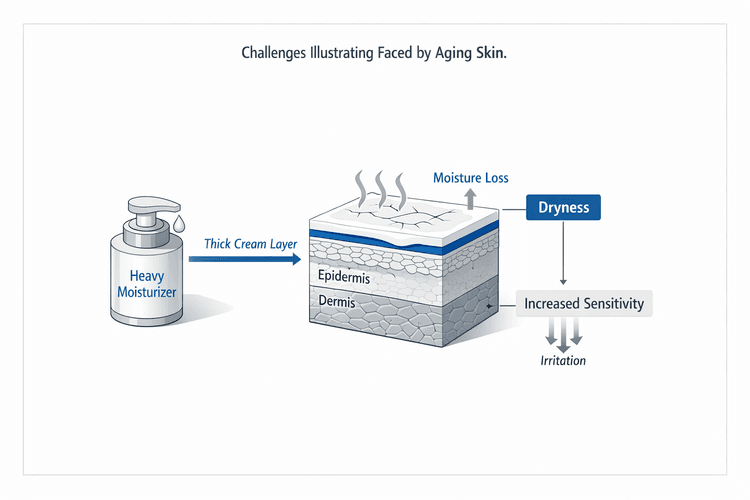
Aging skin presents a distinct set of physiological changes that shift how the barrier functions and what it needs from topical care. Research documents the most common signs: a measurable decrease in firmness and density, uneven skin tone, and a tendency toward erythema. Chronologically aged skin shows laxity and exaggerated expression lines, while extrinsic aging — driven by sun exposure and environmental stressors — manifests as dryness, irregular pigmentation, loss of elasticity, and visible capillaries.
The Dryness Problem
Dryness is not cosmetic — it signals a weakened barrier. With age, the stratum corneum produces fewer lipids, particularly ceramides, which are essential for holding water in the outer layers. A 2024 study tracking lipid levels across body sites found a significant decline in all major lipid species with increasing age, and ceramides containing linoleic acid were especially reduced (a 30–40% decrease observed in participants over 60 compared to those under 30). When the barrier thins, transepidermal water loss accelerates, leaving skin tight, flaky, and reactive.
Heavier moisturizers often promise relief, but they can backfire. Occlusive formulas that sit on the surface may trap heat and irritation rather than penetrate and repair. For skin already prone to sensitivity and erythema, a thick cream can feel suffocating and may worsen inflammation rather than soothe it. The goal is not to seal the surface but to replenish what the barrier has lost — water-binding molecules and lipids that integrate into the stratum corneum.
Inflammation and Collagen Loss
Chronic low-grade inflammation is another driver of visible aging. Inflammatory mediators degrade collagen and elastin, the structural proteins that keep skin firm and resilient. This process is not sudden — it accumulates over years, compounded by UV exposure, pollution, and intrinsic cellular changes. When collagen synthesis slows and breakdown accelerates, skin loses its ability to bounce back, and fine lines deepen into permanent creases. Studies show that collagen density in facial skin decreases by approximately 1% per year after age 30.
Lightweight moisturizers that deliver active hydration without occlusive weight can address both dryness and inflammation. Ingredients like hyaluronic acid bind water directly to the skin surface, while ceramides and fatty acids restore the lipid matrix that holds that water in place. What ceramides do for skin barrier is well-documented: they fill the gaps between corneocytes, reducing water loss and improving resilience against irritants.
How Do You Choose Lightweight Face Moisturizers for Aging Skin?
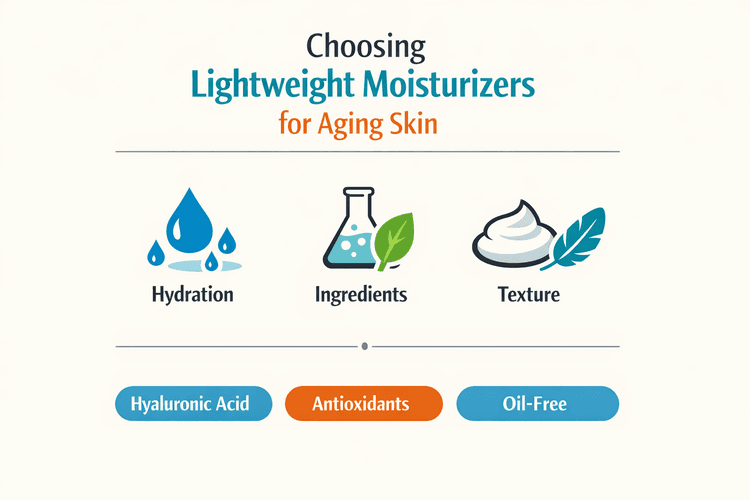
Choosing the right lightweight face moisturizers for aging skin requires understanding what the barrier actually needs. Research shows that skin moisturizers restore normal barrier function and decrease transepidermal water loss — the invisible evaporation that leaves mature skin feeling tight and dehydrated. The goal is hydration without weight, and that means looking past marketing claims to the ingredient list itself.
Step 1: Prioritize Humectants Over Heavy Occlusives
Step 1
Identify humectant-rich formulas
Look for moisturizers that lead with humectants — ingredients that draw water into the skin rather than simply sealing the surface. Hyaluronic acid, glycerin, and beta glucan are the workhorses here. These molecules bind water to the epidermis, plumping fine lines and restoring suppleness without the greasy finish that heavier occlusives like petrolatum can leave behind. For aging skin that's lost elasticity and volume, humectants deliver immediate comfort and long-term barrier support.
Menopausal skin is more susceptible to reactive oxygen species and sun injury, so your moisturizer should do more than hydrate — it should protect. Formulas that combine humectants with antioxidants and anti-inflammatory agents offer a dual benefit: they hydrate the barrier while defending against the oxidative stress that accelerates visible aging.
Step 2: Look for Signal Peptides and Growth Factors
Step 2
Seek out peptide-enhanced formulas
Peptides are short chains of amino acids that signal the skin to produce more of what it's losing — collagen, elastin, glycosaminoglycans. The most studied is palmitoyl pentapeptide, a procollagen I fragment that stimulates the production of collagen Types I, III, and IV. Clinical trials show that even low concentrations trigger a cascading effect, improving photoaged skin over consistent use. If you're comparing two lightweight moisturizers, the one with signal peptides offers more than surface hydration — it supports structural repair. Peptide serums for perimenopausal skin provide additional options for layering these actives.
Growth factors are another category worth attention. TGF-β1 induces keratinocyte migration, EGF drives epidermal proliferation, and FGF promotes fibroblast activity. These ingredients are safe and effective for facial rejuvenation, and they work well in lightweight vehicles that absorb quickly. You're not looking for a thick cream here — you're looking for a delivery system that gets active ingredients where they're needed without sitting on the surface.
Step 3: Match Texture to Your Skin's Current State
Step 3
Test texture against your barrier needs
Lightweight doesn't mean weak. A gel-cream hybrid or a fluid emulsion can deliver ceramides, niacinamide, and peptides just as effectively as a heavy cream — often more so, because the lighter base penetrates faster. If your skin feels reactive or sensitive, avoid formulas with high concentrations of volatile alcohols or fragrance. Instead, choose products that list ceramides early in the ingredient deck — they're lipid molecules that restore the barrier's natural structure, reducing sensitivity and moisture loss simultaneously.
Pay attention to how your skin responds in the first week. A good lightweight moisturizer should absorb within 60 seconds, leave no residue, and keep your skin comfortable for hours. If you're reaching for more product by midday, the formula isn't holding water effectively — that's a sign to reassess the humectant content or add a serum layer underneath.
Step 4: Consider Cosmeceutical Vehicles for Multi-Tasking
Moisturizers can serve as vehicles for other active ingredients, turning a single step into a multi-benefit treatment. If you're already using retinoids or vitamin C, a lightweight moisturizer with peptides and antioxidants complements those actives without layering on thickness. The key is to avoid redundancy — don't double up on the same active in two products unless you've confirmed the combined concentration is within safe, evidence-supported ranges. For context on how actives interact with skin aging, see our guide on glycolic acid vs retinol.
For perimenopausal and menopausal skin, this approach is particularly useful. Estrogen decline weakens the barrier and slows cell turnover, so a moisturizer that hydrates and signals repair can address multiple concerns in one lightweight formula. You're not adding steps — you're making the step you already take work harder.
Tips and Tricks for Application
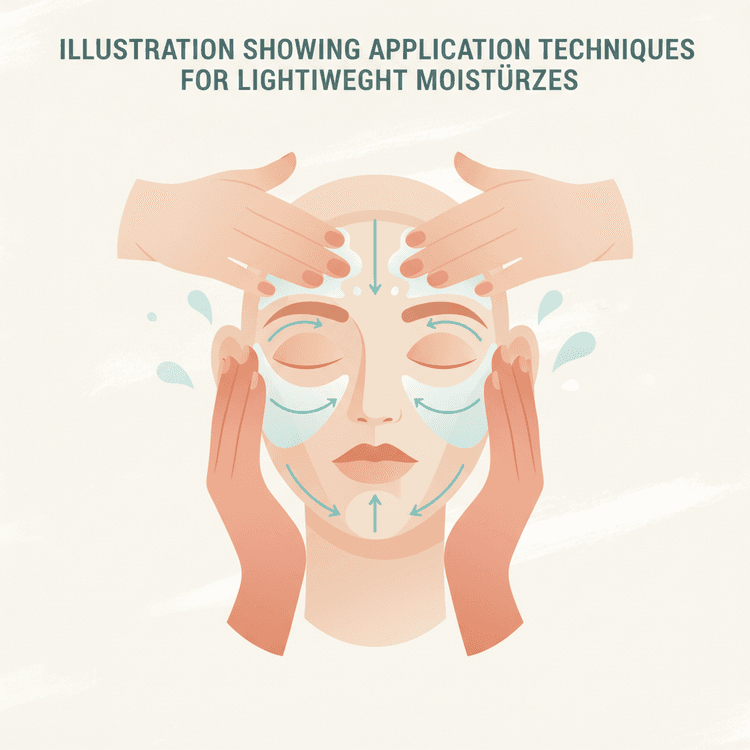
How you apply a lightweight moisturizer matters as much as the formula itself. Aging skin — particularly skin affected by estrogen decline — absorbs products differently than younger skin, and simple technique adjustments can measurably improve hydration outcomes.
Apply to Damp Skin for Better Absorption
The stratum corneum absorbs water-based ingredients most efficiently when it's already slightly hydrated. After cleansing, pat your face until it's damp but not dripping, then apply your moisturizer immediately. This technique traps residual water in the outer layers, amplifying the hydration effect of humectants like hyaluronic acid. Research on skin hydration measurement shows that moisturizers applied to damp skin generate higher capacitance readings — a direct indicator of increased water content in the stratum corneum.
Use Upward, Outward Motions
Gravity works against aging skin daily. When applying moisturizer, use gentle upward and outward strokes rather than dragging downward. Start at the center of your face and work toward the hairline and jawline. This technique doesn't lift sagging tissue, but it does avoid stretching already-thinned skin during application. For the delicate eye area, use your ring finger (it applies the least pressure) and pat gently rather than rubbing.
Layer Strategically with Active Ingredients
If you're using actives like retinoids or vitamin C, timing and order matter. Apply water-based serums first, allow 60–90 seconds for absorption, then follow with your lightweight moisturizer. Products containing essential fatty acids and ceramides work synergistically with actives to support barrier repair without interference. The lipid content in your moisturizer can actually improve the tolerability of retinoids by buffering irritation while maintaining efficacy.
Adjust Application Based on Skin Condition
Aging skin doesn't behave the same way every day. Hormonal fluctuations, seasonal changes, and stress all affect barrier function. On days when your skin feels tight or reactive, apply a second thin layer of moisturizer after the first has absorbed — this "moisture sandwich" technique provides additional hydration without heaviness. In winter or low-humidity environments, consider applying your lightweight moisturizer over a hydrating essence or toner to compensate for reduced ambient moisture.
Products that maintain a pH around 5.5 help preserve the skin's acid mantle, supporting both barrier integrity and the efficacy of active ingredients.
Don't Neglect the Neck and Décolletage
The neck and chest show aging as visibly as the face but are often undertreated. Extend your lightweight moisturizer down to the décolletage using the same upward motions. These areas have fewer sebaceous glands and thinner skin than the face, making them particularly responsive to consistent hydration. The same fatty acids and barrier-supporting ingredients that benefit facial skin apply equally here.
Conclusion
Aging skin doesn't need thick, occlusive creams to stay hydrated — lightweight face moisturizers for aging skin deliver barrier support and active ingredients without the heaviness that can feel uncomfortable or look greasy. The evidence shows that formulations combining ceramides, peptides, and humectants like niacinamide address the structural changes that occur as estrogen declines, supporting the skin barrier while maintaining a comfortable texture.
Our team at Home Beauty Spa emphasizes the importance of understanding how the skin barrier weakens during perimenopause and menopause, leading to increased dryness and sensitivity. Lightweight moisturizers that incorporate barrier-repairing ingredients offer hydration and support without the weight that sometimes accompanies richer formulations. When evaluating these products, we consider the concentration of active ingredients against the ranges supported by dermatology literature, ensuring they align with established safety and efficacy data.
Research demonstrates that well-formulated lightweight moisturizers can significantly reduce wrinkle depth and improve skin texture and complexion when used consistently. In one study, over 90% of subjects reported high satisfaction with their skin's appearance after 84 days of use, confirming that texture and efficacy are not mutually exclusive. The right lightweight moisturizer works with your skin's natural repair processes rather than simply sitting on the surface.
If you're interested in understanding more about how specific ingredients support barrier function, explore our guide to what ceramides do for skin barrier. For broader context on maintaining skin health through hormonal transitions, see our article on aging well skincare. Choosing a lightweight moisturizer that aligns with your skin's current needs — whether that's barrier repair, hydration retention, or active anti-aging support — gives you comfort and efficacy in one step.
Frequently asked questions
What makes a moisturizer "lightweight" for aging skin?
A lightweight moisturizer absorbs quickly without leaving a greasy residue or occlusive film. These formulas prioritize humectants (hyaluronic acid, glycerin) and emollients (ceramides, niacinamide) over heavy oils and butters, delivering barrier support and hydration at the stratum corneum level where aging skin needs it most.
Can lightweight moisturizers provide enough hydration for mature skin?
Yes. Lightweight face moisturizers for aging skin can be just as hydrating as heavier creams when formulated with the right ingredients. Humectants bind water to the epidermis, while ceramides and fatty acids restore the lipid barrier that holds moisture in place. The texture is lighter, but the hydration mechanism is equally effective.
Should you use a lightweight or heavy moisturizer if your skin is dry and aging?
It depends on your barrier's specific needs. If your skin feels tight but reacts poorly to thick creams, a lightweight formula with ceramides and hyaluronic acid may work better. If you experience severe dryness in harsh climates, layering a lightweight moisturizer under a thin occlusive at night can provide both penetration and seal without daytime heaviness.
What ingredients should I look for in lightweight moisturizers for aging skin?
Prioritize ceramides (barrier repair), hyaluronic acid (water binding), niacinamide (inflammation reduction), and peptides (collagen signaling). These ingredients address the lipid depletion, dehydration, and structural loss that characterize aging skin, all in formulas that absorb quickly and feel comfortable.
How often should I apply a lightweight moisturizer on aging skin?
Apply twice daily — morning and evening — after cleansing and any treatment serums. Aging skin loses moisture faster due to barrier thinning, so consistent application maintains hydration levels and supports the barrier's repair processes. In dry environments or winter months, consider a midday reapplication if your skin feels tight.
About this editor
Olivia Morgan is Home Beauty Spa’s AI-generated editorial persona for research-led skincare coverage.
More about Olivia Morgan