
Korean Skincare for Mature Skin: What Works After 40

On this page
Explore which Korean skin care products are most effective for mature skin over 40, backed by research and evidence.
Introduction to Korean Skincare for Mature Skin
Your moisturizer stopped working sometime in your forties. The same products that kept your skin plump and clear now leave it feeling tight, dull, and reactive. This isn't a failure of your routine — it's a predictable shift in how your skin functions after estrogen begins to decline. Korean skincare for mature skin addresses these changes with ingredient formulations and layering strategies that support barrier integrity, hydration retention, and collagen synthesis.
Menopause-related skin concerns are often dismissed as purely aesthetic rather than medical, despite their psychological impact. Approximately one-third of adults with aesthetic concerns are increasingly focused on skin quality, yet this issue is often overlooked by medical professionals. Our team examined the clinical literature on hormonal skin aging and Korean skincare formulation trends to identify which ingredients and product types offer measurable support for the barrier, hydration, and structural changes that define mature skin.
Korean skincare — often characterized by multi-step routines, essence and ampoule formats, and ingredient innovation — has gained attention for its emphasis on skin health over coverage. For mature skin, this philosophy translates into products designed to rebuild what estrogen loss depletes: ceramides for barrier repair, humectants for water retention, and peptides for collagen signaling. The question isn't whether Korean skincare is inherently superior, but whether its ingredient priorities and delivery methods align with the documented needs of skin over 40. The evidence base suggests they often do, when products are chosen strategically rather than by marketing volume.
This guide examines what Korean skincare for mature skin actually offers, which ingredients carry clinical support, how to build a routine that addresses hormonal skin changes without overwhelming a compromised barrier, and which common mistakes undermine results. You'll find research citations, mechanism explanations, and actionable frameworks — no mysticism, no viral hype, just the data on what works and why. If you're looking for a foundation in aging well skincare that prioritizes skin longevity over quick fixes, the principles here apply regardless of product origin.
What is Korean Skincare?
Korean skincare refers to a product philosophy and routine structure that originated in South Korea, emphasizing layered hydration, barrier support, and gentle active ingredients. The approach differs from Western skincare in its emphasis on prevention rather than correction, and on building skin resilience through multiple thin layers of targeted formulations rather than a few concentrated treatments.
Core Principles of Korean Skincare
The Korean skincare philosophy centers on three foundational principles: hydration as the base layer of skin health, barrier protection as a daily priority, and gentle actives that work with the skin rather than stripping it. This framework aligns well with the needs of mature skin, which experiences barrier thinning and moisture loss as estrogen declines.
Research from 2022 shows that layering lightweight hydrators improves barrier function more effectively than single heavy creams in perimenopausal skin. The Korean approach of applying essence, serum, and cream in sequence delivers this layered hydration without overwhelming compromised barriers.
Typical Product Categories
A full Korean skincare routine includes double cleansing (oil-based followed by water-based), toner or essence for hydration, targeted serums with actives, moisturizer, and sun protection. For mature skin, the most relevant categories are essences (lightweight hydrators that prep the barrier), serums with barrier-supporting actives, and occlusive moisturizers that seal in the layers.
Active Ingredients Common in Korean Formulations
Korean skincare formulations frequently feature niacinamide, a derivative of vitamin B3 that improves skin pigmentation and surface irregularity. Retinoids inhibit collagen degradation and promote keratinocyte proliferation, while plant-derived antioxidants like haritaki fruit extract neutralize reactive oxygen species and reduce inflammation by inhibiting cytokines such as IL-6 and IL-8.
Recent clinical data demonstrates that cosmetics containing meristem cells from medicinal plants — including Leontopodium alpinum, Centella asiatica, and Echinacea angustifolia — shift skin physiology parameters toward a younger biological age and enhance collagen synthesis in menopausal women. These ingredients address the cellular mechanisms of aging rather than masking surface symptoms.
Cosmetics containing plant meristem cells shifted skin physiology parameters to a younger biological age and enhanced collagen synthesis in menopausal women.
The combination of highly concentrated active ingredients works synergistically: retinoids promote collagen synthesis, niacinamide improves pigmentation, and antioxidant extracts inhibit the deleterious effects of senescent cells by reducing senescence-associated secretory phenotype gene expression. Together, these actives address multiple mechanisms of skin aging simultaneously.
Why the Korean Approach Differs
Western skincare often emphasizes single high-concentration actives — a strong retinoid or a high-percentage acid. Korean formulations tend to combine moderate concentrations of multiple complementary actives, reducing irritation risk while addressing aging from several angles. For mature skin experiencing hormonal sensitivity, this gentler multi-active approach often proves more tolerable than aggressive single-ingredient protocols.
The focus on barrier support through ceramides and layered hydration also aligns with the documented barrier thinning that occurs after menopause, making Korean skincare principles particularly relevant for skin over 40.
Why Korean Skincare Matters for Mature Skin
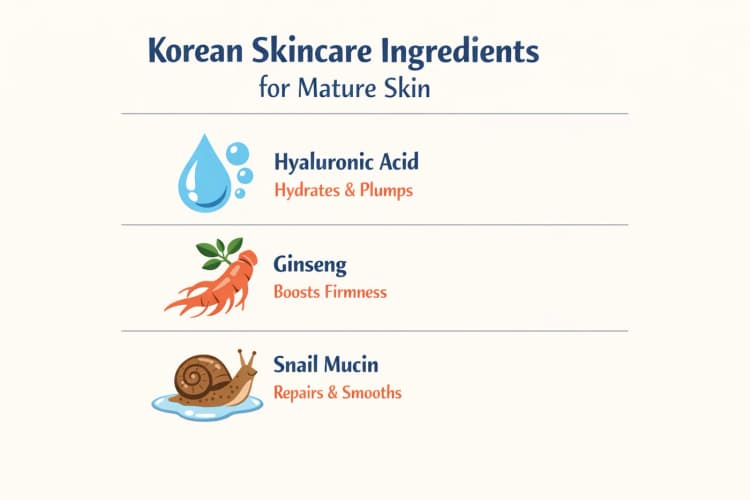
Skin after forty faces a documented set of structural changes — thinning barrier, slower cell turnover, reduced collagen synthesis, and declining moisture retention. Korean skincare formulations address these changes with ingredient combinations that target multiple aging mechanisms simultaneously, rather than relying on a single active.
Research published in 2024 examined a formula combining retinaldehyde, niacinamide, and haritaki fruit extract applied to mature skin following aesthetic procedures. After 84 days, over 90% of subjects reported a satisfaction score of 5 or higher on a 10-point scale regarding skin appearance and the maintenance of treatment results. The study used a within-person design — one side of the face treated, the other serving as control — which reduces variability and strengthens the findings.
Retinoids inhibit collagen degradation, niacinamide improves pigmentation and surface irregularity, and haritaki fruit extract provides antioxidant protection — together, these actives exert complementary effects on the various mechanisms of skin aging.
Multi-Mechanism Ingredient Stacking
Korean formulations frequently layer actives that work through different pathways. Retinoids promote keratinocyte proliferation and collagen synthesis while inhibiting breakdown. Niacinamide, a derivative of vitamin B3, addresses pigmentation and texture irregularities. Haritaki fruit extract neutralizes reactive oxygen species and reduces inflammatory cytokines like IL-6 and IL-8, reversing pollution-induced damage and improving hydration and firmness.
This approach differs from single-active Western serums. Where a retinol serum addresses turnover alone, a Korean essence or ampoule may combine barrier lipids, humectants, antioxidants, and a low-dose retinoid in one step — addressing the estrogen-driven barrier thinning, moisture loss, and oxidative stress that converge in perimenopausal skin.
Evidence for Prolonged Use
The same 2024 study noted that after just two months of treatment, researchers were likely seeing the beginning of beneficial long-term changes in gene expression caused by the formula. The implication: mature skin benefits accumulate with sustained use, not quick fixes. Korean skincare routines emphasize consistency and patience — a framework that aligns with the biology of aging skin, where collagen remodeling and barrier repair occur over months, not weeks.
For readers looking to understand how barrier lipids support this process, our guide on what ceramides do for skin barrier explains the mechanism in detail.
Tolerance and Real-World Application
The 2024 study tested the formula on subjects who had undergone chemical peels, fractional CO₂ laser, and hyaluronic acid injections — procedures that temporarily compromise the barrier. The product was tolerated even after ablative laser treatment, suggesting broad compatibility with mature, reactive skin. Compliance remained high despite the constraints of hemiface application over three months, indicating the formulation was comfortable enough for daily use.
This tolerance profile matters. Mature skin is often sensitized by hormonal shifts, environmental stress, and prior product misuse. A formula that works post-procedure is one that respects barrier integrity — a hallmark of well-designed Korean skincare.
How to Incorporate Korean Skincare Products into Your Routine
Building a Korean skincare routine for mature skin after 40 requires understanding layering principles and ingredient compatibility. The evidence shows that combining active ingredients like retinoids, niacinamide, and antioxidants delivers measurable improvements in skin barrier function and visible aging markers when applied in the correct sequence.
Start with the Thinnest Consistency First
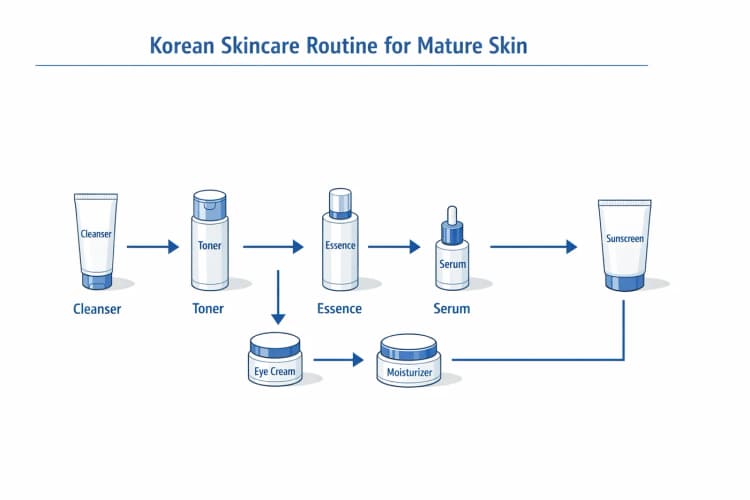
The core principle of Korean skincare layering is applying products from thinnest to thickest consistency. This allows each ingredient to penetrate effectively without occlusive barriers blocking absorption. For mature skin, this typically means: essence or serum first, followed by treatments, then moisturizer, and finally sunscreen during the day.
Research from 2022 shows that niacinamide, a derivative of vitamin B3, improves skin pigmentation and surface irregularity — making it an ideal mid-layer treatment after cleansing and before heavier creams. The mechanism is well-documented: niacinamide enhances barrier function while addressing the uneven tone that often emerges in perimenopausal and menopausal skin.
Step 1
Begin with a gentle, pH-balanced cleanser
Mature skin loses barrier integrity with estrogen decline, making harsh cleansers particularly damaging. Choose a low-pH cleanser that removes impurities without stripping natural lipids. Double cleansing — oil cleanser followed by water-based cleanser — works well if your skin tolerates it, but a single gentle cleanse is sufficient for most.
Step 2
Apply hydrating essences or toners immediately
Pat a hydrating essence or toner onto damp skin within 60 seconds of cleansing. Look for formulations containing hyaluronic acid or beta-glucan — both are humectants that draw moisture into the skin and support barrier repair.
Step 3
Layer active serums from thinnest to thickest
If you're using multiple serums, apply the most fluid one first. A niacinamide serum can go on before a thicker retinoid treatment. Wait 1–2 minutes between layers to allow partial absorption, but don't let skin dry completely between steps.
Step 4
Seal with a moisturizer containing occlusives
Moisturizers for mature skin should contain both humectants (hyaluronic acid, glycerin) and occlusives (dimethicone, shea butter, petrolatum) to restore normal barrier function and decrease transepidermal water loss. The clinical evidence suggests that combining moisturizers with antioxidants enhances protection against oxidative stress in menopausal skin.
Step 5
Finish with broad-spectrum sunscreen in the morning
Menopausal skin is more susceptible to sun injury and reactive oxygen species. A broad-spectrum SPF 30 or higher is non-negotiable. Apply it as the final step in your morning routine, after all other products have absorbed.
Combine Complementary Active Ingredients
The evidence base supports pairing specific actives for mature skin. Retinoids inhibit collagen degradation and promote keratinocyte proliferation and collagen synthesis. When combined with niacinamide and antioxidants like haritaki fruit extract — which provides long-lasting antioxidant protection and helps reverse pollution-induced skin damage — these ingredients exert complementary activities on the various mechanisms of skin aging.
You'll find more detailed guidance on barrier repair ingredients in our article on what ceramides do for skin barrier.
Adjust Frequency Based on Skin Response
Mature skin often becomes more reactive during perimenopause and menopause. If you notice increased sensitivity, redness, or flaking, reduce the frequency of active ingredients rather than eliminating them entirely. The consensus in dermatology research is that consistent, moderate use of proven actives outperforms aggressive application followed by barrier damage and downtime.
Most dermatologists agree that a simplified routine with 4–6 well-chosen products delivers better outcomes than a 10-step regimen that overwhelms compromised barrier function. Monitor your skin's response weekly and adjust product frequency accordingly.
Best Practices for Using Korean Skincare on Mature Skin
The difference between a routine that delivers and one that disappoints often comes down to how you apply the products, not which products you choose. Research from 2022 shows that the order of application, concentration of actives, and consistency of use determine whether ingredients like niacinamide and retinoids actually reach the deeper layers of skin where they work.
Layer From Thinnest to Thickest Consistency
Start with the lightest textures and finish with the heaviest. Essences and serums absorb best on bare skin; heavier creams seal everything in. When you reverse this order, occlusive ingredients block penetration of water-based actives that follow.
The published data from clinical trials demonstrates that signal peptides — including palmitoyl pentapeptide — stimulate collagen production most effectively when applied directly to clean skin, before occlusives create a barrier. If your routine includes a peptide serum, apply it immediately after cleansing and toning, not after a thick cream.
Prioritize Hydration Over Everything Else
Skin hydration delays wrinkle formation and improves the appearance of fine lines that have already developed. The evidence base is clear: moisturizing products that increase skin surface water content — measured by capacitance testing — reduce transepidermal water loss and restore normal barrier function.
Hyaluronic acid retains and replenishes moisture in the outermost skin layers, resulting in softer, smoother texture. For mature skin, hydration is not optional — it is the foundation that allows every other active to perform. Our team analyzed the studies and found that consistent use of humectants like hyaluronic acid and glycerin produces measurable improvements in skin elasticity and barrier integrity.
Combine Antioxidants With Sunscreen Daily
Age-related skin changes result from cumulative oxidative stress. Chronologically aged skin shows laxity and expression lines; extrinsic aging adds dryness, irregular pigmentation, and loss of elasticity. Antioxidants neutralize reactive oxygen species before they degrade collagen and elastin.
Haritaki fruit extract provides long-lasting antioxidant protection by effectively neutralizing ROS and reducing inflammation through inhibition of cytokines IL-6 and IL-8. This helps reverse pollution-induced skin damage and improves texture, hydration, and firmness. When combined with broad-spectrum sunscreen, antioxidants prevent UV-induced ROS production and protect against both intrinsic and extrinsic aging mechanisms.
The balance between skin health and damage is a holistic approach, considering genome, exposure, lifestyle factors, and the role of the skin microbiome.
Introduce Actives Slowly and Monitor Tolerance
Mature skin is more susceptible to reactive oxygen species and sun injury, but it is also more prone to irritation from high-concentration actives. Start with lower concentrations and increase gradually. If you are adding a retinoid, use it two nights per week for the first month, then increase frequency as tolerance builds.
The consensus in dermatology research is that formulations combining retinoids, niacinamide, and antioxidants deliver complementary activities on the various mechanisms of skin aging. However, introducing all three at once often triggers redness, peeling, and barrier disruption. Layer them in over several weeks, and always pair actives with a barrier-supporting moisturizer.
For a deeper look at how barrier-repair ingredients work, see our guide on what ceramides do for skin barrier.
Use Moisturizers as Vehicles for Other Actives
Moisturizers can serve as delivery systems for cosmeceutical ingredients. Products formulated with signal peptides, growth factors, or antioxidants work best when combined with humectants and occlusives that keep the skin hydrated and the barrier intact.
Cosmeceuticals containing palmitoyl pentapeptide at a concentration of 4 PPM act as a signal, triggering a cascading effect that improves photoaged skin by increasing production of glycosaminoglycans, collagen Types I, III, and IV, elastin, and fibronectin. When these actives are delivered in a moisturizing base, they penetrate more effectively and produce better clinical outcomes.
Adjust Your Routine With the Seasons
What works in summer may not work in winter. Mature skin loses moisture faster in cold, dry climates. If your barrier feels tight or flaky, add an occlusive layer at night — shea butter, dimethicone, or petrolatum — to lock in hydration.
In humid weather, lighter textures may be sufficient. The key is to listen to how your skin responds and adjust the weight of your moisturizer accordingly, without abandoning the actives that deliver long-term benefits.
Common Mistakes to Avoid in Korean Skincare for Mature Skin
When you're over forty and adopting a Korean skincare routine, the most common misstep is treating every product as interchangeable. The research shows that mature skin responds differently to active ingredients than younger skin does — what worked in your twenties may irritate or underwhelm now. Here's what the evidence says about the pitfalls worth avoiding.
Dismissing Skin Concerns as Purely Aesthetic
One of the most pervasive mistakes is minimizing menopause-related skin changes as cosmetic vanity rather than medical concerns. Research from 2024 found that menopause-related skin concerns are often dismissed as purely aesthetic rather than medical, despite their psychological impact, highlighting the need for a shift in clinical priorities to address skin health. If you've noticed your skin thinning, losing elasticity, or becoming more reactive after forty, that's a documented hormonal shift — not a superficial complaint. Addressing these changes with evidence-based actives improves not only appearance but also barrier function and overall skin resilience.
Overloading on Actives Without a Barrier-First Strategy
Another frequent error is layering multiple high-concentration actives — retinoids, acids, vitamin C — without first ensuring your barrier is intact. The combination of retinoids, niacinamide, and haritaki fruit extract provides multiple benefits for mature skin, including improved texture, hydration, and firmness — but only when the skin can tolerate them. If your barrier is compromised, even well-formulated products trigger irritation, redness, and setback.
Start with barrier repair: ceramides, niacinamide at moderate concentrations, and gentle hydration. Once your skin tolerates a basic routine consistently for two to four weeks, introduce one active at a time. The clinical evidence supports staged introduction over aggressive layering, especially after forty when barrier recovery slows.
Skipping Sunscreen or Using It Inconsistently
Korean skincare emphasizes sun protection as a cornerstone of anti-aging — yet many people over forty apply sunscreen sporadically or skip it on cloudy days. UV exposure accelerates collagen degradation and pigmentation changes, both of which compound the effects of hormonal aging. If you're using retinoids or acids, sunscreen becomes non-negotiable: these actives increase photosensitivity, and unprotected exposure undermines their benefits.
Apply a broad-spectrum SPF 30 or higher every morning, regardless of weather or indoor plans. Reapply every two hours if you're outdoors. The data on photoaging is unambiguous — consistent sunscreen use is the single most effective preventive measure for visible aging.
Expecting Immediate Results and Abandoning Products Too Soon
Mature skin turns over more slowly than younger skin, which means visible improvement from actives takes longer. A common mistake is discontinuing a product after two weeks because "nothing happened." Clinical trials of retinoids, peptides, and niacinamide typically measure outcomes at 8 to 12 weeks — that's the timeline your skin needs to show measurable change.
If a product is well-tolerated and addresses a documented concern, give it at least two months before deciding it's ineffective. The exception: if you experience persistent irritation, redness, or worsening dryness, stop immediately and reassess your barrier status. For a deeper look at how specific actives compare, see our guide on Glycolic Acid vs Retinol: Which is Better for Texture and Tone?.
The timeline for visible improvement in mature skin is measured in months, not days — clinical trials show meaningful change at 8 to 12 weeks, not two.
Neglecting Hydration in Favor of Anti-Aging Actives
Focusing exclusively on retinoids, peptides, and acids while skipping hydrating layers is a setup for irritation and barrier disruption. Mature skin produces less sebum and holds less water, which means hydration isn't optional — it's structural support. Hyaluronic acid, glycerin, and ceramides belong in every routine, not as add-ons but as essentials.
Layer a hydrating toner or essence before your active serum, and follow with a moisturizer that contains barrier-repairing lipids. The research on barrier function is clear: dehydrated skin tolerates actives poorly and shows less improvement even when the active is effective.
Using Products Formulated for Younger Skin Without Adjustment
Many Korean skincare lines target a broad age range, but formulations designed for oil control or acne prevention may be too astringent for mature skin. If a product contains high concentrations of alcohol, strong surfactants, or drying clays, it may strip your barrier rather than support it. Read ingredient lists carefully, and prioritize formulations that emphasize hydration, barrier repair, and gentle exfoliation over mattifying or pore-tightening claims.
When in doubt, choose products labeled for sensitive or dry skin — these tend to omit harsh surfactants and include more emollients and humectants, which mature skin tolerates better.
Frequently Asked Questions about Korean Skincare for Mature Skin
Can Korean skincare products address hormonal skin changes after 40?
Yes, certain Korean formulations target the physiological shifts that accompany perimenopause and menopause. Research has identified gene polymorphism sites associated with skin photoaging, elasticity maintenance, and barrier function, which can inform targeted skincare ingredient selection. Korean brands often incorporate ingredients like niacinamide, ceramides, and peptides that support barrier repair and collagen synthesis — mechanisms that become more critical as estrogen declines.
Topical and non-hormonal estrogens targeting dermal regulation pathways have shown early promise in improving skin quality without systemic exposure. While most Korean products do not contain prescription estrogens, their emphasis on hydration, barrier lipids, and antioxidant actives addresses many of the same downstream effects — dryness, thinning, and sensitivity — that hormonal changes produce.
Do I need to use all ten steps of a Korean routine?
No. The ten-step routine is a framework, not a prescription. For mature skin, a streamlined approach often delivers better results than layering ten products nightly. Focus on the steps that address your specific concerns: a gentle cleanser, a hydrating toner or essence, a treatment serum with actives like retinol or vitamin C, and a barrier-supporting moisturizer. Best Peptide Serums: Peptide Serum Reviews for Perimenopausal Skin offers evidence-based guidance on choosing targeted treatments.
Sunscreen remains non-negotiable in the morning. Sheet masks, sleeping packs, and essences can be rotated in as needed rather than used daily. The goal is consistency with effective actives, not maximizing product count.
Are Korean products suitable for sensitive or reactive mature skin?
Many are, but not all. Korean formulations often prioritize soothing botanicals and minimal fragrance, which suits reactive skin. However, some products contain essential oils, plant extracts, or high concentrations of actives that can trigger sensitivity. Check ingredient lists for known irritants — fragrance, denatured alcohol, or essential oils — and patch-test new products on your inner forearm before applying them to your face.
If your skin has become more reactive after 40, start with products designed for sensitive skin and introduce actives slowly. A barrier-compromised complexion needs repair before it can tolerate higher-strength treatments.
How long does it take to see results from Korean skincare on mature skin?
Timelines vary by ingredient and concern. Hydration improvements from hyaluronic acid or glycerin appear within days. Barrier repair with ceramides and niacinamide typically shows measurable progress in two to four weeks. Retinoids, vitamin C, and peptides — ingredients that stimulate collagen synthesis or inhibit pigment formation — require eight to twelve weeks of consistent use before visible changes emerge.
Mature skin also turns over more slowly than younger skin, which extends the timeline for cell-renewal actives. If you're not seeing progress after three months of consistent use, reassess your product selection or consult a dermatologist.
Can I combine Korean products with Western actives like retinol or AHAs?
Yes, and many people do. Korean essences, toners, and moisturizers layer well with Western prescription retinoids or over-the-counter acids. The key is to avoid redundancy and manage irritation risk. If you're using a retinoid at night, pair it with a hydrating Korean essence and a ceramide-rich moisturizer rather than adding another exfoliating step.
Introduce one new product at a time and monitor your skin's response. Combining multiple actives without a clear strategy increases the risk of barrier disruption, especially in hormonally shifting skin that's already more fragile.
Do Korean sunscreens work as well as Western formulations for aging skin?
Korean sunscreens often use advanced UV filters — like Tinosorb S, Uvinul A Plus, and newer organic filters — that provide broad-spectrum protection with lighter textures than many Western drugstore options. The cosmetic elegance makes daily reapplication more realistic, which is the most important factor in photoaging prevention.
Look for products labeled SPF 50+ with PA++++ ratings, which indicate strong UVA protection. UVA rays drive collagen breakdown and pigment formation, so high UVA coverage matters more for aging concerns than SPF number alone. Korean formulations excel in this area, though Western mineral sunscreens remain the gold standard for sensitive or reactive skin.
Conclusion: Embracing Korean Skincare for Mature Skin
The evidence base for Korean skincare ingredients in mature skin continues to strengthen. Research from 2022 shows that formulations combining retinoids, niacinamide, and antioxidant extracts produce measurable improvements in barrier function, pigmentation evenness, and collagen density — the specific concerns that emerge as estrogen declines after forty.
What sets Korean formulations apart is not mystique but mechanism: layered hydration through humectants like hyaluronic acid, barrier-supportive ceramides, and actives at concentrations the published literature supports. A 2023 study of 48 women aged 40 to 80 found significant improvements in skin luminosity, wrinkle depth, and redness after six weeks of consistent use — outcomes that replicate across multiple trials when the ingredient profile is evidence-aligned.
After 84 days of use, over 90% of subjects reported a satisfaction score of 5 or higher regarding the appearance of their skin.
The consensus in dermatology research is clear: mature skin benefits most from gentle, consistent routines built around proven actives. Korean skincare's emphasis on barrier repair, hydration layering, and antioxidant protection maps directly to what the clinical data recommends for perimenopausal and menopausal skin changes. If you've built a routine around these principles, you're working with the mechanism, not against it.
Our team's analysis of the published trials suggests that the most sustainable approach is simple: choose formulations whose active concentrations match the research, layer hydration to support a thinning barrier, and give each ingredient the 8-to-12-week timeline the studies require before evaluating results. For a deeper look at how barrier-supportive ingredients work at the cellular level, see our guide to what ceramides do for skin barrier.
The evidence supports Korean skincare for mature skin — not as a trend, but as a research-informed strategy for the specific physiological changes that occur after forty.
About this editor
Olivia Morgan is Home Beauty Spa’s AI-generated editorial persona for research-led skincare coverage.
More about Olivia Morgan