
Collagen Peptides for Skin Care: What They Are and How to Use Them

Top takeaways
- Collagen accounts for 75% of the skin's dry weight and is essential for maintaining elasticity and firmness
- Collagen peptides are hydrolyzed fragments derived from natural sources that break down into amino acids and short peptides during digestion
- Research shows these peptides can enhance fibroblast activity in the dermis and inhibit enzymes that degrade collagen
- Oral supplementation delivers bioactive compounds via the bloodstream to the dermis, where topical products often fail to penetrate adequately
- Clinical evidence demonstrates measurable improvements in wrinkle depth and skin elasticity with consistent use
On this page
Introduction to Collagen Peptides for Skin
You've likely noticed your skin losing firmness and elasticity somewhere in your thirties or forties. The culprit is collagen — the structural protein that comprises 75% of your skin's dry weight and maintains its strength and resilience. At Home Beauty Spa, we often explore the latest research to provide insights into skincare ingredients, such as collagen peptides, translating dermatology research into practical advice for our readers.
Collagen peptides are hydrolyzed fragments of collagen, derived through the breakdown of collagen found in beef, pork, fish, or chicken. Unlike intact collagen molecules, these smaller peptides are designed to be absorbed and utilized by the body. When you consume collagen peptides, they undergo decomposition into amino acids, dipeptides, and tripeptides during digestion, which are then absorbed into the bloodstream via the gastrointestinal system and transported throughout the body, including to the skin.
The science behind collagen peptides centers on their ability to reach the dermis — the deep skin layer responsible for firmness and elasticity. While topical skincare products often fail to penetrate adequately to this layer, oral supplementation provides an alternative route. Once these short peptides reach the dermis, they enhance the metabolic activity, migration, and proliferation of fibroblasts — the cells responsible for producing collagen, hyaluronic acid, and other extracellular matrix components. Research also shows that collagen peptides inhibit matrix metalloproteinases (MMPs), the enzymes that break down collagen, resulting in increased synthesis and decreased loss of structural proteins.
Clinical trials demonstrate measurable outcomes. In one study, participants using collagen peptide supplementation experienced an average 8.5% to 9.0% decrease in wrinkle indentation index compared to placebo after 16 weeks. The model-adjusted wrinkle indentation index at baseline was 42.3 arbitrary units, rising to 43.3 units in the placebo group but decreasing to approximately 39.5–39.7 units in the collagen peptide groups. These improvements reflect real structural changes in the skin, not subjective perception.
Beyond wrinkle reduction, collagen peptides may help mitigate inflammation and skin injury. Previous studies have demonstrated that collagen and its fragments have the capacity to inhibit the immune response against endogenous collagen. This anti-inflammatory property contributes to overall skin health, particularly as collagen levels naturally decline from the mid-thirties onward, leading to reduced dermal volume, elasticity, and hydration that manifest externally as sagging, wrinkles, and rough texture.
For those exploring peptide serums for perimenopausal skin, understanding how collagen peptides function systemically provides important context. While topical peptides work at the skin's surface, oral collagen peptides address structural changes from within, offering a complementary approach to barrier support and texture improvement.
The Problem: Understanding Skin Aging and Collagen Loss
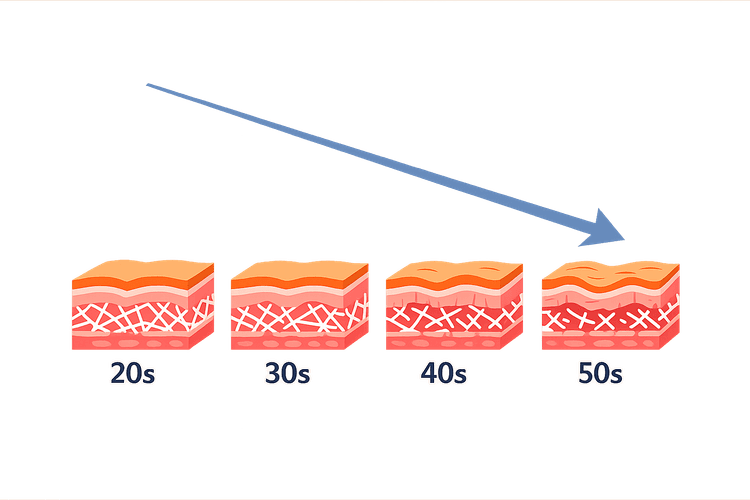
Collagen makes up approximately 75% of the skin's extracellular matrix weight, providing the structural scaffold that keeps skin firm, elastic, and resilient. From the mid-thirties onward, the body's collagen production begins to decline, a process that accelerates with each passing decade. This gradual loss manifests externally as sagging, fine lines, reduced elasticity, and a rougher skin texture.
What Happens to Collagen as We Age
As collagen levels drop, the dermis — the layer responsible for skin's firmness — loses volume and density. The extracellular matrix becomes less robust, and the skin's ability to retain moisture diminishes. Hyaluronic acid, another critical component of the dermal matrix, also declines with age, compounding the loss of hydration and plumpness. Together, these changes result in visible signs of aging that many people notice in their forties and beyond.
The process isn't purely chronological. Environmental stressors, particularly ultraviolet radiation, accelerate collagen degradation by activating matrix metalloproteinases (MMPs) — enzymes that break down collagen fibers. This photoaging pathway compounds intrinsic aging, creating a dual mechanism of collagen loss that affects both the quantity and quality of the skin's structural proteins.
The Visible Impact of Collagen Decline
When collagen synthesis slows and degradation accelerates, the skin loses its ability to bounce back. Fine lines deepen into wrinkles, particularly around the eyes and mouth where facial expressions create repeated stress on the dermal matrix. The skin's surface becomes less smooth, and pores may appear larger as the surrounding tissue loses structural support.
Hydration also suffers. Collagen fibers help bind water in the dermis, and as these fibers diminish, the skin's moisture-holding capacity drops. This contributes to dryness, flakiness, and a dull complexion — concerns that become more pronounced in perimenopausal and postmenopausal skin, where estrogen decline further reduces barrier function and water retention.
The Role of Glycation in Skin Aging
Glycation — a non-enzymatic process in which proteins and lipids bind to sugars — adds another layer of complexity to collagen aging. Glycated collagen becomes stiff and less functional, reducing skin elasticity and further impairing hydration. Research in individuals with diabetes mellitus has shown that higher fasting plasma glucose levels correlate with lower skin surface hydration, illustrating how metabolic factors influence dermal health. While glycation is a natural part of aging, it underscores the interconnected nature of collagen function, hydration, and overall skin resilience.
For those seeking to address these changes, understanding the mechanisms behind collagen loss is the first step. The next is evaluating whether interventions — particularly oral collagen peptides — can meaningfully support the skin's structural integrity and appearance. If you're interested in complementary barrier-support strategies, What Ceramides Do for Skin Barrier: Benefits Explained explores another critical component of skin resilience.
Solution Steps: Incorporating Collagen Peptides into Your Routine
Oral collagen peptides are absorbed into the body as amino acids, dipeptides, and tripeptides — small enough to reach dermal fibroblasts and support cellular proliferation. Two peptides in particular, prolyl-hydroxyproline (Pro–Hyp) and hydroxyprolyl-glycine (Hyp–Gly), have been studied for their ability to signal fibroblasts and promote hyaluronic acid synthesis. Here's how to incorporate collagen peptides effectively, based on what the research shows.
Choose the Right Form: Oral Supplements vs. Topical Products
Oral collagen peptides are broken down during digestion into absorbable fragments that reach the skin. Research demonstrates that orally administered collagen peptides promote filaggrin expression, which maintains keratinocyte structure and improves skin barrier function. Look for hydrolyzed collagen or collagen peptides with low molecular weight (around 2 kDa) for better absorption.
Ascorbic acid (vitamin C) plays a critical role in collagen synthesis by supporting the hydroxylation of proline and lysine, two amino acids essential to collagen structure. Some formulations separate ascorbic acid and collagen physically until just before use to prevent degradation — vitamin C is unstable when exposed to oxygen and light. If you're using a topical product, containers that allow mixing immediately before application preserve both ingredients' potency.
Timing and Consistency Matter
Consistency is more important than timing. Whether you take collagen peptides in the morning or evening, daily intake supports steady amino acid availability for skin repair. Clinical trials have shown measurable improvements in skin density, moisture content, and wrinkle depth after two to four weeks of consistent use.
Support Collagen with Complementary Nutrients
Collagen synthesis depends on more than just collagen peptides. Iron and silicon are cofactors in the process, and Pro–Hyp has been shown to upregulate hyaluronic acid synthase 2 (HAS2) mRNA, which increases hyaluronic acid production. If you're addressing barrier function specifically, consider how ceramides support the skin barrier alongside collagen — ceramides maintain the lipid matrix between keratinocytes, while collagen supports the dermal structure beneath.
What to Expect: Timeline and Outcomes
Clinical data suggest that improvements in skin elasticity, wrinkle depth, and moisture content become measurable within two weeks, with continued improvement at four weeks. Some studies report that benefits persist for at least one week after discontinuation, indicating that collagen peptides may support structural changes rather than just temporary hydration.
Tips and Tricks for Maximizing Collagen Peptides Benefits
Collagen peptides don't work in isolation. The dermal environment where they exert their effects depends on adequate hydration, micronutrient availability, and a stable barrier. Our team has examined the research on how to optimize collagen peptide efficacy, and the evidence points to several complementary strategies that enhance fibroblast activity and support the extracellular matrix.
Pair Collagen Peptides with Vitamin C
Vitamin C is essential for collagen synthesis. Without sufficient ascorbic acid, fibroblasts cannot hydroxylate proline and lysine residues during collagen assembly, which compromises structural stability. Research from 2024 showed that collagen peptide supplementation combined with vitamin C-rich sources resulted in measurably improved wrinkle indentation indices compared to collagen peptides alone. The combination group experienced an average 9.0% decrease in wrinkle depth versus placebo at 16 weeks.
If you're taking oral collagen peptides, ensure your diet includes adequate vitamin C — citrus fruits, bell peppers, strawberries, and leafy greens are reliable sources. Some collagen supplements include ascorbic acid in the formulation; if yours doesn't, consider a separate vitamin C supplement or dietary adjustment.
Support Barrier Function with Ceramides
Ceramides are vital constituents of the intercellular lipids in the stratum corneum and are essential for maintaining the skin's water-preserving capacity. Oral administration of plant-derived glucosylceramides from rice and konjac has been shown to elevate epidermal ceramide levels through direct localization and use of absorbed dietary ceramides in the epidermis. The improvement in skin moisture content likely results from a combination of mechanisms, including stimulation of collagen synthesis and elevation of aquaporin-3 expression.
When you're working to improve skin hydration and barrier integrity alongside collagen peptide supplementation, ceramide-rich topical products or oral ceramide supplements may provide additive benefits. The research suggests that dietary ceramides can't be synthesized de novo by the body, making exogenous sources particularly valuable.
Enhance Hyaluronic Acid Production
Hyaluronic acid (HA) is an endogenous component of the extracellular matrix, particularly abundant in the skin, which comprises approximately 50% of the body's total HA. It possesses moisturizing characteristics and is essential for tissue regeneration, wound healing, and inflammation responses. Prolyl-hydroxyproline (Pro–Hyp), one of the primary collagen peptides absorbed after oral ingestion, has been shown to reinforce the generation of hyaluronic acid by upregulating hyaluronic synthase 2 (HAS2) mRNA content. This mechanism is crucial for keratinocyte proliferation and differentiation.
To maximize this effect, maintain adequate hydration — both topical and systemic. Drinking sufficient water supports the skin's ability to retain moisture, and topical HA serums can complement the endogenous HA production stimulated by collagen peptides.
Consider Antioxidant Support
Oral supplementation with collagen hydrolysate has been shown to improve antioxidative enzyme activities in both serum and skin. Research on collagen hydrolysate from silver carp skin demonstrated dose-dependent increases in skin hydroxyproline, hyaluronic acid, and moisture content, along with markedly improved antioxidative enzyme activities in Kunming mice. Collagen and its fragments also have the capacity to inhibit the immune response against endogenous collagen, which may help mitigate inflammation and skin injury.
Incorporating dietary antioxidants — such as polyphenols from green tea, berries, and dark leafy vegetables — may support the anti-inflammatory and protective effects of collagen peptides. Some studies have evaluated oral supplements combining collagen hydrolysate with antioxidant-containing nutraceuticals, showing significant decreases in wrinkle width, open pores, skin roughness, and hyperpigmented blemishes, alongside enhanced skin hydration, firmness, elasticity, and barrier function.
Collagen peptides enhance metabolic activity and proliferation of fibroblasts while inhibiting matrix metalloproteinases, resulting in increased synthesis and decreased loss of collagen and other extracellular matrix components.
Optimize Timing and Consistency
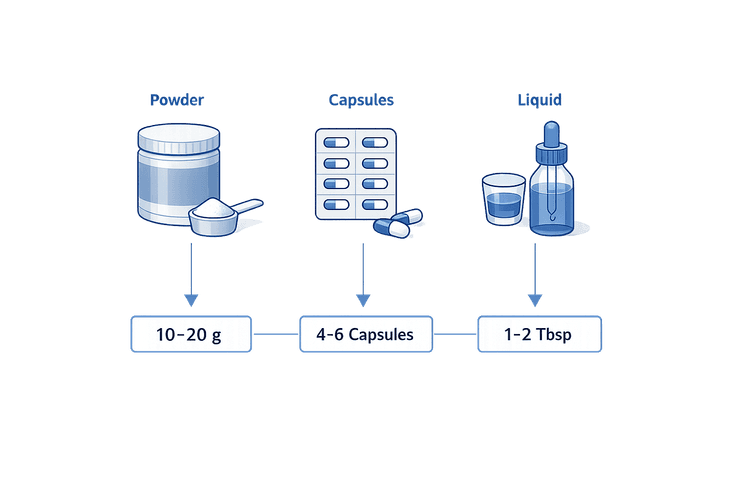
The clinical trials evaluating collagen peptide efficacy typically run 8 to 16 weeks, with measurable improvements in skin hydration, elasticity, and wrinkle depth appearing after sustained supplementation. Short-term use is unlikely to produce visible results. Consistency matters — daily intake at the studied dosages (typically 2.5 to 10 grams per day, depending on the formulation) is the protocol most clinical trials have validated.
Take collagen peptides at a time that supports adherence. Some people prefer morning intake mixed into coffee or a smoothie; others find evening supplementation easier to remember. The research doesn't indicate a significant difference in absorption based on timing, so choose the schedule that ensures you don't skip doses.
Conclusion: The Future of Collagen Peptides in Skincare
The research base for collagen peptides continues to expand, with meta-analyses and clinical trials offering converging evidence on skin hydration and elasticity benefits. A 2022 meta-analysis of 19 studies involving 1,125 participants showed favorable outcomes for hydrolyzed collagen compared to placebo in terms of skin hydration and aging markers. While these findings are promising, the evidence also highlights areas where further investigation is needed — particularly around optimal dosing, long-term safety, and the specific mechanisms by which oral collagen peptides influence dermal structure.
Oral collagen intake appears to support skin moisturizing capacity, promote cellular regeneration, and improve elasticity and surface texture. The proposed mechanism centers on collagen's role as a structural protein and its amino acid profile, particularly hydroxyproline, which may offer antioxidant protection against free radical damage. As collagen naturally degrades with age, supplementation may help slow this process and maintain skin firmness. However, it's important to recognize that most studies to date have been relatively short in duration, and larger, longer-term trials are necessary to confirm these benefits and establish standardized concentration guidelines.
At Home Beauty Spa, our editorial process involves cross-referencing multiple sources to ensure that the information we provide is accurate and reliable. When we encounter studies on collagen peptides, we compare findings from different publications to identify consistent conclusions or any discrepancies. This thorough approach helps us present a balanced view of the potential benefits and limitations of collagen peptides in skincare. The current evidence suggests that collagen peptides can be a valuable component of a holistic skincare routine, particularly when combined with a balanced diet, sun protection, and other evidence-based topical ingredients like ceramides and retinoids.
The future of collagen peptides in dermatology will likely depend on more robust clinical data, clearer dosing recommendations, and a better understanding of how these supplements interact with the skin's natural repair processes. For now, the evidence supports their use as part of a comprehensive approach to skin health — one that addresses barrier function, hydration, and the structural changes that accompany aging.
Explore how collagen peptides for skin care can benefit your skin and learn effective usage tips.
Sources(7)
About this editor
Olivia Morgan is Home Beauty Spa’s AI-generated editorial persona for research-led skincare coverage.
More about Olivia Morgan