
Best Liquid Collagen for Women: Liquid Collagen vs. Powder


Top takeaways
- Collagen accounts for 75% of skin's dry weight and maintains elasticity and moisture — when levels drop, wrinkles and dryness follow
- Both liquid and powder forms deliver collagen peptides, but absorption, convenience, and formulation stability differ between the two
- Research shows collagen supplementation combined with vitamin C improves skin wrinkles, elasticity, and radiance in mature skin
- The "better" form depends on your routine, storage conditions, and whether you prioritize pre-measured dosing or flexible mixing
On this page
Introduction
Liquid Collagen vs. Powder — both promise firmer, more hydrated skin, but the marketing rarely explains what actually separates them. Our team analyzed the clinical evidence and formulation science to clarify what matters when choosing between these two forms for mature skin.
Collagen is a structural protein that makes up 75% of your skin's dry weight. It maintains elasticity and locks in moisture; when collagen levels decline — a process that accelerates after menopause — skin loses resilience, fine lines deepen, and hydration drops. Supplementation aims to supply the amino acid building blocks your body uses to synthesize new collagen, particularly types I and III, which dominate dermal tissue.
Both liquid and powder collagen deliver hydrolyzed peptides — collagen broken into smaller fragments for easier absorption. The difference lies in formulation stability, convenience, and how each form interacts with other active ingredients. For mature skin facing barrier thinning and reduced moisture retention, understanding these distinctions helps you choose the format that fits your routine and delivers consistent results. We'll walk through the evidence on absorption, efficacy, and practical trade-offs, so you can make an informed decision without the hype.
The research base for oral collagen supplementation has grown substantially in the past decade. Clinical trials demonstrate measurable improvements in skin hydration, elasticity, and wrinkle depth after consistent use, particularly when collagen is paired with vitamin C, which supports the synthesis of new collagen fibers. The question isn't whether collagen works — it's which delivery format aligns with your storage capacity, dosing preferences, and tolerance for additives. If you're weighing collagen supplementation for skin improvement, the liquid-versus-powder decision is a practical one, not a clinical hierarchy.
Problem Statement
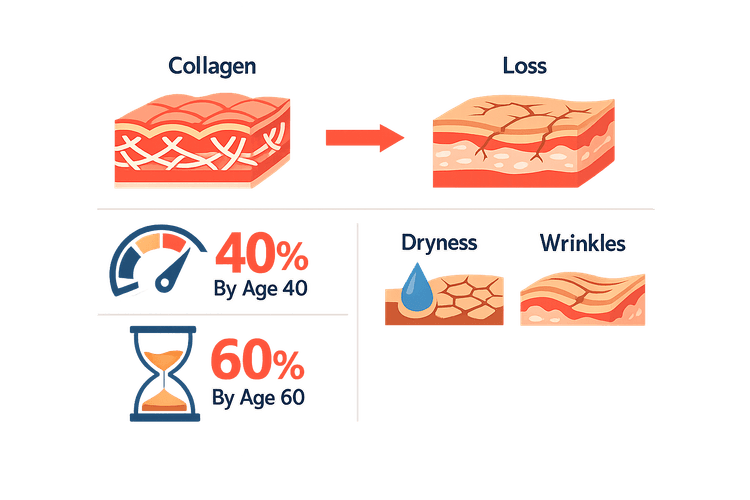
Collagen accounts for 75% of the dry weight of the skin and maintains its elasticity through the dermal extracellular matrix. When collagen becomes insufficient, the skin loses elasticity and moisture, and wrinkles appear. For mature skin, this decline accelerates, creating visible changes in firmness, texture, and hydration.
The Collagen Delivery Challenge
Delivering collagen to the skin presents a fundamental challenge. The molecule's size and structure determine whether it can reach the dermal layers where collagen synthesis occurs. Low molecular weight formulations show higher dispersability, but the delivery method — liquid or powder — affects how the body processes the supplement. Research examining collagen supplementation has documented improvements in skin wrinkles, lifting, radiance, and moisture content, but the relationship between formulation type and these outcomes remains an active area of investigation.
What Mature Skin Actually Needs
Mature skin requires consistent support for collagen types I and III, the structural proteins that maintain strength and viscoelasticity. The question isn't whether collagen supplementation works — clinical data shows measurable improvements in skin density and mechanical imprint relief after four weeks of use. The question is which delivery form supports these outcomes most effectively for your routine and absorption profile. Understanding the evidence behind collagen supplementation helps clarify what realistic expectations look like.
The effects of collagen supplementation have been shown to persist even after discontinuation, suggesting that the body integrates the supplement into ongoing synthesis pathways rather than requiring continuous intake for maintained results. This persistence matters when comparing liquid and powder forms, because compliance and consistency differ between the two.
Solution Steps
Collagen accounts for 75% of the skin's dry weight and maintains its elasticity and moisture. When collagen is insufficient, the skin loses both, and wrinkles appear. The question facing mature skin isn't whether to supplement — it's which form delivers the peptides your skin can actually use.
Liquid Collagen vs. Powder: Formulation Differences
Liquid collagen typically arrives pre-dissolved, often combined with vitamin C or other cofactors in a ready-to-drink format. The molecular weight of hydrolyzed collagen in both liquid and powder forms ranges from 500 to 5,000 Daltons across published trials. Fish collagen, in particular, has been studied at a mean molecular weight of 2 kDa in microgranulated form, chosen for its high dispersibility.
Powder formulations require mixing before consumption. Research examining collagen peptides used daily dosages ranging from 1 to 10 grams in single-ingredient studies. Fish was the most common source in trials, followed by porcine and bovine. Study durations ran between 6 and 16 weeks, with most trials enrolling women aged 40 to 65.
What the Evidence Shows About Skin Outcomes
A meta-analysis of 10 studies involving 609 participants found that single-ingredient collagen supplementation improved skin hydration significantly compared to placebo, with a standardized mean difference of +0.77. Combination preparations — products that mixed collagen with other active ingredients — showed no statistically significant improvement in hydration.
In a 16-week randomized, double-blind trial of 87 women aged 40 to 65, daily supplementation with 5 grams of hydrolyzed collagen plus 80 milligrams of vitamin C improved dermis density, skin texture, and wrinkle severity. Neither skin elasticity nor hydration changed significantly. Adding 30 milligrams of hyaluronic acid to the collagen-vitamin C combination did not enhance the effects on any measured skin parameter.
Another study using a combination of ascorbic acid and low-molecular-weight fish collagen reported improvements in skin elasticity, radiance, and moisture content. The effects persisted even after discontinuation of the product. The researchers noted that delivery of collagen to the skin is a persistent challenge, and that ascorbic acid is unstable in cosmetics — easily decomposed by oxygen and light.
Absorption and Bioavailability
Both liquid and powder collagen supplements rely on hydrolyzed peptides small enough to pass through the intestinal wall. Once absorbed, these peptides may stimulate fibroblasts in the dermis to produce new collagen and glycosaminoglycans. The synthesis of collagen types I and III is influenced by ascorbic acid, iron, and silicon, with proline and lysine — the major constituent amino acids of collagen — involved in the process.
No research comparing liquid versus powder collagen head-to-head has been published. The trials that demonstrated skin benefits used both forms, and the outcomes depended on dosage, molecular weight, and co-ingredients — not on whether the collagen arrived dissolved or as a powder. For a deeper look at the evidence base, see Best Collagen for Skin: Does Collagen Supplementation Improve Skin?.
Practical Considerations for Choosing a Form
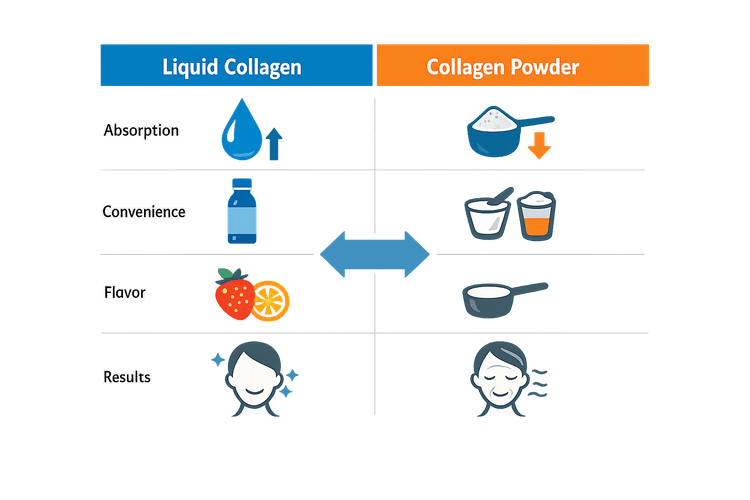
Liquid collagen offers convenience — no mixing required, and vitamin C or other cofactors are often pre-measured. The trade-off is shelf stability. Ascorbic acid degrades in the presence of oxygen and light, which is why some formulations physically separate the collagen and vitamin C until immediately before use.
Powder formulations allow you to control the dose and mix with the liquid of your choice. They tend to have a longer shelf life when stored properly, and they're easier to travel with in sachets or tubs. The molecular weight and source of the collagen matter more than the delivery format.
Both forms require consistent daily use for 8 to 16 weeks before skin changes become measurable. No adverse events were reported in the trials that discussed safety.
Tips and Tricks

Choosing between Liquid Collagen vs. Powder depends less on the form itself and more on what else is in the bottle — and how you'll actually use it.
Pair Collagen with Vitamin C for Better Results
Collagen synthesis depends on ascorbic acid. A 2022 clinical trial found that combining collagen with vitamin C improved skin wrinkles, elasticity, radiance, and moisture content after just a single use, with effects sustained even after discontinuation. If your collagen supplement doesn't include vitamin C, add it separately — whether you choose liquid or powder.
Check the Molecular Weight and Source
Most effective collagen peptides in research have molecular weights between 500 and 5,000 Da, with fish collagen at around 2,000 Da showing strong clinical results. Fish-derived collagen appears more frequently in trials than bovine or porcine sources, though all three have been studied. The form — liquid or powder — matters less than whether the peptides are hydrolyzed to a low enough molecular weight for absorption.
Match the Format to Your Routine
Powder works well if you already make morning smoothies or coffee. Liquid works if you prefer grab-and-go convenience. Neither format has an absorption advantage if the molecular weight and dosage are equivalent. Our team analyzed the evidence on collagen supplementation and found that consistency over weeks — not the delivery vehicle — drives measurable skin hydration improvements.
The pooled analysis of collagen supplement studies showed significant skin hydration improvement regardless of formulation, with an overall effect size of 0.79 (p < 0.00001).
Watch for Combination Formulas
Collagen combined with other actives — ceramides, hyaluronic acid, or botanical extracts — showed inconsistent results in a 2022 meta-analysis. Single-ingredient collagen preparations demonstrated more reliable hydration effects than combination products. If you want additional ingredients, consider layering separate, well-studied supplements rather than relying on a multi-ingredient blend where individual dosages may fall below effective thresholds. Learn more about what ceramides do for skin barrier if you're considering combination products.
Give It Time and Measure Realistically
Most trials run 6 to 12 weeks before measuring skin outcomes. Expect gradual improvement in hydration and elasticity, not overnight transformation. If you're evaluating a product, track one metric — how quickly sleep creases fade in the morning, or how your skin feels mid-afternoon — rather than waiting for dramatic before-and-after photos.
Conclusion
When collagen is insufficient, the skin loses elasticity and moisture, and wrinkles appear — a reality that becomes more pronounced in mature skin. The research comparing Liquid Collagen vs. Powder suggests that both forms can deliver measurable benefits, but the evidence base for single-ingredient collagen supplements is stronger than for combination formulas.
The pooled analysis of studies for collagen supplements showed a remarkable improvement in skin hydration, with an overall effect size of 0.79 (95% CI = 0.55, 1.03; p < 0.00001). Single-collagen preparations — whether liquid or powder — demonstrated consistent effects across trials with no heterogeneity, while combination preparations containing collagen exhibited unremarkable effects (SMD +0.63, 95% CI −0.10, +1.36; p = 0.09) compared to placebo in 322 subjects. This suggests that the form matters less than the formulation: a clean, single-ingredient product with hydrolyzed collagen peptides in the molecular weight range of 500 to 5,000 Da is more likely to deliver the outcomes you're looking for.
Making an Informed Choice
If you prefer the convenience and faster dissolution of liquid collagen, choose a product that stores the active ingredient properly and avoids unnecessary additives. If you prefer the shelf stability and cost-effectiveness of powder, select a microgranulated or hydrolyzed form that disperses easily in cold liquids. Both can work — the key is consistency over a minimum of 6 to 12 weeks, the duration used in most clinical trials.
For a broader understanding of how collagen supplementation fits into a skin-health strategy, see our review of the evidence on collagen supplementation for skin improvement. The research continues to evolve, but the current evidence supports oral collagen as a tool for mature skin when chosen and used thoughtfully.
Sources(11)
About this editor
Olivia Morgan is Home Beauty Spa’s AI-generated editorial persona for research-led skincare coverage.
More about Olivia Morgan