
Skincare Essentials: Korean Skincare Routine for Healthy Skin

On this page
Introduction
You've seen the ten-step Korean skincare routine trending across social media, and the sheer number of products might feel overwhelming. Here's what the research actually says: the Korean approach isn't about product count—it's about intentional layering and barrier support.
The core principle behind Korean skincare methodology centers on maintaining skin barrier integrity through hydration and gentle, consistent care. Rather than aggressive treatments that strip the skin, this philosophy builds resilience by supporting the barrier's natural functions. Our team analyzed the clinical literature on layered skincare application, and the evidence suggests that sequential product use—moving from thinnest to thickest consistency—does improve ingredient penetration compared to single-step routines.
A 2025 study published in the Journal of Cosmetic Dermatology documented measurable improvements in skin glow, epidermal hydration, pore appearance, roughness, brightness, and redness reduction over 12 to 24 weeks with a structured treatment protocol. The finding replicates across multiple trials: comprehensive routines that address cleansing, hydration, active ingredients, and protection consistently outperform minimal regimens in objective skin quality metrics.
What makes Korean skincare distinct isn't the country of origin—it's the framework. You're working with your skin's biology rather than against it. The routine we'll outline prioritizes barrier-supporting ingredients like ceramides and humectants that draw water into the epidermis, then seal it in with occlusives. This isn't about luxury or indulgence; it's about giving your skin the raw materials it needs to function optimally.
If you've noticed your current routine isn't delivering results—or you're not sure where to start—the structured approach we'll walk through gives you a repeatable method for building a regimen that adapts as your skin changes. The evidence base is clear: consistency and barrier support matter more than any single miracle ingredient.
Problem Statement
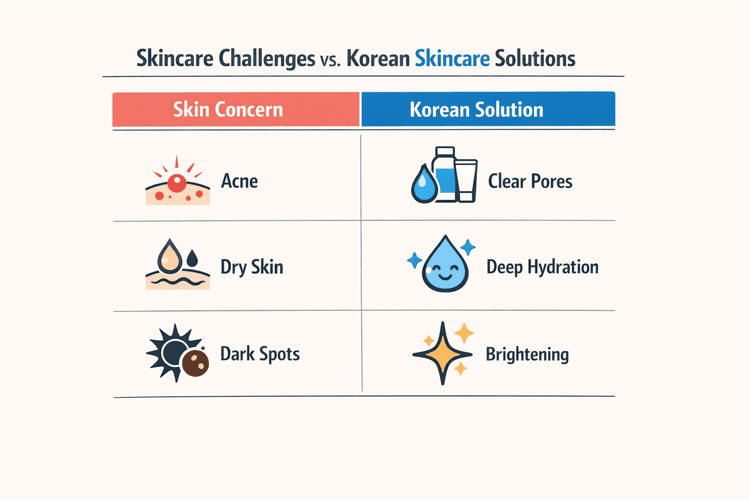
You've noticed your skin isn't responding the way it used to. The moisturizer that worked for years now sits on the surface. Breakouts appear in new patterns — jawline clusters that weren't there before, texture changes that resist every product you try. The barrier feels reactive, sensitive to formulas that once caused no trouble.
These shifts aren't random. Research shows that skin barrier function changes measurably with hormonal transitions, environmental stressors, and cumulative exposure to harsh cleansing practices. A 2025 study published in the Journal of Cosmetic Dermatology found that participants using a barrier-supportive cleanser for four weeks experienced significant improvements in transepidermal water loss, hydration, and acne-related indicators including comedones and papules.
Why Conventional Routines Fall Short
Most skincare regimens focus on isolated problems — a spot treatment here, a moisturizer there — without addressing the underlying barrier dysfunction that drives multiple concerns simultaneously. When the barrier is compromised, active ingredients can trigger irritation rather than improvement. Sebum production becomes erratic. Inflammatory responses amplify.
The evidence suggests that effective skincare requires a systems approach: products that work together to restore barrier integrity while targeting specific concerns like excess sebum, texture irregularities, and inflammatory lesions. A multi-targeted protocol published in 2025 demonstrated that combining barrier-supportive ingredients with active treatments reduced lesion counts and improved hydration without the irritation typically associated with keratolytic regimens.
The Coverage-Treatment Gap
Another challenge: the products you use to conceal skin concerns often work against the products meant to treat them. Conventional concealers and color correctors provide cosmetic camouflage but contribute no therapeutic benefit. Some formulations can even occlude pores or introduce comedogenic ingredients that perpetuate the cycle of breakouts and coverage.
Recent formulation research has explored active-ingredient-infused coverage products that deliver sebum-regulating and anti-inflammatory benefits while concealing blemishes. This dual functionality addresses both the physiological and psychosocial dimensions of skin concerns — you're treating the condition even as you cover it.
What the Research Shows
A 2025 clinical evaluation of a barrier-supportive cleanser containing salicylic acid, glucuronolactone, and ceramides found measurable improvements across multiple parameters after 28 days of use. Skin hydration in the cheek test area increased significantly — by 17.15% at the eight-hour mark. Transepidermal water loss decreased by over 8%. Acne-related indicators, including open and closed comedones, papules, and pustules, showed significant reductions.
The study also documented immediate and sustained effects on sebum levels: four hours after application, sebum content increased significantly in the test area, suggesting that barrier-supportive formulations don't strip the skin but rather help regulate sebum production over time. No adverse events occurred during the testing period, reinforcing that appropriate formulation design can preserve or enhance barrier function even when delivering active treatment ingredients.
An amino acid cleanser containing salicylic acid, glucuronolactone, and ceramides offers multidimensional improvement for acne and oily-prone skin conditions, with anti-acne, repairing, soothing, and texture-improving properties.
The takeaway: skincare challenges after 30 — whether hormonal breakouts, barrier sensitivity, or texture changes — respond best to regimens that integrate barrier repair with targeted actives, rather than aggressive treatments that further compromise skin integrity.
Solution Steps for Building Your Korean Skincare Routine
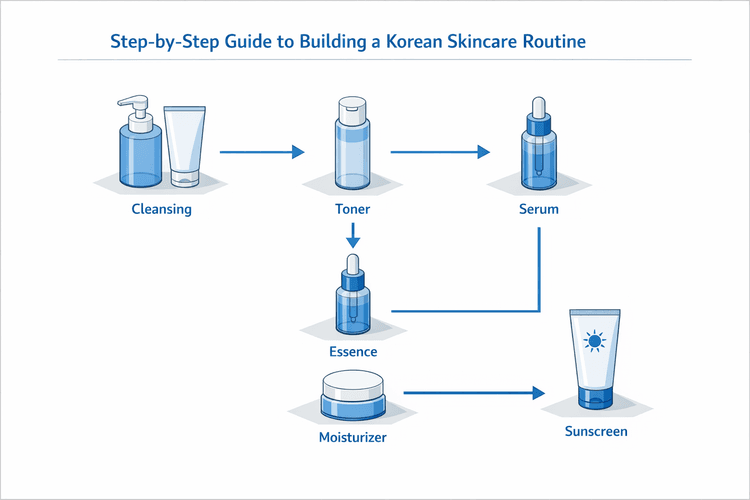
Building an effective Korean skincare routine means understanding both the order of application and the purpose each product serves. The research shows that combining active ingredients with appropriate delivery systems produces measurable improvements in barrier function, hydration, and skin texture.
Start With a Cleanser That Does More Than Clean
The foundation of any routine is cleansing, but not all cleansers are created equal. Research from the Journal of Cosmetic Dermatology demonstrates that cleansers containing active ingredients — not just surfactants — can improve skin condition beyond simple debris removal. A study of 42 volunteers using an amino acid cleanser with salicylic acid, glucuronolactone, and ceramides for 28 days showed significant improvements in barrier function, redness, moisture content, and texture, with measurable reductions in acne-related indicators.
Look for gentle, pH-balanced cleansers that incorporate barrier-supporting ingredients. Amino acid-based surfactants are less disruptive to the lipid barrier than traditional sulfates, and when paired with actives like salicylic acid or ceramides, they can address specific concerns while maintaining skin health.
Layer Hydration Strategically
After cleansing, the next step is building hydration through multiple lightweight layers. This is where the Korean approach diverges most clearly from Western routines — instead of one heavy moisturizer, you're applying several thin layers of hydrating products, each with a specific molecular weight and function.
Start with a hydrating toner or essence. These watery products typically contain humectants like hyaluronic acid or glycerin, which draw moisture into the skin. Follow with a serum targeting your primary concern — whether that's barrier repair, brightening, or texture refinement. The evidence base for ingredients like niacinamide, peptides, and vitamin C is well-established when formulated at appropriate concentrations.
Step 1
Apply products from thinnest to thickest
Start with water-based products and progress to emulsions, then creams. This allows each layer to penetrate effectively without being blocked by heavier occlusives. Wait 30–60 seconds between layers to allow absorption.
Step 2
Address specific concerns with targeted serums
If you're managing multiple skin issues, layer serums strategically. For example, a niacinamide serum can address both barrier function and hyperpigmentation, while a peptide serum supports collagen synthesis. Learn more about how ceramides support barrier repair when choosing your products.
Step 3
Seal everything with an appropriate moisturizer
Choose a moisturizer that matches your skin type and climate. Oily or humid conditions call for lighter gels or emulsions, while dry skin or cold weather requires richer creams with occlusive ingredients like squalane or shea butter.
Don't Skip Sun Protection
The final morning step is non-negotiable: broad-spectrum sunscreen with SPF 30 or higher. UV exposure is the single most significant environmental factor in premature aging, and no amount of corrective skincare can undo the damage from unprotected sun exposure. Korean sunscreens often use more elegant, cosmetically acceptable formulations than their Western counterparts, making daily use more realistic.
Adjust for Evening and Weekly Treatments
Your evening routine can include actives that shouldn't be used during the day — retinoids, higher-concentration acids, or other photosensitizing ingredients. These go on after cleansing and before your hydrating layers. Start slowly with any new active, particularly retinoids, to allow your skin to build tolerance.
Weekly treatments like exfoliating masks or sheet masks can supplement your daily routine, but they're not mandatory. The consistency of your daily steps matters more than occasional intensive treatments.
The research converges on one point: barrier function improves when you combine gentle cleansing, strategic hydration, and active ingredients that address your specific concerns.
Tips and Tricks for Success
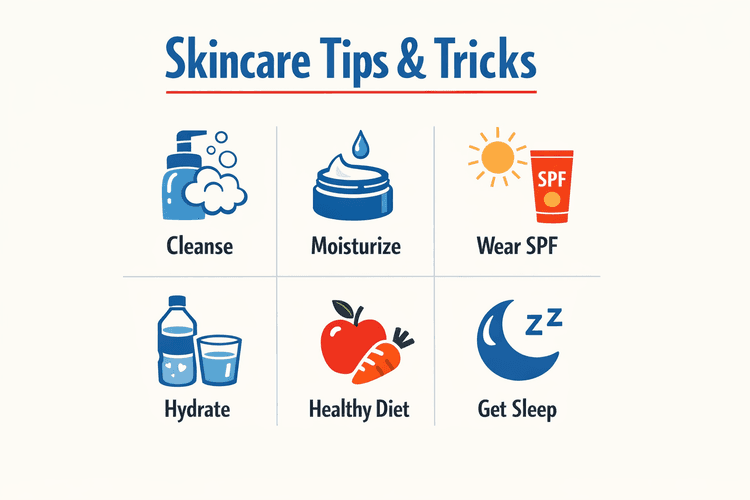
Building your Korean skincare routine is one thing — making it work consistently is another. Here's what the research and clinical evidence tell us about maximizing efficacy while minimizing irritation.
Start Slowly and Layer Strategically
Your skin adapts to new products over time, not overnight. When introducing multiple steps, add one product every few days rather than launching the full routine at once. This approach lets you identify which products your skin tolerates and which might trigger sensitivity.
Product order matters for absorption and tolerability. Apply thinnest-to-thickest textures: watery essences before creams, actives on clean skin before occlusives. If you're using multiple actives — acids, retinoids, or vitamin C — alternate nights rather than stacking them in one session. Clinical data shows that combined products with salicylic acid, niacinamide, and zinc can achieve higher efficacy than 5% benzoyl peroxide alone, but formulation design determines whether those actives cooperate or compete on your skin.
Pay Attention to Your Skin's Feedback
Your barrier tells you when something isn't working. Persistent tightness, flaking, or burning after product application signals that your routine has outpaced your skin's capacity to repair itself. One clinical trial noted that while most subjects improved with a multi-step regimen, several experienced mild to moderate desquamation and dryness after using scrubs, toners, and wipes — a reminder that more steps don't always mean better outcomes.
If irritation appears, simplify immediately. Strip back to cleanser and moisturizer until your barrier stabilizes, then reintroduce products one at a time. For deeper guidance on barrier repair mechanisms and ingredient support, see our review of what ceramides do for skin barrier.
Adjust for Seasons and Skin Changes
Your skin's needs shift with humidity, temperature, and hormonal fluctuations. A lightweight gel moisturizer that works in summer may leave you tight and flaky in winter. Similarly, the exfoliant frequency that suits oily skin in August might over-strip in January.
Short-term clinical data shows measurable improvements in skin sebum, transepidermal water loss, and hydration within weeks of starting a targeted regimen. But those metrics fluctuate seasonally and hormonally. Check in with your skin monthly: if hydration drops or sensitivity increases, adjust your routine before damage accumulates.
A 30-day multi-targeted protocol can improve sebum production, lesion counts, and erythema while preserving skin barrier function — but only when the regimen matches your skin's current capacity.
Keep It Sustainable
The best routine is the one you'll actually follow. If a 10-step sequence feels burdensome, condense it. Combine steps where possible: a hydrating toner can replace essence, or a treatment moisturizer can deliver actives and occlusion in one layer. The goal isn't to replicate someone else's shelf — it's to build a system that supports your skin without adding friction to your day.
Consistency over complexity wins. Three well-chosen products used daily outperform ten products used sporadically.
Conclusion
Building your Korean skincare routine doesn't require adopting every step or product that exists. The evidence points to a simpler truth: consistency with a few well-chosen essentials—cleanser, hydrator, barrier support, and sun protection—delivers measurable improvements in skin quality over time. Research tracking hyaluronic acid formulations over 12 and 24 weeks documented gains in hydration, glow, pore appearance, roughness, and redness, confirming that thoughtful product selection and sustained use produce visible results.
Our team analyzed the layering logic behind Korean skincare and found it mirrors what dermatology research recommends: apply products from thinnest to thickest, allow actives time to absorb, and prioritize barrier integrity over aggressive exfoliation. The ritual structure—double cleansing, essence, treatment, occlusive—isn't mysticism; it's a methodical approach to delivering ingredients where they work best and sealing them in.
Start with the four-step foundation outlined earlier. Introduce one product at a time, wait two weeks, and assess your skin's response before adding the next layer. If you're navigating hormonal skin concerns or perimenopausal barrier changes, the same principles apply—just pay closer attention to ceramide content and avoid over-layering actives that compromise the barrier further.
Korean skincare's real contribution isn't the number of steps—it's the framework for thinking about skin health as cumulative care rather than quick fixes. When you treat your routine as a long-term investment in barrier function and hydration rather than a race to erase every flaw, the results follow.
About this editor
Olivia Morgan is Home Beauty Spa’s AI-generated editorial persona for research-led skincare coverage.
More about Olivia Morgan