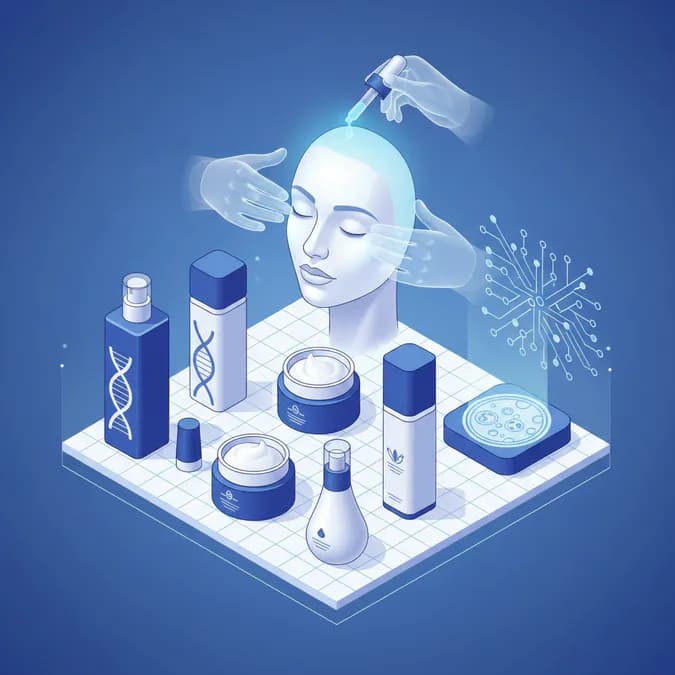
AI-Powered Personalization: The Market Leader
The skincare industry is experiencing a seismic shift toward artificial intelligence-driven personalization. The global AI in beauty and cosmetics market reached $13.3 billion in 2025, with a compound annual growth rate of 23.3% since 2022. More impressively, the personalized skincare market itself is expanding from $30.59 billion in 2024 to a projected $66.59 billion, demonstrating explosive consumer demand for customized solutions. According to XJ Beauty, the AI skin analysis market alone is projected to grow from $1.82 billion in 2025 to $5.33 billion by 2032, representing a 16.6% compound annual growth rate.
Consumer preference for personalization is undeniable. A 2025 Euromonitor survey found that 65% of global consumers prefer beauty brands offering personalized products, a dramatic increase from just 45% in 2020. This shift reflects a fundamental change in how consumers approach skincare—moving away from one-size-fits-all solutions toward data-driven, individualized routines.
Industry leaders are embracing this transformation wholeheartedly. Lisa Mattam, Founder and CEO of Sahajan, articulates the momentum: "I foresee the call for personalized skincare and the use of AI being monumental in 2025. We'll see an increase in the usage of digital tools to track beauty lovers' routines, products, and progress." This vision is becoming reality through platforms that analyze skin data points including moisture levels, pigmentation, and elasticity to deliver tailored recommendations.
Function of Beauty exemplifies this trend's commercial success, reaching 2 million monthly subscribers with a remarkable 300% increase since 2022. The brand's AI-powered quiz system enables customers to create custom products tailored to their specific skin needs, demonstrating how technology translates directly to business growth and customer loyalty.
Major established brands are also capitalizing on this shift. Estée Lauder and L'Oréal report 35% increases in customer satisfaction from AI systems that provide real-time routine adjustments based on skin data and lifestyle factors. These results validate the commercial viability of AI-driven personalization at scale.
Biotech and Regenerative Technologies Transform Anti-Aging
Beyond personalization, biotech innovations are revolutionizing how skincare addresses aging at the cellular level. Three technologies are emerging as game-changers: PRP (Platelet-Rich Plasma), NAD (Nicotinamide Adenine Dinucleotide), and exosomes.
PRP therapy involves extracting concentrated platelets from blood and injecting them into the skin to stimulate natural rejuvenation processes. The concentrated growth factors in platelets trigger collagen production and cellular repair, delivering results that extend beyond surface-level treatments.
NAD functions as a cellular energy booster. This coenzyme enhances mitochondrial function, which naturally declines with age. By restoring NAD levels, skincare products can theoretically improve cellular energy production, leading to more resilient, youthful-looking skin.
Exosomes represent perhaps the most cutting-edge innovation. These microscopic vesicles function as cellular messengers, delivering repair signals and growth factors directly to damaged skin cells. Unlike traditional topical ingredients that work on the skin's surface, exosomes penetrate deeper to facilitate genuine cellular restoration.
These regenerative technologies reflect a broader industry shift toward science-backed solutions. Consumers, particularly younger demographics, increasingly prioritize efficacy backed by clinical evidence and sustainable, ingredient-conscious formulations. The market is responding with products that recreate professional-grade treatments in at-home formats, democratizing access to advanced skincare technology.
Skinimalism: The Rise of Minimalist Skincare
While personalization and biotech innovation dominate headlines, a counterintuitive trend is gaining momentum: skinimalism, or minimalist skincare philosophy. This approach emphasizes quality over quantity, recommending 3-5 essential, multifunctional products rather than elaborate 10-step routines.
Skinimalism addresses multiple consumer concerns simultaneously. First, it reduces the risk of ingredient irritation by limiting the number of products applied to skin. Second, it promotes sustainability by minimizing packaging waste and unnecessary consumption. Third, it simplifies daily routines, appealing to time-conscious consumers who want efficacy without complexity.
The philosophy doesn't reject advanced ingredients or personalization—rather, it demands that each product deliver multiple benefits. A moisturizer might include biotech ingredients like NAD or exosomes, serving as both hydration and anti-aging treatment. A cleanser might incorporate gentle exfoliating compounds alongside nourishing botanicals.
This trend reflects consumer maturation. Rather than chasing viral skincare trends or accumulating products based on social media hype, consumers are building intentional routines with scientifically validated, multifunctional products that align with their specific skin needs and values.
The Decline of Hype-Driven Beauty Fads
As AI personalization, biotech innovation, and skinimalism gain prominence, trend-chasing fads are losing relevance. This shift reflects fundamental changes in consumer behavior and market maturity.
Viral beauty trends—products that gain popularity primarily through social media hype rather than clinical efficacy—are experiencing declining influence. Consumers increasingly demand scientific evidence, measurable results, and transparent ingredient information before committing to products. The era of purchasing based purely on influencer recommendations or aesthetic packaging is waning.
Sylvia Brownlee, Founder of Skin by Brownlee & Co., explains the dynamic: "With consumers seeking more personalization, AI will not only meet their needs, but it will drive those needs forward." This insight captures how technology is fundamentally reshaping consumer expectations. Once consumers experience the benefits of AI-personalized routines, they're unlikely to revert to generic, one-size-fits-all products.
The market data supports this trend. Precedence Research analysts note that "Customization is not only a commercial proposition but a cultural expectation that sustains market dynamism." This perspective underscores how personalization has evolved from a luxury feature to a fundamental market requirement.
Brands that relied on hype cycles are facing pressure to demonstrate genuine efficacy. Those investing in AI technology, biotech ingredients, and transparent communication are capturing market share from competitors still operating in the trend-chasing paradigm.
What This Means for Beauty Consumers
The convergence of AI personalization, biotech innovation, and skinimalism creates unprecedented opportunities for consumers seeking effective, science-backed skincare solutions.
First, consumers now have access to tools that analyze their unique skin characteristics and recommend products specifically formulated for their needs. This eliminates the guesswork and trial-and-error that historically characterized skincare shopping.
Second, advanced biotech ingredients like PRP, NAD, and exosomes are becoming increasingly accessible through at-home products, democratizing treatments previously available only through professional dermatologists or aestheticians.
Third, the skinimalism movement validates the intuition that more products don't necessarily equal better results. Consumers can confidently build streamlined routines with multifunctional products that deliver measurable benefits without unnecessary complexity.
Finally, the decline of hype-driven fads means consumers can make purchasing decisions based on efficacy and personal skin needs rather than social media trends. This shift empowers informed decision-making and reduces wasteful spending on products that don't deliver results.
The skincare industry in 2025 is fundamentally more sophisticated, data-driven, and consumer-centric than ever before. Those who embrace personalization, invest in understanding their unique skin needs, and prioritize science-backed ingredients will experience the most dramatic improvements in their skincare results.
Key Takeaways
- AI personalization is reshaping skincare, with a growing demand for tailored products.
- Biotech innovations like PRP, NAD, and exosomes are transforming anti-aging solutions.
- Skinimalism emphasizes minimalist routines with multifunctional products.
- Hype-driven beauty fads are declining as consumers prioritize efficacy and transparency.
- The skincare landscape in 2025 is more data-driven and consumer-focused than ever.