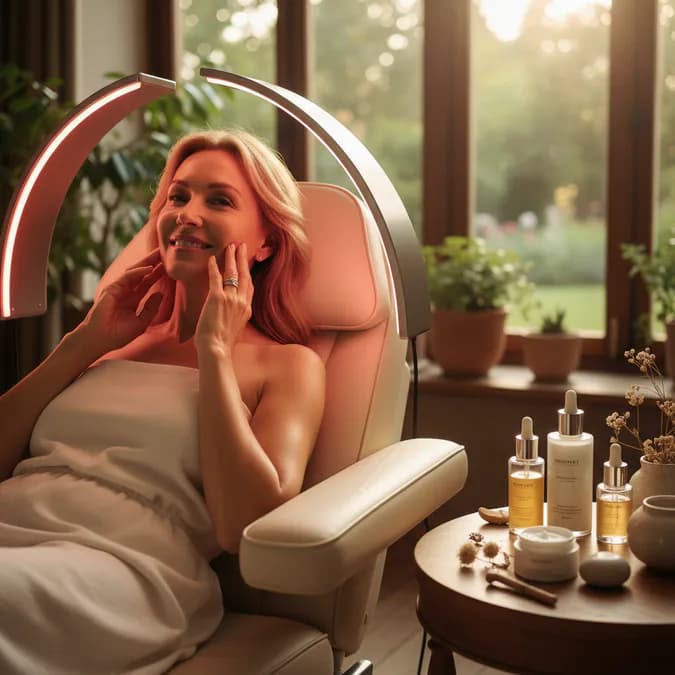
Understanding Red Light Therapy
Red light therapy, also known as photobiomodulation, utilizes specific wavelengths of red or near-infrared light (typically 630-700 nm) to penetrate the skin. This process stimulates cellular mitochondria, enhancing energy production and promoting cell repair and growth. RLT is non-invasive and has been FDA-cleared for home use, making it a safe option for those looking to rejuvenate their skin.
Benefits for Mature Skin
For mature skin, RLT offers several compelling benefits:
- Collagen Production: RLT stimulates collagen and elastin production, which are crucial for maintaining skin elasticity and reducing wrinkles.
- Improved Skin Texture: Clinical studies report over 90% of patients experiencing smoother skin texture and reduced redness after consistent treatments.
- Non-Invasive Treatment: Unlike surgical options, RLT is non-invasive and poses minimal risks, making it suitable for various skin types.
- Versatile Applications: Beyond anti-aging, RLT can also treat conditions like acne, psoriasis, and hair loss.
How Red Light Devices Work
Red light devices work by emitting specific wavelengths of light that penetrate the skin, stimulating cellular activity. This process enhances blood flow and promotes healing without the risks associated with UV light exposure. Users typically see results after consistent use over several weeks or months. Minor side effects, such as temporary redness, may occur, but these are generally mild and resolve quickly.
Comparing Skincare Technologies
When considering options for skincare, RLT stands out for its efficacy and safety compared to traditional treatments. Unlike chemical peels or laser treatments, RLT does not involve harsh chemicals or invasive procedures. It is a gentle yet effective alternative that can be integrated into a regular skincare routine.
User Experience and Results
Many users report significant improvements in their skin's appearance after incorporating RLT into their skincare regimen. For instance, a study published by the American Academy of Dermatology found that over 90% of participants noticed enhanced skin softness and reduced dark spots after just eight LED treatments over four weeks. Dermatologist Rahman from Stanford Medicine notes, "Red light penetrates the skin at shallow depths and stimulates follicle growth... Used over multiple months consistently, red light has been shown to regrow thinning hair." This highlights the versatility of RLT beyond just skin rejuvenation.
In conclusion, red light therapy presents a promising solution for those seeking to improve the appearance of mature skin. With its ability to stimulate collagen production and enhance skin texture, RLT is a valuable addition to any skincare routine. As always, it’s advisable to consult with a healthcare provider before starting any new treatment, especially for individuals with a history of skin conditions.