E.l.f. Beauty CEO Tarang Amin is executing an ambitious strategy to transform the company into a 21st-century beauty conglomerate specifically designed for Gen Z consumers. The centerpiece of this expansion is the $1 billion acquisition of Hailey Bieber's rhode skincare brand in May 2025, which contributed $128 million to Q3 2026 sales growth. This strategic move represents a pivotal moment in how affordable beauty brands are competing with traditional luxury conglomerates and reshaping consumer expectations around quality, accessibility, and brand authenticity. The e.l.f. Beauty gen z approach has become a blueprint for how modern brands capture younger consumers through cultural relevance and authentic engagement.
The Gen Z Beauty Market Opportunity for E.l.f. Beauty Gen Z
Gen Z consumers are fundamentally reshaping the beauty industry through their purchasing power and brand loyalty preferences. Unlike previous generations, Gen Z prioritizes authenticity, inclusivity, and value over prestige pricing. E.l.f. Beauty has positioned itself perfectly at the intersection o
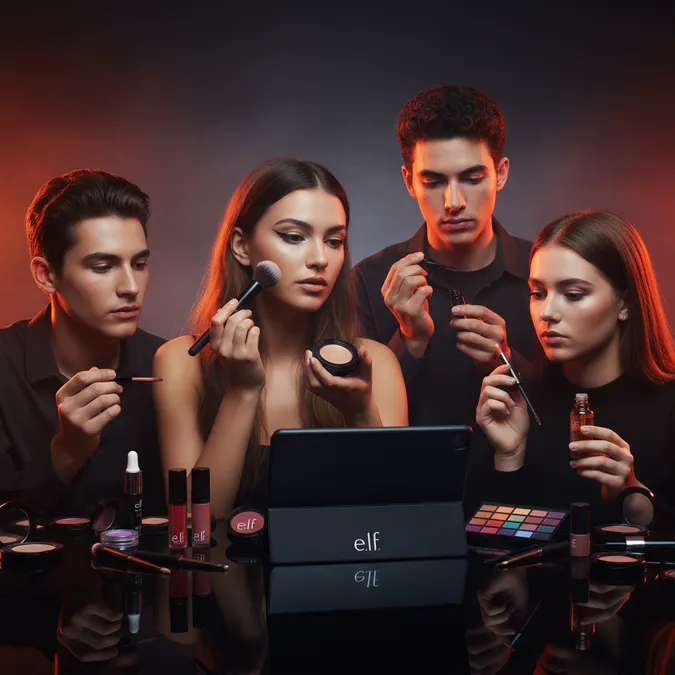
The e.l.f. Beauty gen z market penetration has exploded dramatically in recent years. Five to six years ago, e.l.f. Beauty had only 10% brand awareness. Today, that figure exceeds 40%, driven largely by strategic Super Bowl advertising investments and viral TikTok marketing campaigns. According to CFO Mandy Fields, "Brand awareness was a little over 10% five or six years ago, and today it's over 40%." She further explained the company's confidence in these big-ticket investments: "From a finance perspective, the company's confidence in big-ticket Super Bowl investments stems from their long-term impact on brand awareness rather than a focus on immediate dollar-for-dollar return."
This dramatic growth reflects a broader truth about Gen Z beauty consumers: they respond to brands that understand their culture and speak their language, rather than brands that simply have the longest heritage or highest price tags. The e.l.f. Beauty gen z approach has proven that affordability and quality are not mutually exclusive in the eyes of younger consumers. Industry analysts recognize that this demographic shift represents a fundamental realignment in beauty industry dynamics, with younger consumers wielding unprecedented influence over market trends and brand positioning.
Viral Marketing and Cultural Relevance
E.l.f. Beauty's success in capturing the e.l.f. Beauty gen z demographic stems from understanding how Gen Z discovers and engages with brands. Rather than relying on traditional advertising, the company leverages TikTok virality, memes, user-generated content, and influencer partnerships. Campaigns like #eyeslipsface have generated organic engagement that traditional beauty conglomerates struggle to replicate.
The company's marketing strategy includes:
- TikTok-first content creation and viral campaigns
- Meme-based marketing that resonates with Gen Z humor
- User-generated content initiatives that build community
- Shock-value initiatives promoting diversity and inclusivity
- Strategic influencer partnerships with Gen Z creators
The company's marketing budget of 24-26% of sales fuels this awareness-building strategy, significantly higher than industry averages. This investment level reflects e.l.f.'s commitment to maintaining cultural relevance and international growth, particularly as the company expands beyond North America. The e.l.f. Beauty gen z marketing playbook has become a case study for how modern beauty brands should engage younger consumers through authentic, culturally relevant channels rather than traditional media. Marketing experts recognize that e.l.f.'s approach represents a paradigm shift in how brands communicate with digitally native audiences, prioritizing social authenticity over polished corporate messaging.
The rhode Acquisition: Premium Meets Accessible
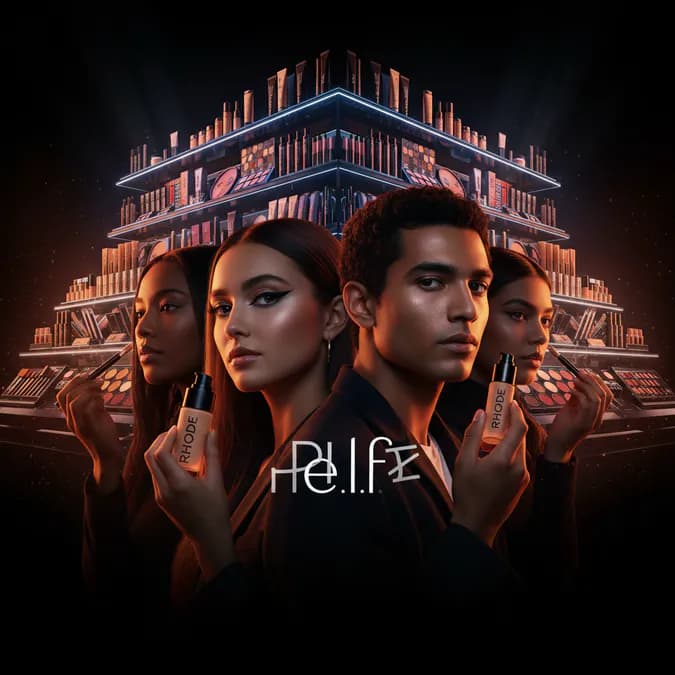
The acquisition of rhode represents a crucial evolution in e.l.f. Beauty's portfolio strategy and demonstrates the company's sophisticated approach to the e.l.f. Beauty gen z market. Rather than competing solely in the budget segment, the company now operates across multiple price tiers. Rhode brought Hailey Bieber's direct-to-consumer audience and premium skincare credibility to e.l.f.'s ecosystem, while e.l.f.'s distribution network and marketing prowess amplified rhode's reach.
The financial impact has been immediate and substantial. The rhode acquisition contributed $128 million to Q3 2026 sales growth, demonstrating the brand's strong performance within e.l.f.'s portfolio. This success validates the company's strategy of acquiring complementary brands rather than building them organically, allowing e.l.f. to quickly expand into adjacent market segments and consumer demographics.
The rhode acquisition also provides several strategic advantages:
- Access to premium skincare market segment and higher price points
- Hailey Bieber's celebrity influence and direct-to-consumer audience
- Enhanced credibility in the skincare category
- Opportunity to cross-sell e.l.f. products to rhode customers
- Diversification of revenue streams across price tiers
Global Expansion and Market Challenges
E.l.f. Beauty is aggressively expanding internationally, with recent market entries into Mexico via Sephora and Germany via Rossmann. International sales currently represent 20% of total revenue, with the company targeting significant growth in these regions. This international push is critical to CEO Tarang Amin's vision of building a true beauty conglomerate with global reach.
However, 2026 tariff challenges on China-sourced manufacturing present a significant headwind. The company manufactures much of its product line in China, making tariff increases a material concern for margins and pricing strategy. E.l.f. must balance the need to maintain its competitive pricing advantage—a core part of its Gen Z appeal—while absorbing or mitigating tariff costs.
The company addresses these challenges through:
- Multi-channel retail distribution (Target, Ulta, TikTok Shop, DTC)
- International expansion into high-growth markets
- Supply chain optimization and diversification
- Premium brand acquisitions to offset tariff impacts on margins
What This Means for the Beauty Industry
E.l.f. Beauty's strategy signals a fundamental shift in how beauty companies compete. The days of relying solely on heritage, luxury positioning, or traditional retail dominance are fading. Instead, cultural relevance, authentic engagement with younger consumers, and strategic portfolio diversification are becoming table stakes.
By combining affordable mass-market products with premium acquisitions like rhode, e.l.f. is creating a template that other beauty brands are likely to follow. The company's playbook demonstrates that Gen Z consumers don't view affordable and quality as mutually exclusive. They want inclusive, meme-worthy brands that reflect their values and fit their budgets.
E.l.f. Beauty, under Tarang Amin's leadership, has cracked this code more effectively than most traditional beauty conglomerates. The company's transformation from a budget cosmetics brand to a Gen Z powerhouse—evidenced by brand awareness growth from 10% to over 40%—positions it as the beauty empire for a generation that values authenticity over prestige. As the beauty industry continues to evolve, e.l.f.'s strategy of combining accessibility, cultural relevance, and strategic acquisitions will likely define the next era of beauty retail.
Key Takeaways
- E.l.f. Beauty gen z strategy focuses on affordability, authenticity, and cultural relevance rather than luxury positioning
- The company's brand awareness grew from 10% to over 40% through strategic Super Bowl advertising and viral TikTok campaigns
- The $1 billion Rhode acquisition contributed $128 million to Q3 2026 sales, validating the multi-tier portfolio approach
- E.l.f. Beauty gen z marketing budget of 24-26% of sales significantly exceeds industry averages
- International expansion and supply chain diversification are critical to offsetting tariff challenges
- The e.l.f. Beauty gen z model demonstrates that Gen Z consumers prioritize authenticity and value over prestige pricing
Frequently Asked Questions
What is e.l.f. Beauty's strategy for Gen Z consumers?
E.l.f. Beauty gen z strategy centers on three core pillars: affordability (75% of products priced at $10 or less), authenticity (meme-based marketing and user-generated content), and cultural relevance (TikTok-first campaigns and influencer partnerships). The company invests 24-26% of sales in marketing to maintain cultural relevance, significantly higher than industry averages. This approach has proven effective, growing brand awareness from 10% to over 40% in five to six years.
How much did the Rhode acquisition contribute to e.l.f. Beauty's revenue?
The Rhode acquisition, completed in May 2025, contributed $128 million to Q3 2026 sales growth. This substantial contribution demonstrates the success of e.l.f.'s strategy to acquire complementary premium brands while maintaining its core affordable product line. The acquisition allowed e.l.f. to access the premium skincare market segment while leveraging Hailey Bieber's direct-to-consumer audience and celebrity influence.
What challenges does e.l.f. Beauty face in 2026?
E.l.f. Beauty faces significant tariff challenges on China-sourced manufacturing in 2026, which threatens margins and pricing strategy. The company manufactures much of its product line in China, making tariff increases a material concern. To address this, e.l.f. is pursuing supply chain diversification, international expansion into high-growth markets, and premium brand acquisitions to offset tariff impacts on margins while maintaining its competitive pricing advantage.
How has e.l.f. Beauty achieved such high brand awareness growth?
E.l.f. Beauty achieved its dramatic brand awareness growth from 10% to 40% through strategic Super Bowl advertising investments and viral TikTok marketing campaigns. According to CFO Mandy Fields, the company's confidence in big-ticket investments stems from their long-term impact on brand awareness rather than immediate dollar-for-dollar returns. The company's TikTok-first content creation, meme-based marketing, and user-generated content initiatives have generated organic engagement that traditional beauty conglomerates struggle to replicate.
What is e.l.f. Beauty's international expansion strategy?
E.l.f. Beauty is aggressively expanding internationally, with recent market entries into Mexico via Sephora and Germany via Rossmann. International sales currently represent 20% of total revenue, with the company targeting significant growth in these regions. This international push is critical to CEO Tarang Amin's vision of building a true global beauty conglomerate with multi-channel retail distribution including Target, Ulta, TikTok Shop, and direct-to-consumer channels.
Sources
- KEYT (CNN) - E.l.f. Beauty's CEO wants to make a beauty empire for Gen Z
- e.l.f. Cosmetics Marketing Strategy: From TikTok Virality to Rhode Acquisition
- Disruption by Design: A Deep-Dive Into e.l.f. Beauty's (ELF) 2026 Outlook
- Fortune - How e.l.f. Beauty has used Super Bowl ads to rocket from 10% to 40% brand awareness
- e.l.f. Beauty's Bold Strategy to Win Gen Z and Expand with Rhode Acquisition
- AOL - E.l.f. Beauty's CEO wants to make a beauty empire for Gen Z
- The Rave Agency - What Gen Z Actually Wants from Brands in 2026